Mortgage rates rose today, while the Consumer Price Index report for August showed inflation remaining stubbornly high.
The average interest rate on a 30-year, fixed-rate mortgage jumped to 6.98% APR, according to rates provided to NerdWallet by Zillow. This is 19 basis points higher than yesterday and 29 basis points higher than a week ago. (See our chart below for more specifics.) A basis point is one one-hundredth of a percentage point.
Today’s CPI data showed inflation persisting at an annual pace of 3.4%. If you’ve bought gas, groceries, or really anything you had a sense of the price history on lately, you’ve been feeling the pinch of rising prices. Mortgage rates are feeling the sting, too.
The Federal Reserve targets a 2% rate of inflation as healthy for the economy, but we’ve been above that since March 2021. The Fed meets next week on Sept. 15-16. The latest CPI data strengthens the case for the committee to raise its benchmark rate a quarter percentage point. If you’re shopping for a mortgage, it’s wise to brace yourself for higher rates for the time being.
While the economy never sleeps, markets are closed on the weekends. The rates you see Friday are unlikely to change much (if at all) until Monday.
Average mortgage rates, last 30 days
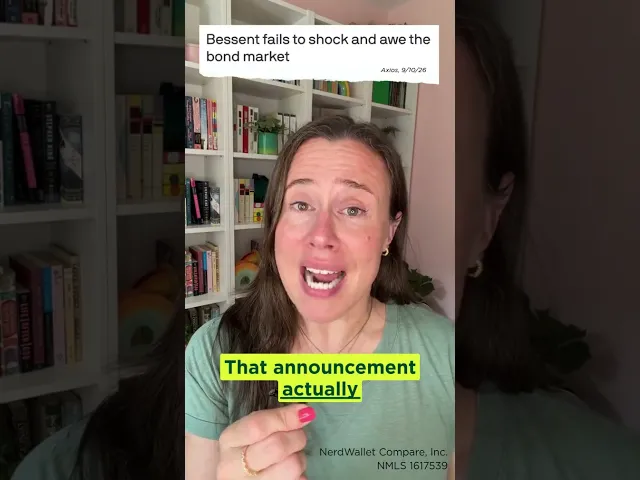
🤓 Kate on Rates: September 10, 2026
📈 What influences mortgage rates?
Mortgage rates are constantly changing, since a major part of how rates are set depends on reactions to new inflation reports, job numbers, Fed meetings, global news … you name it. For example, even tiny changes in the bond market can shift mortgage pricing.
There’s been a lot pushing mortgage rates higher recently. Let’s do a quick recap of three of the biggest influences, which all kinda boil down to one thing: Inflation.
So, what’s fueling the fire? One, we’ve got the war in Iran. After a weekslong stretch of relative peace, tensions have flared into actual aggression once again — and pretty much every time that’s happened, we’ve seen mortgage rates rise. Mortgage rates are pegged to the yield (essentially the return) on the 10-Year Treasury note. Concerns about the Iran war impeding trade, pushing up oil prices and overall, spurring inflation, keep driving bond yields higher. As yields go up, so do rates.
Meanwhile, last week closed with the case for maintaining the funds rate getting a little weaker, as August’s Employment Situation Summary (better known as the jobs report) showed a shockingly strong labor market. In August, the U.S. economy added 162,000 jobs, more than three times what economists had predicted. The unemployment rate continued to hold steady.
This was especially stunning coming off of July, which originally showed the economy losing 23,000 jobs. That stat’s been revised upward, and while it’s still way lower than August — 21,000 jobs gained — at least now it’s a positive number.
If the labor market were struggling, that would discourage the Fed from hiking rates. The central bankers raise the federal funds rate (that’s the overnight borrowing rate the Fed sets) to curb inflation. Part of that reasoning is that higher rates discourage businesses from expansion and hiring. If the labor market’s in bad shape, it’s risky to raise rates even if inflation’s high. But if it seems like the job market’s strong, the Fed can feel more confident about choosing to tackle inflation.
The Federal Reserve doesn’t set mortgage rates, but its decisions influence the direction of where mortgage rates tend to go. So if you’re shopping for a mortgage, don’t expect relief anytime soon.
Explore mortgages today and get started on your homeownership goals
Get personalized rates. Your lender matches are just a few questions away.
Won’t affect your credit score
Refinancing might make sense if today’s rates are at least 0.5 to 0.75 of a percentage point lower than your current rate (and if you plan to stay in your home long enough to break even on closing costs).
With rates where they are right now, you could start considering a refi if your current rate is around 7.48% or higher.
Also consider your goals: Are you trying to lower your monthly payment, shorten your loan term or turn home equity into cash? For example, you might be more comfortable with paying a higher rate for a cash-out refinancethan you would for a rate-and-term refinance, so long as the overall costs are lower than if you kept your original mortgage and added a HELOC or home equity loan.
If you’re looking for a lower rate, use NerdWallet’s refinance calculator to estimate savings and understand how long it would take to break even on the costs of refinancing.
🏡 Should I start shopping for a home?
There is no universal “right” time to start shopping — what matters is whether you can comfortably afford a mortgage now at today’s rates.
If the answer is yes, don’t get too hung up on whether you could be missing out on lower rates later; you can refinance down the road. Focus on getting preapproved, comparing lender offers, and understanding what monthly payment works for your budget.
NerdWallet’s affordability calculator can help you estimate your potential monthly payment. If a new home isn’t in the cards right now, there are still things you can do to strengthen your buyer profile. Take this time to pay down existing debts and build your down payment savings. Not only will this free up more cash flow for a future mortgage payment, it can also get you a better interest rate when you’re ready to buy.
🔒 Should I lock my rate?
If you already have a quote you’re happy with, you should consider locking your mortgage rate, especially if your lender offers a float-down option. A float-down lets you take advantage of a better rate if the market drops during your lock period.
Rate locks protect you from increases while your loan is processed, and with the market forever bouncing around, that peace of mind can be worth it.
🤓 Nerdy Reminder: Rates can change daily, and even hourly. If you’re happy with the deal you have, it’s okay to commit.
🧐 Why is the rate I saw online different from the quote I got?
The rate you see advertised is a sample rate — usually for a borrower with perfect credit, making a big down payment, and paying for mortgage points. That won’t match every buyer’s circumstances.
In addition to market factors outside of your control, your customized quote depends on your:
Even two people with similar credit scores might get different rates, depending on their overall financial profiles.
👀 If I apply now, can I get the rate I saw today?
Maybe — but even personalized rate quotes can change until you lock. That’s because lenders adjust pricing multiple times a day in response to market changes.
I get groceries delivered about three times a month. From my couch, I can also order dinner, buy a dress for an upcoming wedding and stream a movie. Many months, a solid chunk of my budget gets spent without me even leaving the house. In the couch economy era, more and more domestic spending is…
The investing information provided on this page is for educational purposes only. NerdWallet, Inc. does not offer advisory or brokerage services, nor does it recommend or advise investors to buy or sell particular stocks, securities or other investments. Each week, we answer money questions from around the web on the NerdWallet app. Here are three…
Mortgage rates are slightly higher today, though they haven’t quite hit the highs we saw last week. The average interest rate on a 30-year, fixed-rate mortgage ticked up to 6.7% APR, according to rates provided to NerdWallet by Zillow (but don’t say that number out loud in front of your kids). This is three basis…
Funto Omojola writes for NerdWallet. Email: fomojola@nerdwallet.com. The article What Credit Score Do You Need for a 0% APR Credit Card? (Based on Real Applications) originally appeared on NerdWallet.
The investing information provided on this page is for educational purposes only. NerdWallet, Inc. does not offer advisory or brokerage services, nor does it recommend or advise investors to buy or sell particular stocks, securities or other investments. Saving for college has been a financial challenge for me ever since becoming a mom. Like many…
American Dream Auto Protect isn’t one of our top extended car warranty picks. The company offers fairly priced extended car warranties compared to other providers, but we had trouble getting key information about its coverage. American Dream’s monthly and per-mile costs are on the low side compared to the other companies we reviewed, and the…