Your book of business is worth less than you think

Most brokers own a contact list and value it like an asset.
Last week, a brokerage owner told me that her accountant laughed when the subject of selling a mortgage book came up. His take: brokers are the worst for this. They think their book is worth a fortune, but it’s a list of names and emails. It isn’t like insurance or wealth management. There’s no residual.
It stings because it’s true.
What are you actually selling?
More brokers are having the retirement conversation now than at any point in the last decade. Almost none of them have a playbook, because there isn’t one: no valuation formula, no comparables, no standard terms. Everyone is making it up as they go.
So, whether you plan to sell in two years or twenty, ask yourself: If I bought your database tomorrow, what would I own?
A list of people who did a mortgage with you before. What’s your repeat rate with those clients?
When they have a homeownership question, are you still the name that comes to mind? How do you know? Can you prove it? How many of them are actively thinking about their homeownership goals today? Who’s likely to move or refinance in the next few years?
If I were buying a book, those are the first questions I’d ask.
For most brokers I talk to, their clients haven’t heard from them recently, other than generic communications such as birthday emails, mortgage anniversaries, renewal reminders. You don’t know how much equity they’ve built, whether they’ve changed their mortgage, if they’ve changed careers, or if they’re thinking about moving. Neither does the buyer.
That’s not an asset. That’s a contact list, and contact lists are nearly free.
What a book is worth when it’s alive
Now imagine the other version. Every client in your database knows where they stand: what their home is worth, how much equity they have, and whether they could save money, move up or pull equity out. And they know it because you’re the one keeping them informed.
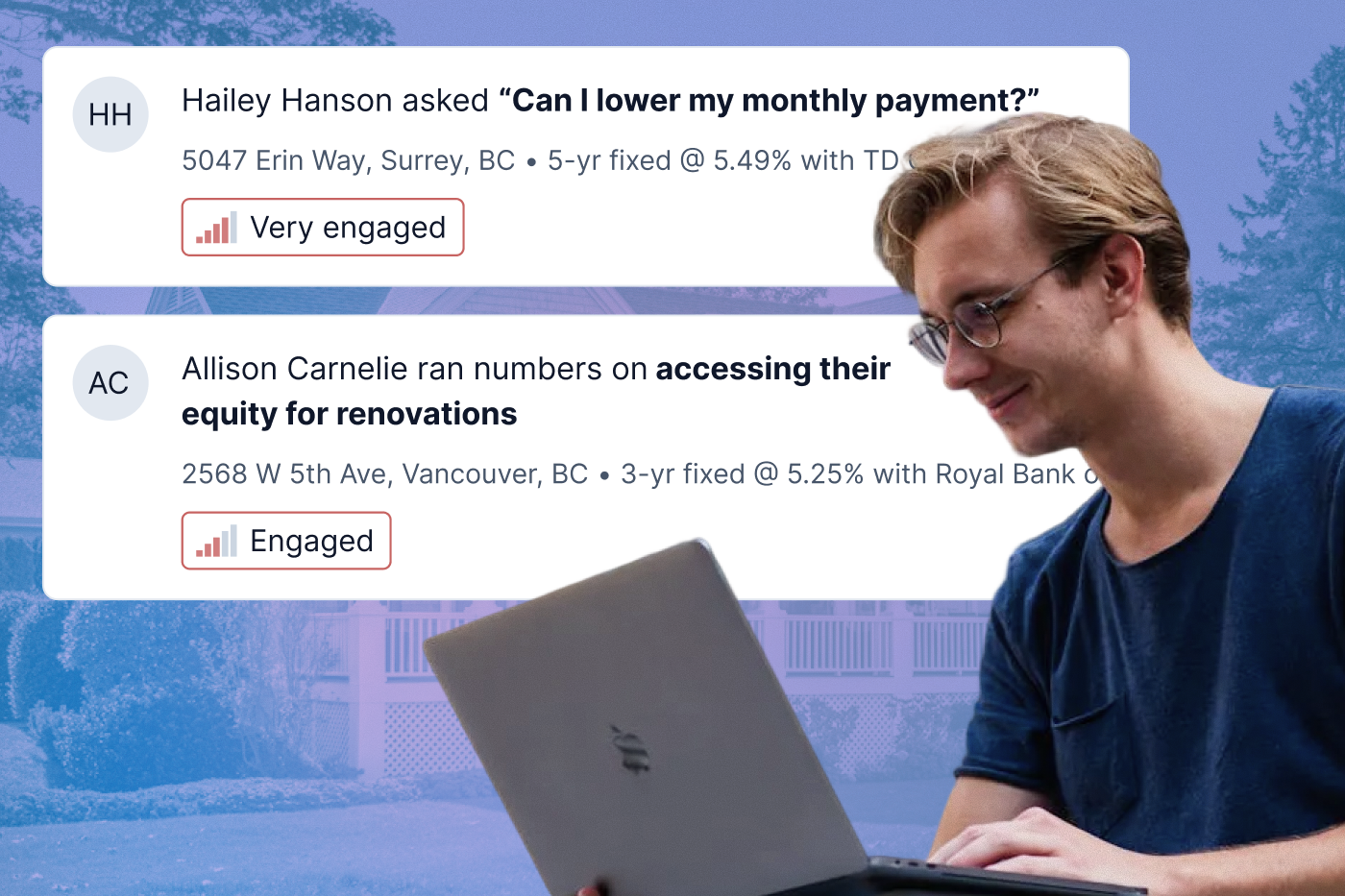
Better yet, you know it too. You can see which clients could lower their payment today, who has the equity to move up or refinance, and who’s worth a call before they go looking elsewhere. Imagine you could even see which of them are already weighing a change: who ran the numbers on a lower payment, set a target price for the next house, or reported a bump in income.
In other words: how many deals is this database likely to produce, and will these clients think of their broker when the light bulb goes on?
That’s what Ownwell does. We send personalized, interactive homeownership reports to 55,000 Canadian homeowners on behalf of their broker. Last month, 52% of the people who opened one did something with it: ran the numbers on paying off their mortgage faster, refinancing or transferring to save interest, or accessing equity to see how it would affect their payment.
They set target purchase prices, corrected their mortgage details, and updated their income. And every month, more than a thousand of them ask their broker a question or tell them something has changed. That engagement doesn’t fade: clients who’ve been getting the report for a year are as engaged as clients three months in.
That’s a book with a pulse, and a buyer can see it. You can show them exactly how engaged it is, where the refinance and move-up opportunities sit, and roughly what it produced in the last 12 months. You can hand it over with a warm introduction and a transition plan instead of a spreadsheet, and the clients keep engaging, because the only thing that changed on their monthly report is the name at the top.
Nobody buys an apartment building without knowing which units are rented and what they pay. Right now, brokers are selling buildings with no leases on file and wondering why the offers are low.
Your database isn’t an asset (yet)
The fix doesn’t start when you begin thinking about retirement. It starts now, whether you plan to sell in two years or 20, because the same thing that makes a book sellable (clients who hear from you every month and reach out when something changes) is the thing that makes it pay while you own it.
Find out what yours is worth
Come to Booth 126 at the National Mortgage Conference this weekend. Give us five minutes and the basics on your book, and we’ll run it through Ownwell and show you what’s sitting in it today: the refinance and equity opportunities, the renewals, and a rough estimate of the commission they could produce over the next 12 months. Then decide whether you’re building a business or a list.
Not at the conference? Email me at [email protected] and we’ll run it with you.
Visited 166 times, 166 visit(s) today
client retention Dan MacDonald fintech mortgage broker technology mortgage brokers ownwell sponsored succession planning technology
Last modified: October 14, 2026