Mastercard touts agentic AI tools during earnings call
- Key insight: Mastercard discussed its agentic AI strategy during its earnings call.
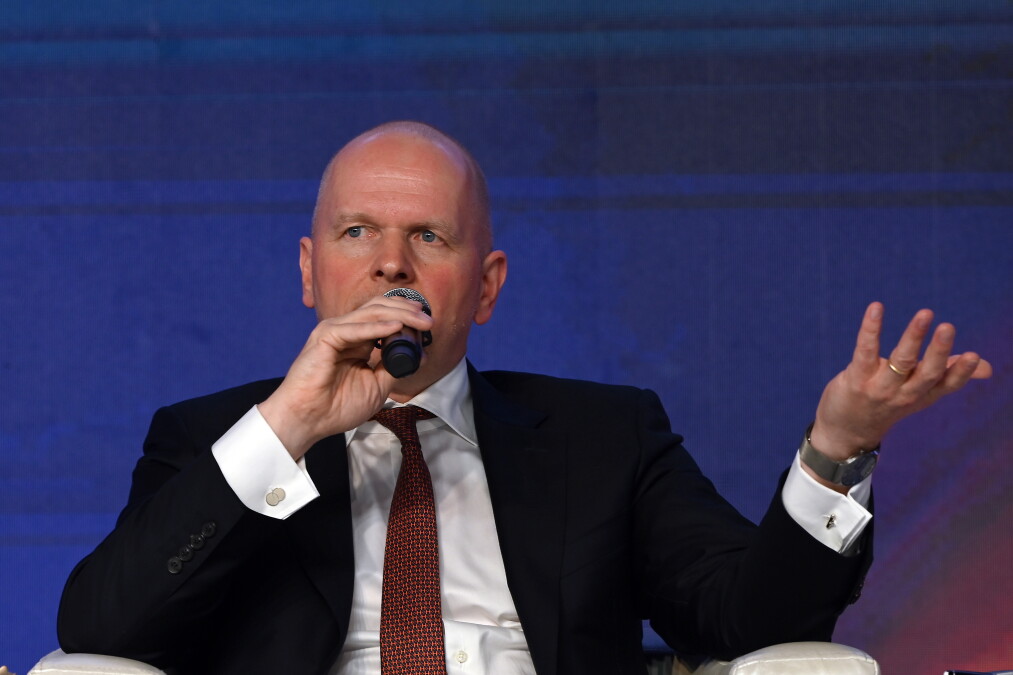
- Expert quote: “It’s early days, but engagement across the globe is energizing. The rise of agentic commerce also brings about an entirely new class of payment use cases.” —Mastercard CEO Michael Miebach
- Forward look: The card network is recruiting clients to its machine-to-machine AI product.
With
Processing Content
“We expect cards will prevail in an agentic world,” Mastercard CEO Miebach said, noting Mastercard’s scale, access to data, range of products that support agentic commerce, and existing and future risk management capabilities. Miebach addressed agentic AI as large
“It’s early days, but engagement across the globe is energizing. The rise of agentic commerce also brings about an entirely new class of payment use cases,” Miebach said.
Mastercard’s earnings
For the quarter ending June 30, Mastercard reported net revenue of $9.3 billion, up 12% from the prior year, and net income of $4.4 billion, up 19%.
Cross-border payment volume was up 12%, gross dollar volume 8% (to $2.9 trillion), and overall payments up 9%. For value-added services, or non-payment processing functions, net revenue was up 18% on a currency neutral basis. Earnings per share were $4.97, up from $4.07. Zacks research analyst expectations were EPS of $4.77 and $9.06 billion in net revenue. Mastercard raised its outlook for the full year, projecting revenue growth in the “low teens” from “low double-digit to low-teen” range.
Analysts from Keefe Bruyette & Woods said “all metrics are trending in the right direction” at Mastercard. Among other large card companies,
“Mastercard delivered solid top- and bottom-line upside, with outperformance in both payment network and value added services,” KeyBanc Capital Markets said in a research note.
Rise of the machines
The card network’s
Mastercard earlier this year deployed a new AI model in partnership with Nvidia, which Miebach said can improve the ability to anticipate shifts in consumer behaviors.
Ahead of its earnings report, Mastercard released Agent Pay for Machines, which is designed to execute “machine to machine” payments, or the use of AI agents to purchase low-value digital services such as application programming interfaces. It also supports data analysis and blockchain-powered payments.
At launch, Agent Pay for Machines had more than 30 users, including Adyen, Checkout.com, Coinbase and Cloudflare. The agentic payment services also enable traditional currency and digital assets such as stablecoins to process AI transactions.
“We believe stablecoins have great potential but to work there are a few essential principles for it to scale: Reliability, security and interoperability and that’s what Mastercard delivers,” Miebach said. “There’s clear utility for stablecoins for example in some B2B and P2P flows.”
Mastercard does not issue its own stablecoin or trade cryptocurrencies, but has pledged to support stablecoins and other digital assets such as tokenized deposits as the card issuers and merchants in its global payments network evolve their use of digital assets to facilitate the movement of funds, rather than storing digital currencies.
The card network’s other moves in digital assets include its recent receipt of a
Read More
The New York license comes as Mastercard accelerates its stablecoin and digital-asset strategy, with notable recent moves including a
“The market continues to view stablecoins and agentic commerce as potential disintermediation risks, but recent developments suggest the card networks are becoming key beneficiaries instead,” BofA Global Research said in a note.