Washington faces $4B deficit as budget crafting season begins

Washington State Governor’s Office
Washington state is facing a $4 billion deficit as it heads into budget crafting season, according to the latest projections from the Washington State Economic and Revenue
Processing Content
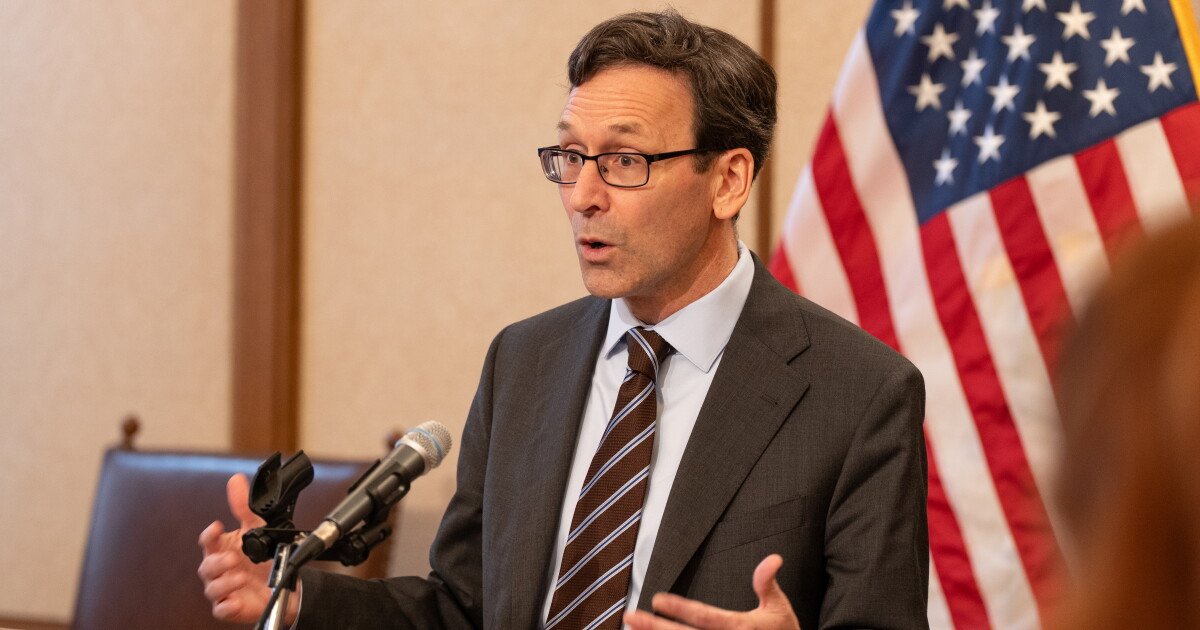
Washington Gov. Bob Ferguson noted in a statement Monday that he inherited a $16 billion budget shortfall when he took office last year and “committed to working our way out of that — and we’re making progress.”
“The bad news is: We now project an approximately $4 billion shortfall in the first year of the next budget,” Ferguson said. “The good news is our budget situation will be stable beginning July 1, 2028.”
Bridging that one-year shortfall will not be easy, Ferguson said, adding he’s focused on delivering a balanced budget that prioritizes core services and protects the state’s most vulnerable while moving the state forward.
He will announce his budget proposal on Dec. 20.
The state had its ratings affirmed by Fitch Ratings at AA-plus, Moody’s Ratings at Aaa and S&P Global Ratings at AA-plus in October. Fitch and Moody’s affirmed negative outlooks, while S&P affirmed a stable outlook.
Moody’s analysts wrote in an October report that “despite stronger than expected revenue performance in fiscal 2026, we expect Washington’s general fund deficit to materialize in fiscal 2027 — absent prompt correction efforts — driven by the state’s escalating tort claims, rising health and human service costs and more limited policy-level cost containment to date.”
Moody’s added, “the recently enacted
Moody’s issuer rating also incorporates the state’s moderate total leverage (including debt, pension, other post-employment benefits, and other long-term liabilities), equal to 103% of own-source revenue, and associated fixed costs representing 6.2% of revenue as of fiscal 2025.
Of strides made by the state to create a steady fiscal path, Ferguson highlighted three.
“First: We made significant budget reductions and found efficiencies to save money,” Ferguson said. “Second: We passed, and the voters overwhelmingly upheld, a historic Millionaires Tax that helps address our regressive and unfair tax system. Third: We now budget in a more responsible way.”
The economic and revenue forecast council “provides expert guidance on how much we can expect our state to grow,” he said. “For years, the state compounded our budget challenges by assuming we would see 4.5% growth, even if the forecast council told us that number would be lower. Now, at my insistence, we are budgeting based on our real growth.”
“After dealing with billions of dollars in draconian cuts imposed by the Trump administration, voters have elected a new Congress that will help return us to budget sanity,” Ferguson said. “In short: We are now on the path toward long-term financial stability.”
He did acknowledge, however, “between rising costs and billions of dollars in federal cuts, including massive cuts to health care, we are facing a significant challenge in the first year of the next budget. Today’s revenue forecast does not change that.”