Got a WhatsApp loan offer? Check these 5 things before clicking the lending app link
In the ongoing festive season, with Dussehra and Durga Puja recently concluded on 22 October and Diwali festivities set to take over in November, the need for funds can be urgent. Especially if you are an aspiring borrower looking to purchase new products and services.
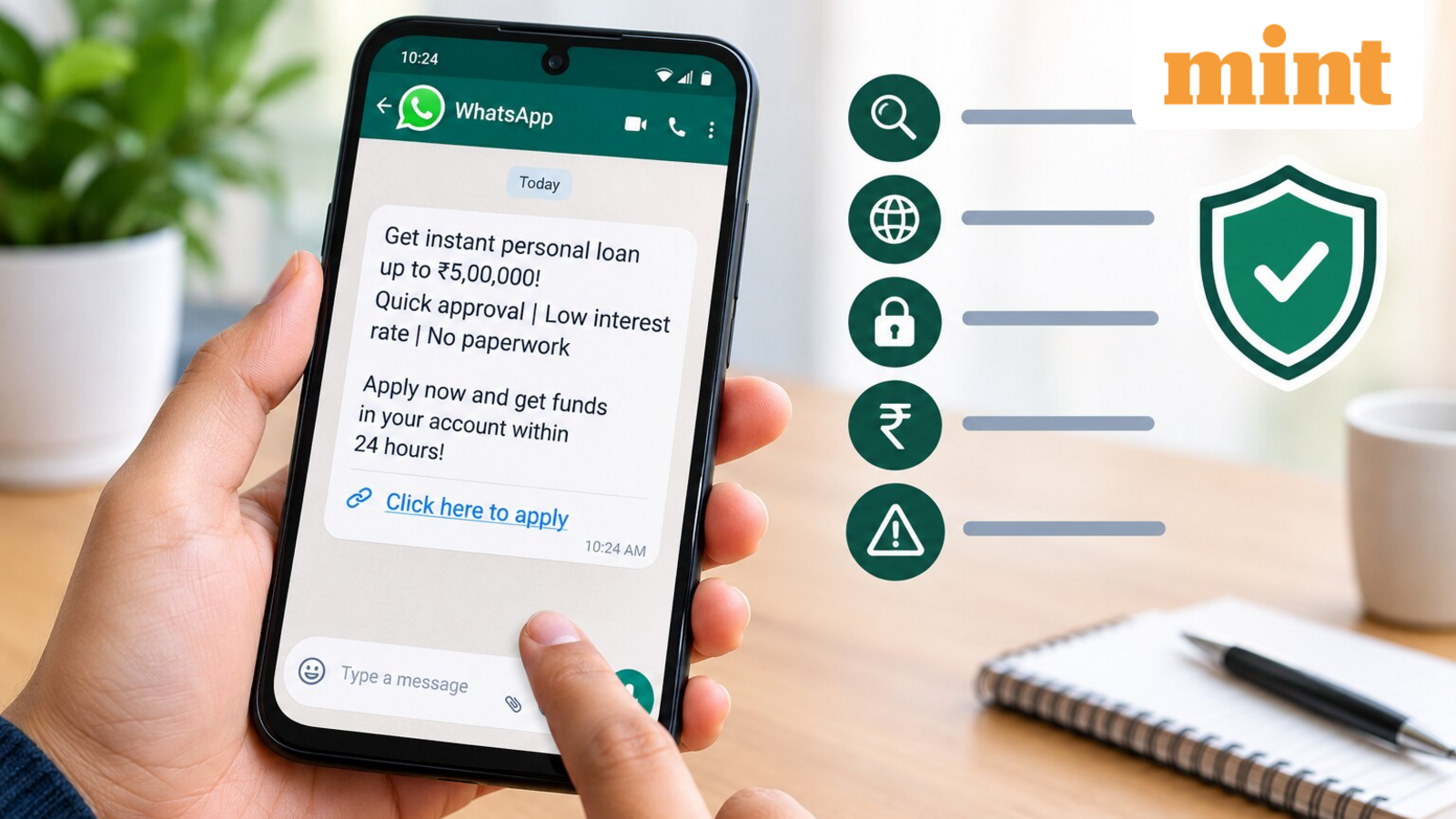
In such an environment, a relatively harmless WhatsApp message promising instant loans, minimal to no paperwork, and seamless approval may seem like a straightforward way to arrange money.
Still, it is vital to note that not every loan offer received on WhatsApp is genuine and should not be trusted blindly. This is because fraudsters often offer attractive lending rates, set urgent deadlines to secure such loans, promise relatively easy approval, and assure flexible repayment terms to persuade individuals to click suspicious links and share confidential financial information.
For these reasons, it is prudent to avoid clicking on random messages sent to you on WhatsApp. Furthermore, before accepting any such lucrative-looking loan offers, borrowers should carefully verify the basic facts, such as the lending institution credentials and whether it is regulated by the Reserve Bank of India (RBI).
Once these aspects are clear, only then should the borrower proceed with understanding the aspects such as:
- Applicable terms and conditions,
- Comparing them with other prominent lenders,
- The pros and cons of the offer, and
- Reviewing the application and the experiences of past borrowers,
Along with the above factors, it is also critical to check whether the application process is secure, before applying for any particular loan on the platform.
What are WhatsApp loan offers from lending apps?
To put it simply, WhatsApp loan offers are messages sent to individual users that promote personal loans or other credit products via links and advertisements. Now, some of the offers might also come from legitimate financial institutions backed by the RBI or their authorised representatives. Whereas others may be sent by fraudulent individuals targeting unsuspecting victims, impersonating registered lending institutions.
These messages might also promise instant approval, pre-approved credit, or loans without extensive documentation or intense background verification. Unsuspecting borrowers often fall for similar fraudulent messages because they are in urgent need of funds to cover medical expenses, surgery costs, educational expenses, or other essential needs.
Still, it should not be overlooked that a message received on WhatsApp does not establish the lending institution’s credibility or authenticity. Sharing confidential information, such as bank details, one-time passwords (OTPs), or identification documents, without verification can expose borrowers to financial fraud, loss of funds, and identity theft.
5 checks to make before clicking a WhatsApp loan link
1. Verify the lender’s credentials
Before you click on any link sent to you on WhatsApp offering easy loan services, it is important to check the legal name of the lender and its credentials, including whether it is registered with the RBI or any other regulated entity. If an application is acting as a lending service aggregator, you should focus on identifying the bank or NBFC actually providing the loan.
2. Check the sender and website
Make sure you do not blindly trust a WhatsApp profile photo, official logo, display name, or any claim from the sender. Strictly do not click on shortened links and APK files. If messages become repetitive, first visit the lender’s official website to independently verify its credibility. If you still find the offers to be illegitimate, block such messages and report them.
3. Never share OTPs or sensitive details
As a matter of rule, you should never share any confidential data or information with anyone. Never disclose or discuss OTPs, ATM PINs, credit card images, debit card photos, or security codes with anyone claiming to process a loan. No legitimate lending institution ever requests customers to share such information. Unverified links and random Google Forms sent on WhatsApp requesting personal information should be avoided at all costs.
4. Read the loan terms carefully
Once you are clear on the legitimacy of the loan offer, it is only then that you should go through the offered interest rate on different loan tenures, annual percentage rate (APR), processing charges, repayment tenure and schedule, fines on missing due dates, and the total repayment amount you will pay as you close the loan. A seemingly lucrative-looking loan offer may carry high costs or unfavourable conditions.
5. Watch out for upfront payment demands
Be careful of any requests to transfer funds to a personal account to secure a loan, obtain final approval, or release funds. No legitimate lending institutions charge borrowers an exorbitant upfront fee just to clear a loan. Verify every charge carefully with the regulated lending institution before making any payment. If in doubt, do not hesitate to seek guidance from a certified financial advisor.
In summary, it is wise for aspiring borrowers to verify any such WhatsApp message first before clicking. A few minutes of this exercise can help borrowers avoid fraudulent loan schemes and make safer borrowing decisions. If you find any link suspicious, do not engage with such messages; report it through the appropriate official channels.