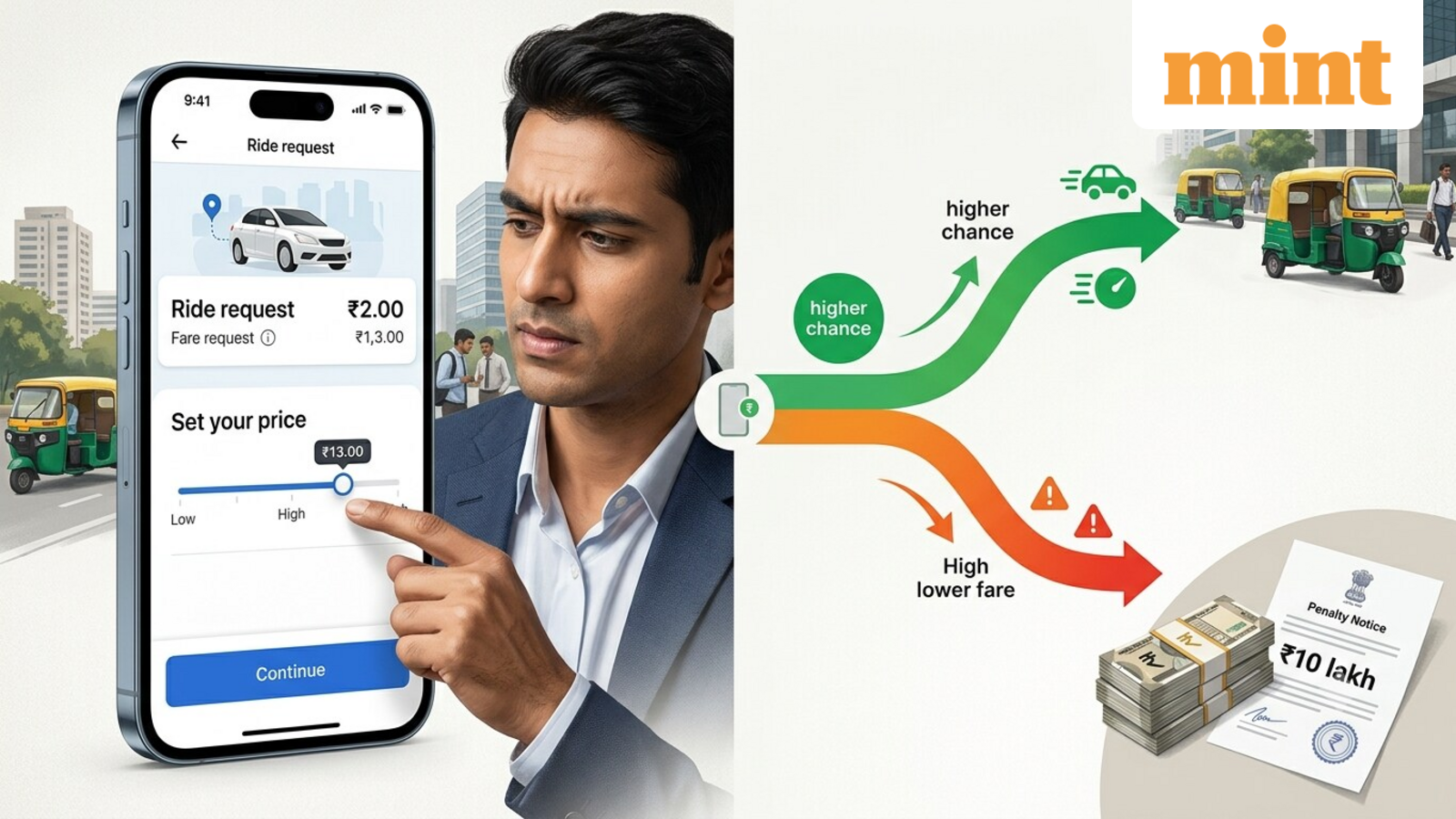
CCPA imposes ₹10 lakh penalty on Rapido: How dark patterns and tipping prompts nudge you to pay more for a ride
If you have ever booked a cab or bike taxi and been asked to pay a little more to improve your chances of getting a ride, the prompt may have felt like a harmless suggestion. But the way such prompts are designed can influence how much you end up spending.
The Central Consumer Protection Authority (CCPA) has imposed a penalty of ₹10 lakh on Roppen Transportation Services Private Limited, which operates the ride-hailing platform Rapido.
The penalty was imposed for misleading advertisements, unfair trade practices, unfair contract terms, and dark patterns that prompted riders (customers) to pay more before their rides were confirmed, according to a press release by the Ministry of Consumer Affairs, Food & Public Distribution on Tuesday.
Why was Rapido penalised?
According to the release, during its examination of ride-hailing and bike-taxi platforms, the CCPA found prompts on the Rapido app such as “Higher the price, higher the chance of getting a ride” and “Captains aren’t accepting at ₹60. Try adding +10, +20, +30”.
According to the CCPA, the app would first quote a fare and, after the rider booked at that amount, prompt them to pay more because captains (drivers) were allegedly not accepting the original price.
The regulator found that this could create the impression that paying more was necessary to improve the chances of getting a ride quickly.
It classified the practice as “Confirm Shaming”, a dark pattern that can create urgency or fear of losing the service unless a consumer agrees to the suggested action.
How did the app design influence the amount?
The CCPA flags Rapido’s colour-coded “Set your price” slider as another dark pattern.
When riders increased the price, the app displayed “higher chance of getting a ride” in green. Lowering the amount triggered a red or orange warning. The regulator also found that the slider provided more room to increase the price than to reduce it.
According to the release, the CCPA classified this as “Interface Interference”, saying the design itself steered consumers towards paying a higher amount.
Is an advance payment really a tip?
According to the release, the CCPA also questioned the use of the term “tip” for an additional payment made before a ride.
It noted that the fare shown at booking already considers factors such as distance, time, traffic, tolls and the amount payable to the captain. A tip, it observed, is ordinarily a voluntary payment made after a service has been provided.
The Motor Vehicle Aggregator Guidelines, 2025, also require tipping features to be made available only after completion of the ride, rather than at booking or during the ride.
The CCPA further noted that Rapido had not provided data demonstrating that paying more actually increases the likelihood of getting a ride. It therefore held the claim to be unsubstantiated and misleading.
The action forms part of CCPA’s wider scrutiny of advance-tip and dark-pattern practices across ride-hailing and bike-taxi platforms. The regulator had earlier issued notices to Uber, Ola, and Namma Yatri, directing them to comply with the Guidelines for Prevention and Regulation of Dark Patterns, 2023.
What should users watch for?
The Rapido case offers a broader lesson: an app’s suggested payment does not necessarily mean you need to spend more.
Before paying extra, check whether the additional amount is mandatory, whether the claim behind the prompt is backed by evidence, and whether the app’s design is discouraging you from choosing the lower-priced option.
Consumers who saw misleading advertisements, unfair trade practices, or dark patterns can register complaints with the National Consumer Helpline (NCH) at 1915.
For users, the takeaway is simple: A prompt saying “pay more” may look like a convenience feature, but it is worth asking whether it is actually a choice—or a nudge designed to make you spend more.
Disclaimer: This is for informational purposes only. Please visit the official website for the latest updates.