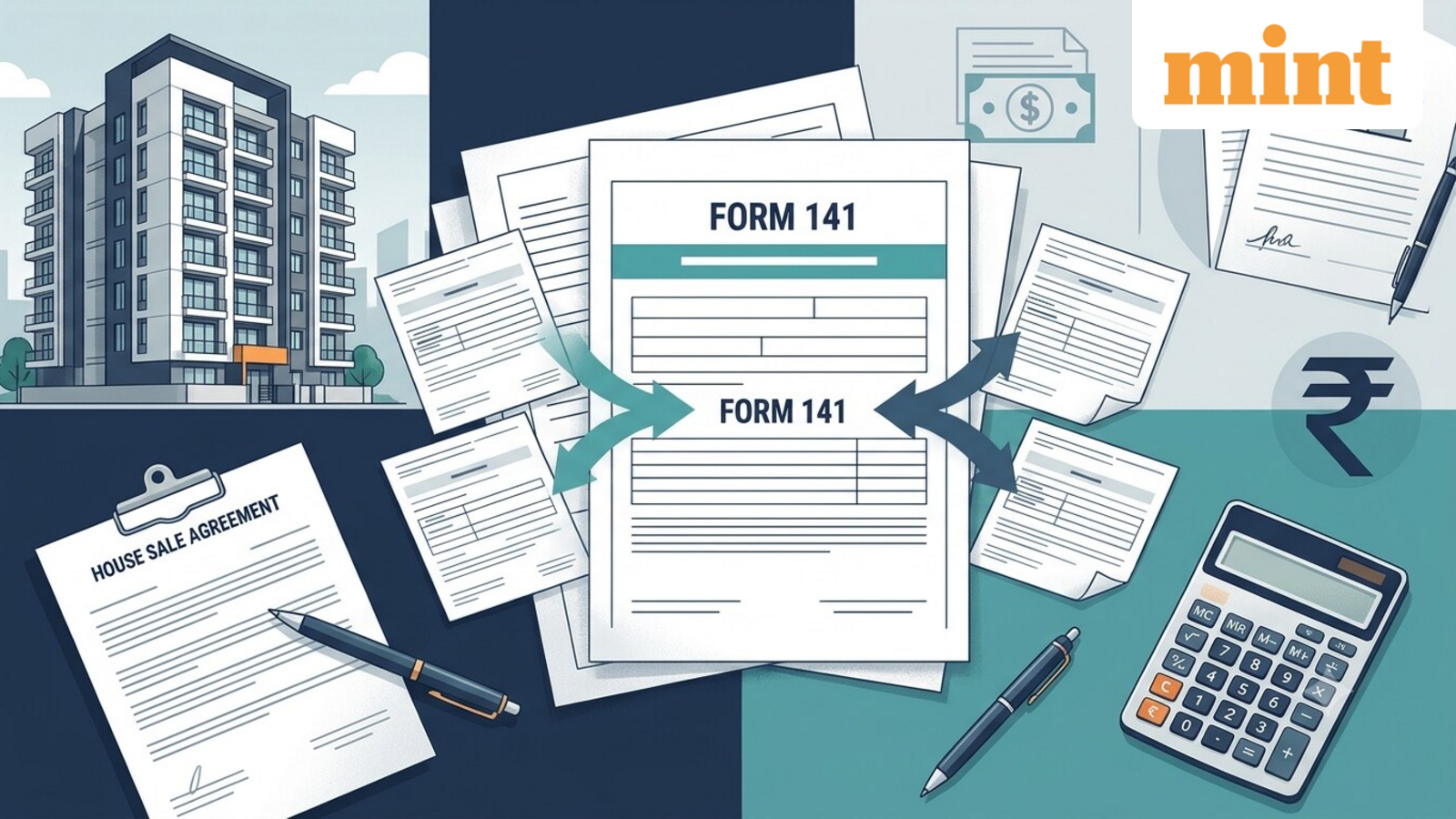
New Form 141 replaces 4 TDS forms for property buyers, rent payments and VDAs: What changed under Income Tax Act 2025
The Income-tax Act, 2025, which came into effect on April 1, 2026, introduces changes to how taxpayers report tax deducted at source (TDS).
One such change is Form No. 141, which consolidates the reporting and payment requirements for several specified transactions into a single form, replacing the need to use multiple forms for these purposes.
Applicable to transactions from Tax Year 2026–27 onwards, Form 141 covers specified payments involving property purchases, rent, contractor and professional fees, and virtual digital assets (VDAs). Here’s what you need to know.
What is Form 141 and which forms does it replace?
Form 141 is a unified form for reporting and paying TDS on specified transactions. It replaces four earlier forms:
- Form 26QB: TDS on the purchase of immovable property.
- Form 26QC: TDS on rent payments.
- Form 26QD: TDS on payments to resident contractors, professionals and others.
- Form 26QE: TDS on the transfer of virtual digital assets.
Instead of submitting a separate form for each of these categories, taxpayers can use Form 141 and select the relevant schedule.
Who needs to deduct TDS and who receives it?
The deductor is the person responsible for deducting tax from a payment and depositing it with the government. The deductee is the person whose payment is subject to TDS and from whose amount the tax is deducted.
For example, when a buyer purchases a property covered by TDS provisions, the buyer is the deductor and the seller is the deductee. Similarly, a person making a covered rent payment may have to deduct TDS from the amount payable to the landlord.
The applicable rules determine whether TDS must be deducted, the rate and the threshold. Not every payment automatically attracts TDS.
Which transactions does Form 141 cover?
The form has four schedules, each meant for a specific transaction category:
- Schedule A — Rent payments: The person paying rent must deduct TDS from rent payable to the landlord if the rent is ₹50,000 per month.
- Schedule B — Purchase of immovable property: The buyer must deduct TDS from the payment to the seller when the property transaction value is ₹50 lakh or more.
- Schedule C — Payments to resident contractors or professionals: The person making the payment must deduct TDS from payments to resident contractors or professionals when the applicable threshold of ₹50 lakh is crossed.
- Schedule D — Transfer of virtual digital assets: The person responsible for making the payment for the transfer of virtual digital assets (VDAs) must deduct TDS. No monetary threshold is prescribed for this category.
Can one Form 141 cover multiple transactions?
Yes, but only under specific conditions. A single Form 141 can cover multiple transactions of the same nature if the tax deduction relates to the same month.
However, each filing can contain only one schedule. Transactions belonging to different categories cannot be combined in the same form. Similarly, transactions involving deductions in different months cannot be clubbed together in one filing.
What is the filing deadline for Form 141?
Form 141 must be filed within 30 days from the end of the month in which TDS is deducted. The tax payment must be made electronically on the e-filing portal along with the submission of the form.
Disclaimer: This is for informational purposes only. Consult a qualified tax professional for advice specific to your circumstances.