Mortgage Rates Today, Friday, October 23: A Substantial Drop
The dynamic we’ve seen most of this week of investors losing confidence in big tech and turning to bonds is in full effect this morning. A pretty significant slump for the tech sector yesterday is showing up as a sizable drop in mortgage rates today. We’re still above 7%, but this is the lowest our daily average has been in a solid month.
The average interest rate on a 30-year, fixed-rate mortgage dropped to 7.08% APR, according to rates provided to NerdWallet by Zillow. This is 20 basis points lower than yesterday and 12 basis points lower than a week ago. (See our chart below for more specifics.) A basis point is one one-hundredth of a percentage point.
It’s impressive for sure, but we can’t be certain rates will keep going down. Markets are erratic, and tech isn’t all investors are paying attention to. (Need an example? Treasury yields already bumped a little higher this morning based on concerns about France.) For more on how this all fits together, keep reading below the chart.
P.S.: While the economy never sleeps, markets are closed on the weekends. The rates you see Friday are unlikely to change much (if at all) until Monday.
Average mortgage rates, last 30 days
🤓 Kate on Rates, 10/22/26

📈 What influences mortgage rates?
Mortgage rates are constantly changing, since a major part of how rates are set depends on reactions to new inflation reports, job numbers, Fed meetings, global news … you name it. For example, even tiny changes in the bond market can shift mortgage pricing.
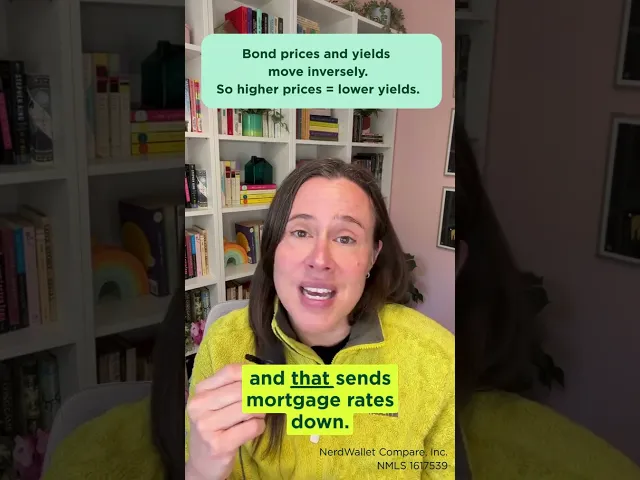
To understand how tech stocks, Treasuries and mortgage rates are all part of the same narrative, let’s start with the basics. The bond market is generally a significant driver of mortgage rates, because mortgage rates are benchmarked to the yield on 10-year Treasury notes. Where the 10YT yield goes, rates go, too.
The yield is basically the return investors get on a bond. A bond is a little piece of government or corporate debt; when an investor buys a bond, they’re making a tiny loan to the issuer. The issuer agrees to pay them back a set amount over the bond’s lifespan (that’s the yield), and when the bond matures, the investor gets the bond’s original price back. That’s why unlike anything-could-happen stocks, bonds are generally considered relatively low risk.
A bond investor who buys a bond at issuance knows immediately: Here’s my cost, here’s what I’ll earn and here’s when my initial investment will be returned. When investors sell bonds to each other, things get more interesting, because the market now determines the price, and that shifts the relative value of the yield.
Here’s how that works. If you bought a $100 bond with $5 annual yield payments, that yield is 5%. But say you want to sell that bond but can’t find a full-price buyer; the best price you can get for it is $80. The annual yield payments are still $5, but since they’re relative to that lower price, the yield is now 6.25%.
For much of the summer and early fall, we saw lots of Treasury bond selling, which drove prices down and yields up. That kept pushing mortgage rates higher. Additionally, tech companies issuing loads of corporate bonds to help fund AI buildout meant that bond investors had a sexier option than Plain Jane Treasuries.
Last week, that dynamic began to reverse as doubts crept in about the potential profits from AI. September’s Consumer Price Index, which came out last Wednesday, and Producer Price Index, from Thursday, showed that inflation’s still running hot. If prices are climbing, the costs of building data centers and other AI infrastructure will increase, right? So to get solid returns on these investments, tech companies are going to have to make some serious profits. That right there is where some investors are having misgivings. And those nerves have tech stocks wobbling while good old reliable bonds provide a proverbial safe haven.
Will this downward trend last? Well, inflation’s a huge part of this story, and next week we’ll get some updates there. The Federal Open Market Committee meets Tuesday and Wednesday, and while the Fed isn’t expected to change the funds rate at this meeting, its outlook on inflation is influential. Markets will be listening closely to Fed chair Kevin Warsh’s post-decision press conference for any clues as to the central bankers’ next steps.
And next Thursday, we’ll get September inflation data from the Bureau of Economic Analysis. While those Personal Consumption Expenditures numbers come out a day too late to be helpful to the Fed, they’ll still provide evidence of how inflation is trending.
What it will all mean for mortgage rates is where it gets tricky. On one hand, when it looks like inflation’s running hot, that generally means higher rates — bonds are usually less attractive to investors (so yields go up), plus the Fed is more likely to raise the funds rate. But on the other hand, persistent inflation is also very much driving investors’ concerns about big tech and AI profits. If that keeps investors interested in bonds, that could send yields — and mortgage rates — lower.
Explore mortgages today and get started on your homeownership goals
Get personalized rates. Your lender matches are just a few questions away.
🔁 Should I refinance?
Refinancing might make sense if today’s rates are at least 0.5 to 0.75 of a percentage point lower than your current rate (and if you plan to stay in your home long enough to break even on closing costs).
With rates where they are right now, you could start considering a refi if your current rate is around 7.58% or higher — but there just aren’t too many people for whom that’s true.
Also consider your goals: Are you trying to lower your monthly payment, shorten your loan term or turn home equity into cash? For example, you might be more comfortable with paying a higher rate for a cash-out refinance than you would for a rate-and-term refinance, so long as the overall costs are lower than if you kept your original mortgage and added a HELOC or home equity loan.
If you’re looking for a lower rate, use NerdWallet’s refinance calculator to estimate savings and understand how long it would take to break even on the costs of refinancing.
🏡 Should I start shopping for a home?
There is no universal “right” time to start shopping — what matters is whether you can comfortably afford a mortgage now at today’s rates.
If the answer is yes, don’t get too hung up on whether you could be missing out on lower rates later; you can refinance down the road. Focus on getting preapproved, comparing lender offers, and understanding what monthly payment works for your budget.
NerdWallet’s affordability calculator can help you estimate your potential monthly payment. If a new home isn’t in the cards right now, there are still things you can do to strengthen your buyer profile. Take this time to pay down existing debts and build your down payment savings. Not only will this free up more cash flow for a future mortgage payment, it can also get you a better interest rate when you’re ready to buy.
🔒 Should I lock my rate?
If you already have a quote you’re happy with, you should consider locking your mortgage rate, especially if your lender offers a float-down option. A float-down lets you take advantage of a better rate if the market drops during your lock period.
Rate locks protect you from increases while your loan is processed, and with the market forever bouncing around, that peace of mind can be worth it.
🤓 Nerdy Reminder: Rates can change daily, and even hourly. If you’re happy with the deal you have, it’s okay to commit.
🧐 Why is the rate I saw online different from the quote I got?
The rate you see advertised is a sample rate — usually for a borrower with perfect credit, making a big down payment, and paying for mortgage points. That won’t match every buyer’s circumstances.
In addition to market factors outside of your control, your customized quote depends on your:
-
Location and property type
Even two people with similar credit scores might get different rates, depending on their overall financial profiles.
👀 If I apply now, can I get the rate I saw today?
Maybe — but even personalized rate quotes can change until you lock. That’s because lenders adjust pricing multiple times a day in response to market changes.