DA hike 2026: Will government employees get a festive salary boost after Dussehra? October 21 holds the key
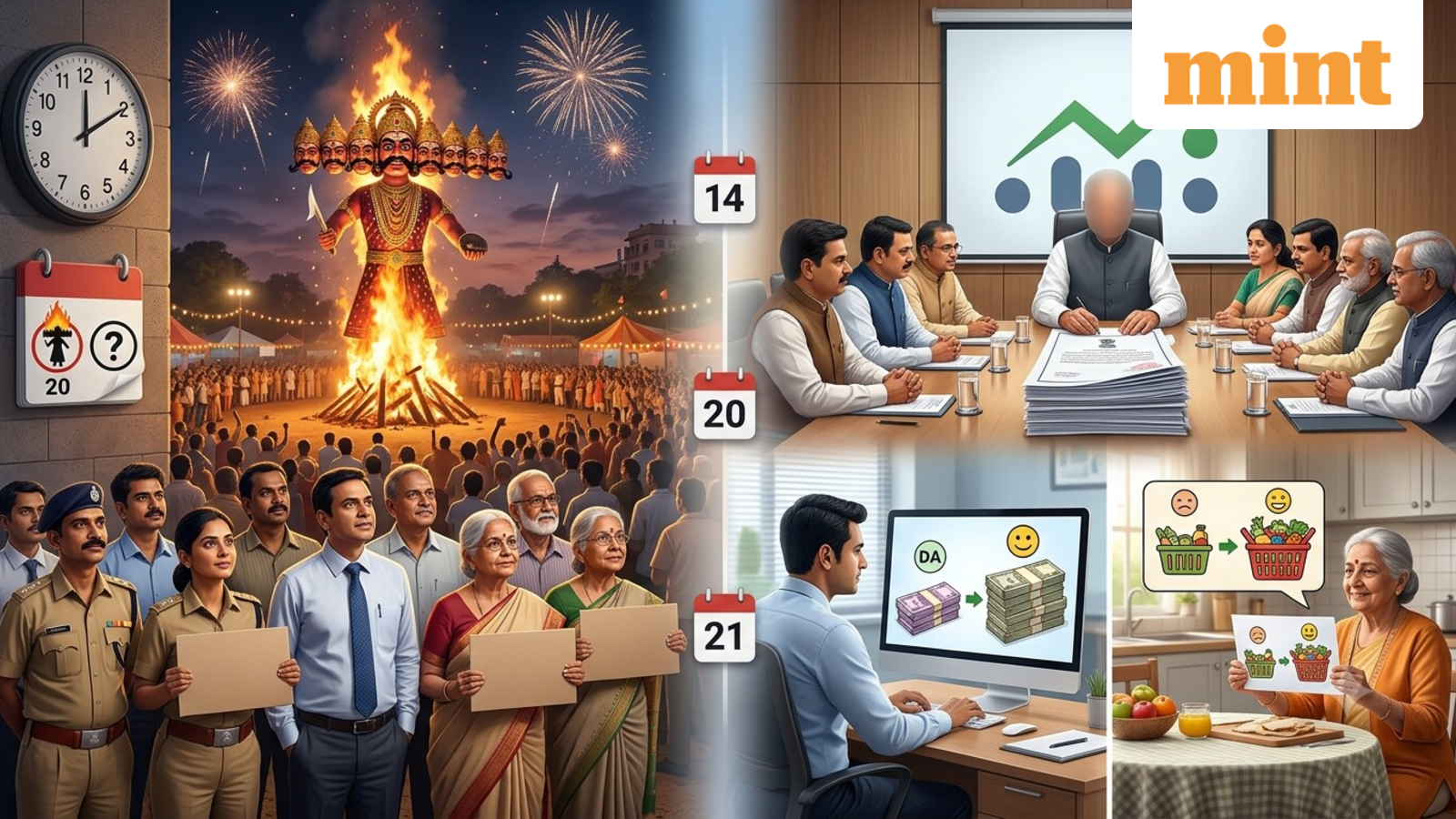
Central government employees hoping for a festive salary boost are waiting for the Centre to announce the next dearness allowance (DA) hike. With Dussehra on 20 October and the next Union Cabinet meeting scheduled for 21 October, the key question is whether the government will approve the pending July revision after Vijayadashami.
The DA rate currently stands at 60% of basic pay following the previous revision in January 2026. The next increase could take it to 63%, according to estimates based on inflation data. However, the government has not officially confirmed the proposed hike or its announcement date.
Will the Centre announce the DA hike on October 21?
The Cabinet meeting on 21 October is the next date central government employees are watching. Expectations of an announcement had built up ahead of the previous meeting on 14 October, but the government did not announce the DA revision.
The July 2026 instalment remains pending as of 20 October. Although DA revisions are generally announced twice a year, effective from January and July, the timing of the official announcement can vary. The Centre has announced increases around festive occasions in the past, but there is no guarantee that the pending revision will be approved on 21 October.
Employees will have to wait for an official government announcement to know whether the increase has been cleared. Until then, the proposed hike and its timing remain unconfirmed.
How much could salaries increase if DA rises to 63%?
The current DA rate is 60% of basic pay. In April 2026, the Union Cabinet approved a 2-percentage-point increase from 58% to 60%, effective from 1 January 2026.
The next revision is expected to reflect changes in the consumer price index used to calculate DA. Estimates based on the relevant inflation data point to a possible 3-percentage-point increase, which would take DA to 63%. The final rate will depend on the government’s approval.
For an employee with a basic salary of ₹44,900, the current DA at 60% amounts to ₹26,940 a month. If the rate increases to 63%, the monthly DA would rise to ₹28,287.
This would mean an additional ₹1,347 a month, or ₹16,164 over 12 months. The actual increase will depend on the employee’s basic pay and the rate ultimately approved by the government. These calculations do not account for deductions or changes in other salary components.
What does the pending DA hike mean for pensioners?
Central government pensioners are also awaiting the revision. They receive dearness relief (DR), which is revised in line with DA to help offset the impact of inflation on pensions.
If the government approves a corresponding 3-percentage-point increase in DR, pensioners would receive a higher monthly amount. The additional benefit would depend on their basic pension and the final rate announced.
The Confederation of Central Government Employees and Workers held a lunch-hour protest on 16 October, demanding the release of the pending DA and DR instalments effective from 1 July 2026.
For employees and pensioners, the 21 October Cabinet meeting could bring clarity on the delayed revision. However, until the Centre formally approves the increase, the projected rise to 63% should not be treated as confirmed.