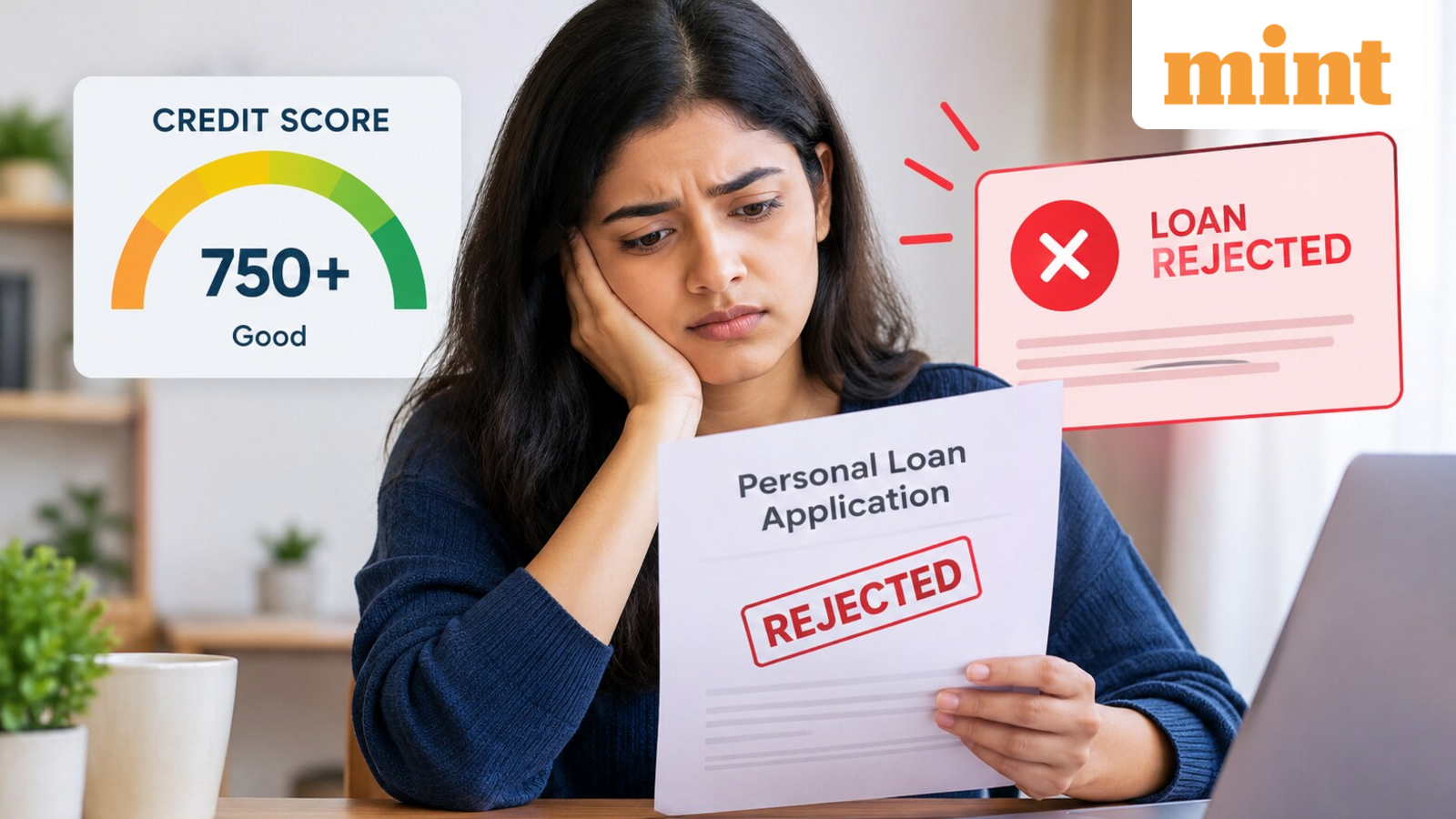
Why your personal loan request can be rejected even with a 750+ credit score? 5 reasons you should know
A credit score of 750-775 is generally considered good and can improve your chances of getting a personal loan. However, a high credit score alone can not guarantee approval as many other factors, such as existing debt and repayment capacity, are assessed by the lender during the disbursal process.
Credit bureaus such as TransUnion CIBIL assign all banking customers a credit score ranging from 300 to 900. A score below 650 signals higher credit risk, while scores above this level indicate moderate to good creditworthiness.
Borrowers can check their credit score on portals like CIBIL, CRIF, Experian, or Equifax. They can access one free credit report every year from each of the four bureaus licensed by the Reserve Bank of India (RBI).
Common reasons for loan rejection
A score of 750 or higher typically reflects a strong credit profile and a consistent repayment history. Here are some reasons why your personal loan application can be rejected despite being in the high credit-score category, according to a blog post by IDFC First Bank:
- Discrepancies in documentation: Errors in identity proofs or address details, incomplete income information and even more concerning, a mismatch between bank statements and declared income can lead to a rejection of a personal loan application.
- Unstable source of income: Banks assess a borrower’s current income to assess their repayment capacity. If you don’t have a fixed monthly income or switch jobs frequently, then your application can be considered risky. This is why most lenders ask for your income proof of six months, as well as bank statements for further verification.
- Existing unsecured loan exposure: A bunch of ongoing unsecured loans may lower the lender’s confidence in your credit profile, even if you repay all the instalments or EMIs on time. This indicates a higher repayment burden and may lead to a rejection.
A personal loan rejection should not be viewed as a roadblock. Instead, borrowers should focus on identifying and addressing the issues that may have led to the rejection before applying again.
By consulting certified financial advisors, understanding basic eligibility terms, improving credit habits, understanding loans on a fundamental level, managing debt responsibly, and ensuring accurate documentation, borrowers can improve their chances of securing approval in future credit-related applications.