ETMarkets Management Talk | We want to grow 20% annually without taking on debt: Bansal Wire’s Pranav Bansal
Even as the company targets around 20% annual growth, it plans to achieve this without increasing leverage, relying instead on stronger free cash flows and internal accruals.
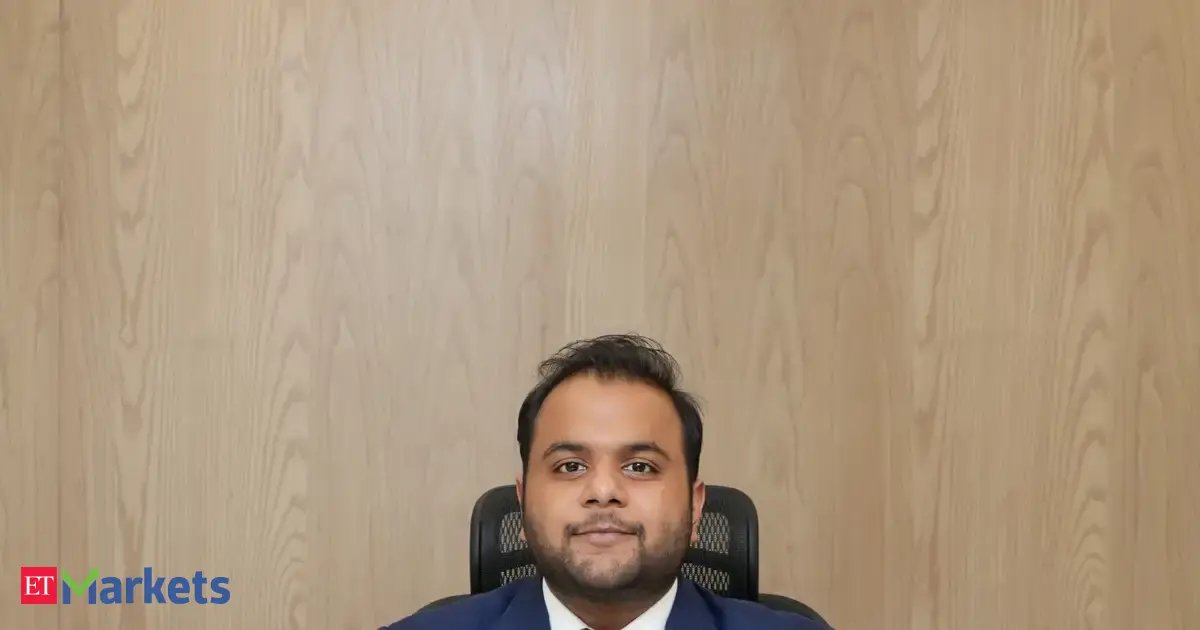
In this edition of ETMarkets Management Talk, Pranav Bansal, MD & CEO, Bansal Wire Industries, discusses the company’s 80-year journey, strategy to gain market share in a fragmented industry, expansion into speciality wires, adoption of AI-driven manufacturing, and why improving return on capital and reducing debt remain central to its long-term growth roadmap. Edited Excerpts –
Kshitij Anand: Eighty-year-old company, more than Rs 5,000 crore market cap. If you can tell us how the business has evolved over the past eight decades. I am sure the business has seen the ups and downs of the cycle. So, how has it really evolved over the years?
Pranav Bansal: We started as a trading company in 1938. That is how my grandfather started. We began with the lowest-cost, or the most commercial grade, of steel wires that were available, and gradually, every year, we grew in volume. In 1985 is when my father started the manufacturing side of things.

At that time, we were already one of the largest steel wire houses in the country—in Asia, in fact. We were selling about 4,000 to 5,000 tonnes of wires a month in 1985. That is what gave us the confidence to backward integrate and manufacture our own wires.
At that time, we were already facing a lot of challenges in getting the right quality, the right delivery, and the right quantity. So, it was very natural for us to start our own manufacturing.
We again started with the simplest product available at that time. I remember that in the first month, we produced 102 tonnes. Today, we produce about 50,000 tonnes. So yes, it has been a good journey since 1985 in manufacturing steel wires.
Of course, we started with the basic products, and then every five years we kept adding broader ranges, more products, more value-added products, and more technical products.
In 1985, we started with low-carbon HP wires; in 1991, we started galvanising; then came stainless steel, followed by the automotive side of the business. In 2001, we started high-carbon wires.
So, every year we have tried to enrich our portfolio, right up to a couple of years ago when we launched our new vertical, which was speciality wire.
The business has evolved well. We are a company that depends more on consistency. We focus on delivering consistent returns rather than one year of exceptional returns. So, the ecosystem has developed gradually, and that is who we are today.
Kshitij Anand: Good that you pointed out the performance of the stock and your preference for consistent returns. My next question is related to that. Over the past three months, the stock has seen quite a sharp rally. Is there something that the market was missing earlier, or is it simply reflecting the company’s performance?
Pranav Bansal: I think what we have been investing in over the last two to three years has now started showing results. That is definitely one of the main reasons. In the last two to three years, we were not able to expand very aggressively in terms of volumes.
However, over the last one to one-and-a-half years, this facility—the Dadri facility—has started generating good volumes. So, it is now showing up in the results.
Last year, as a company, we grew by almost 30-35% in terms of volumes. This year as well, we are targeting around 20% volume growth. So yes, all of those initiatives have started delivering results. Our speciality wire business has also come on track.
There was a fire at our facility in October, and it took us until the end of May to recover from that. From June 1, we resumed production. So yes, a lot of small and big developments have been happening here and there.
Kshitij Anand: In fact, the revenues have also grown from Rs 2,000-odd crore to now over Rs 4,000 crore. How is that shaping up the overall balance sheet? Has it further strengthened the balance sheet for you?
Pranav Bansal: Yes, we have grown in terms of revenues, but more than revenues, we operate on a cost-plus model. So, more than revenue, we look at volumes or tonnage.
That is the main focus area because, depending on the product, our revenue or pricing can be different. On the volume front as well, we have done well over the years. Even if you look at the last 20-30 years, we have grown at around 20% every year.
Kshitij Anand: In fact, the profit has doubled, if I am not wrong, from FY24 to FY25.
Pranav Bansal: Yes. Again, if you look at our long-term approach, whether over five years, 10 years or even 20 years, we have grown at around 20% every year. That is a standard we have been able to maintain, and that remains our target for the future as well.
Kshitij Anand: How is the revenue structured across the different business segments and the types of products that you manufacture? Is there any particular product that contributes the maximum revenue? Is there a pie chart for that?
Pranav Bansal: You can divide our product range into three verticals—low-carbon wires, high-carbon wires, and stainless steel wires. Again, this is more of a quantity split than a revenue split because revenue is not something that I track that aggressively.
These are the three verticals in which we operate. Low-carbon wires account for about 50-55% of the business. We are trying to increase that to around 60% of our total business because that is where we generate the best return on capital. So, it has always been a good business for us. On a per-tonne basis, the EBITDA may appear slightly lower, but in percentage terms, I think it is a very good business. Apart from low-carbon wires, around 25% of the business comes from high-carbon wires, while stainless steel wires contribute around 15-20%.
Kshitij Anand: Just for the benefit of our readers, could you explain what low-carbon and high-carbon wires mean in simple terms?
Pranav Bansal: Low-carbon wire is basically a product that is very ductile in nature and very soft. So, wherever you want to create different shapes using wire, low-carbon wire is generally used.
For example, cable armour is one of its main applications. In industrial cables, there is a steel coating on the outside to protect them from damage, and that is made using low-carbon wire.
Another common application is fencing, such as chain-link fencing, barbed wire, and similar products. So, products that require reasonable strength but greater ductility are made using low-carbon wire. It is available in both galvanised and black finishes, although galvanised low-carbon wire is generally preferred because it enhances the durability of the wire.
The second category is high-carbon wire. High-carbon wire is used in applications where the strength of the wire is critical. Any high-strength application generally uses high-carbon wire. For example, the springs used in two-wheelers and four-wheelers are made from high-carbon wire.
Control cables, brake cables, clutch cables, and window regulator cables are also made using high-carbon wire. Wire ropes used in elevators, bridges, and even ceiling suspension systems are manufactured from high-carbon wire.
These wires are designed to offer high strength and durability. They are available in galvanised as well as various other coated finishes, depending on the application and the required level of durability.
Stainless steel wire is used wherever the wire is exposed to the environment and rust prevention is a critical requirement. In such applications, customers are increasingly shifting from conventional steel to stainless steel. This is particularly visible in consumer durables, where people today are willing to spend more on products that offer greater durability. That is where stainless steel wire comes into the picture.
Kshitij Anand: Because it adds to the product’s life.
Pranav Bansal: Yes, it could be two or three times the price, but it also lasts 10 times longer than regular steel wire. So, stainless steel is basically a replacement for both regular high-carbon and low-carbon steel. That is a vertical that we are focusing on.
Kshitij Anand: From a broader perspective, how are your subsidiaries unlocking value for the parent company at this point in time?
Pranav Bansal: Which subsidiary are you referring to?
Kshitij Anand: Do you have subsidiaries as well?
Pranav Bansal: No. Whatever we do today is under Bansal Wire. We have one subsidiary called Bansal Steel & Power, which was basically a group company that we acquired before the IPO.
Kshitij Anand: And that is also contributing to the revenue?
Pranav Bansal: Yes. It manufactures all kinds of wires—stainless steel, low-carbon, and high-carbon—but that company is more focused on exports and the automotive market. I think that company has done well. Even today, we produce about one lakh tonnes annually. Around 30-35% of our total sales today come from that company.
Kshitij Anand: Could you also highlight the debt on the books and explain how the cash flow generation is shaping up?
Pranav Bansal: Yes. In terms of cash flow, the last one to one-and-a-half years have been good for us. We carried out certain pilots and trials, and we honestly changed the way we do business. We have transformed ourselves over the last one to one-and-a-half years.
If you look at our history, we have grown at around 20% annually, but we achieved that growth through debt. As a company, we had never generated cash earlier. However, in the last financial year itself, we generated about Rs 330 crore in cash, which was the first time we had ever generated cash of that magnitude. In fact, we generated more free cash flow than our EBITDA.
Our thought process was that there is only so much you can grow a company by taking on debt every time. Rather than relying on debt, we want to grow at 20% in a self-sustainable manner through our internal accruals, which is what we did last year. We are focused on improving our working capital.
We are reducing working capital across the board—in inventory, payables, and debtors. Everywhere, we are trying to optimise working capital, which will help improve returns on capital as well as generate free cash.
Our target for this year and the coming years is to generate enough free cash every year to reinvest in the business and continue growing at 20% without taking on additional debt. In fact, despite growing by 30% last year, we reduced our debt by about 7-8%.
Every year, we are trying to reduce our debt. Today, our total debt stands at about Rs 500 crore, which is around two times our EBITDA. Although we are at a very comfortable level, with a debt-to-equity ratio of less than 0.5, we still believe we can reduce it further while maintaining our growth.
Kshitij Anand: A 20% growth target is quite ambitious, and achieving it will require several initiatives. Could you explain how you plan to sustain that pace over the next five years? The point I am trying to make is that the external environment is evolving very quickly. Does that impact your business and your growth trajectory?
Pranav Bansal: We are fortunate to be part of such a large industry. Today, we are the second-largest—or perhaps now the largest—steel wire company in the country. Even after reaching this scale, our market share is still only around 7%.
Our thought process is simply to continue gaining market share, which is what we have been doing over the last eight years. Every year, the industry grows at about 7-8%, whereas we have grown at around 20%. That means we have consistently gained market share, and that remains our strategy going forward.
We believe that if we are at 7% market share and the industry grows by 7-8% annually, there is room for another Bansal Wire to emerge every year. That is how large the industry is. We want to capture the majority of the industry’s incremental growth.
As a company, we are primarily dependent on the domestic market. Exports account for only about 10% of our business. The variables associated with exports therefore impact only a small portion of our operations. As a result, we believe we are in a relatively stable and safe position.
For the next 20 years, or at least until we reach a market share of around 40-50%, I do not think we will have to worry too much about the overall industry’s growth because we still have ample room to expand.
Also, because we have been in this industry for such a long time, the entire ecosystem has evolved around us. Today, we are one of the most cost-effective companies in the industry. Moreover, the next largest company after us is less than one-fourth or one-third of our size, which gives us a significant advantage.
Kshitij Anand: You have given yourself that kind of headroom in terms of market share.
Pranav Bansal: So, I am way ahead of the competition. Tata and we together account for about 15% of the industry, and every other player is at least one-third or one-fourth of our size. That gives us a significant edge and several advantages. We have been able to achieve this over the years, and our track record gives us the confidence that we will be able to achieve it in the future as well.
Kshitij Anand: Given the way you have grown over the years and sustained that growth over the past eight decades, I think that is remarkable. To me, it speaks volumes about the culture and the systems that you have built because, ultimately, people at the top will keep changing, but the culture survives. If the culture is strong, it benefits the organisation and helps the tree continue to grow.
Pranav Bansal: Oh yes. I would say we focus a lot on building our culture, and even more on maintaining it. When you grow at 20-30%, so many people join and so many people leave. It is very important for the culture to remain intact and for everyone to understand who we are and what we do.
Kshitij Anand: Absolutely, because the culture remains the same even though people at the top keep changing. Looking ahead over the next five years, what should investors track—revenue, ROCE, or EBITDA? Which metric should they focus on?
Pranav Bansal: Absolute EBITDA is what we are most concerned about because that ultimately drives returns on our capital. So yes, investors should look at EBITDA along with ROC.
Our target for ROC is 25%. We are gearing up to achieve that, and we are confident we will get there. We have undertaken several initiatives over the last one to one-and-a-half years.
On the cash flow front, I think we have actually exceeded our target. Our target for last year was Rs 250 crore, but we generated Rs 330 crore. This year, our target is Rs 350 crore, and we expect to do even better. In terms of ROC as well, it has now started improving, and we will not stop until we reach 25%.
Kshitij Anand: Now that you have spoken about return on capital employed, what is the level of capital employed today? How has that changed over the past few years?
Pranav Bansal: Today, we are operating at an ROC of about 15-16%, and from here we want to reach 25%. Last year, in fact, we reduced our capital intensity by around 30%.
We achieved nearly 30% volume growth while keeping our overall capital base almost unchanged.
Going forward, our thought process is to reduce our total capital requirement by around 10-15% every year. Wherever we have investments in inventory and other areas, we are trying to optimise them.
We are working to reduce working capital across the board while continuing with the regular expansion required to support our 20% annual growth.
So, while we continue to expand, our total capital should not increase. In fact, it should come down, while our EBITDA continues to increase every year.
Kshitij Anand: One term that has gained significant momentum recently is AI. Are you also using AI or technology in any way to improve productivity or strengthen your systems?
Pranav Bansal: Oh yes, absolutely. I believe there is an application for technology and AI everywhere. Even though we operate in a core manufacturing industry, AI can play a major role in improving processes, structures, and systems.
We have already started integrating AI and technology across several areas wherever it can improve efficiency. Today, we are investing in smart machines where all the data from our equipment across the plant will be available at our fingertips.
That kind of analysis has already been helping us, and with greater integration, it will help us even more.
(Disclaimer: Recommendations, suggestions, views, and opinions given by experts are their own. These do not represent the views of the Economic Times)