Is no-cost EMI always free? The catch buyers should know before opting for it while shopping online
Online shopping deals and instant discounts have made it easier than ever to buy gadgets and appliances throughout the year. No-cost EMI offers add to the appeal by allowing buyers to spread payments over several months, with credit companies advertising the option as “no interest cost” involved.
However, zero-cost EMI does not always mean a purchase comes without extra costs. This is particularly relevant now because festive deals on all major e-commerce platforms such as Myntra, Amazon and Flipkart are live.
Many shoppers wait for these sales to buy appliances and other high-value items at steep discounts. However, an immediate cash outgo is not always preferred, making the “no-interest” tag on EMIs seem attractive.
How does a no-cost EMI scheme work?
One common option is to forego the discount and instead pay this amount to the bank or financial institution to cover the interest cost, according to a blog post by credit bureau CRIF High Mark.
In the second, the interest cost is added to the product’s price, meaning the buyer may end up paying more than they otherwise would have, the blog added.
— When discounts equal interest:
Retailers often offer ‘no-cost EMI’ by offering discounts equivalent to the total amount of interest to be paid.
For example, if you want to purchase a smartphone that costs ₹30,000 but is available for ₹25,500 with an upfront payment, the ₹4,500 discount may be unavailable to buyers who are opting for the no-cost EMI option.
The buyer effectively pays the original price in instalments, while the forgone discount covers the interest cost payable to the financier.
— When the interest amount is added to the product price:
Another way in which such schemes operate is by adding the interest amount to the price of the product that you want to purchase.
Let’s take another example where a product costs ₹15,000 but is offered at ₹17,250 under a no-cost EMI plan, the ₹2,250 interest may already be added to its price. On a three-month EMI plan, you would pay ₹5,750 per month. In some cases, the remaining cost may instead be charged as a processing fee.
Hidden costs you must be aware of
A person can still opt for a no-cost EMI plan if they want to buy an expensive product that is beyond their current budget. They can also do this if they seek to build their credit score by availing a short consumer durable loan.
However, this does not mean buyers should overlook additional costs, which may not always be immediately apparent. According to the blog post, here are the key factors that buyers should watch out for:
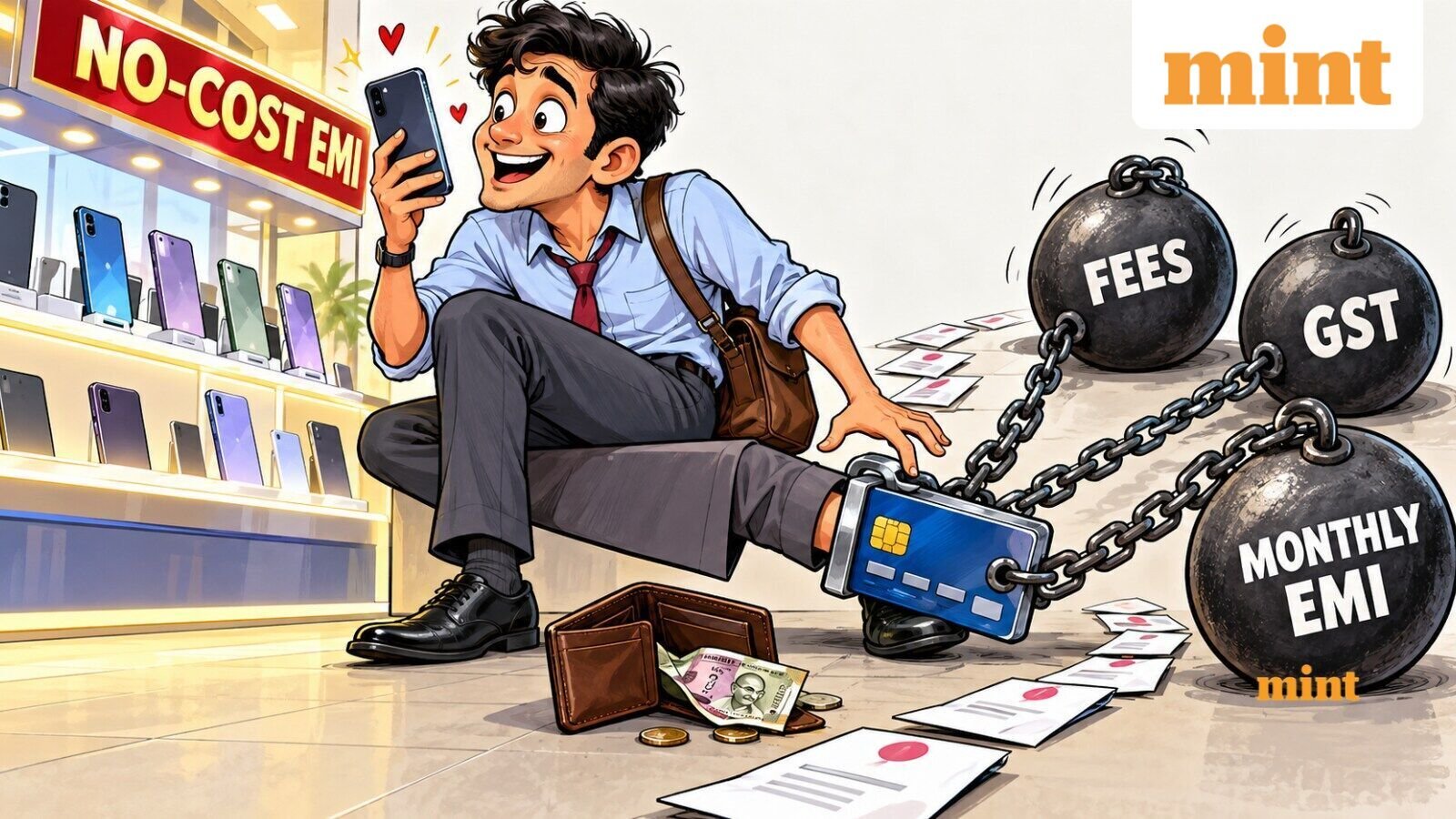
- Processing fees and additional charges: While the EMI may appear interest-free at first, processing fees, GST on fees, or documentation charges may inflate your final purchase amount.
- Credit limit blockage: When no cost EMI is availed through a credit card, the full transaction value gets blocked against your credit limit. This reduces your available credit and may impact future loans.
- Impact on credit score: Missing even a single EMI payment can negatively affect your credit score. Since no cost EMIs are still loans, repayment discipline is critical to avoid long-term financial consequences.
Therefore, if you opt for a loan on the no-cost EMI option, you should also read the terms and conditions about a down payment and processing fees, if any, the credit bureau warned in its post.