₹5 lakh emergency fund: Mutual fund, bank FD, liquid funds – where to keep money for best returns, fast withdrawals
The role of an emergency fund is to provide immediate financial support during a crisis. It should be readily accessible when unexpected expenses arise, such as medical bills, accidents, job loss or other financial emergencies.
Building an emergency fund requires careful planning, particularly when balancing liquidity, capital safety and reasonable returns. For a ₹5 lakh emergency fund, choosing the right mix of financial products is essential to ensure the money remains accessible when needed.
Savings accounts, bank fixed deposits (FDs) and liquid mutual funds serve different purposes. Understanding their features, potential returns, withdrawal timelines, and associated risks can help individuals make informed decisions about how to allocate their savings.
Bank FD vs liquid funds vs savings account
|
Option |
Approximate annual return |
Withdrawal speed |
Key consideration |
|---|---|---|---|
| Savings account | 2.5%–4% | Immediate, usually 24/7 | Best for urgent expenses |
| Bank FD | 5.5%–8.5% | Premature withdrawal may be possible | Penalties and applicable terms can reduce returns |
| Liquid mutual funds | 5.5%–7% | Usually within one working day; redemption rules apply | Market-linked returns are not guaranteed, and capital is not risk-free |
Note: These are indicative annual return ranges for illustration only, not guaranteed or live quotes as of 9 October 2026. Actual savings account and FD rates vary by bank, tenure and customer category. Liquid fund returns fluctuate with market conditions and are not assured.
What should emergency fund planners not ignore?
Bank FDs can offer higher returns than savings accounts, depending on the bank and tenure. For instance, several prominent small finance banks offer senior citizens interest rates over 8% on select FD tenures.
Liquid mutual funds, meanwhile, invest primarily in short-term debt and money market instruments, making them relatively low-risk investment options. However, they are not entirely risk-free. Returns can fluctuate, and redemption proceeds may take time to reach the investor’s bank account.
How to allocate ₹5 lakh for emergencies?
Adhil Shetty, CEO of BankBazaar, highlighted the importance of balancing liquidity, capital safety and returns.
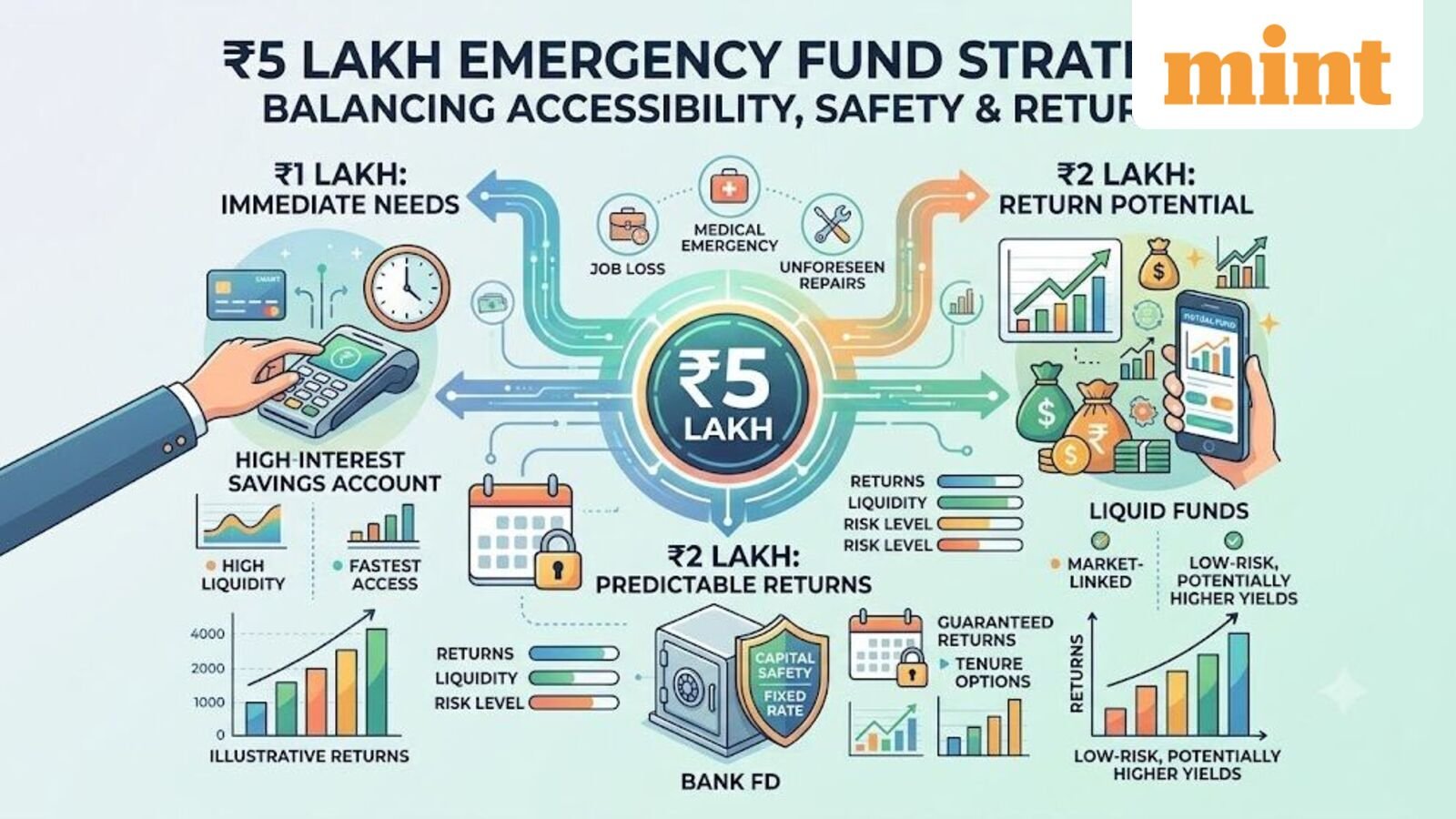
“An emergency fund should prioritise liquidity and capital safety over returns. Savings accounts, bank FDs and liquid funds are among the options you can consider. For illustration, a ₹5 lakh fund could include ₹1 lakh in savings for immediate needs, ₹2 lakh in an FD for predictable returns and ₹2 lakh in a liquid for easy access and return potential. The allocation, however, should be based on your monthly expenses and income stability, while ensuring you can access the money when needed.”
This is just one example of how to allocate funds. This allocation offers a balance between immediate financial needs and return potential. Furthermore, the diversification of ₹5 lakh can vary across individuals depending on their current financial situation and long-term economic vision.
For example, someone with higher debt and irregular income may need to keep a large portion in a savings account or sweep-in FD. The situation may be slightly different for someone with no debt and a better financial situation.
An emergency fund is not designed to maximise returns or provide growth. That is why one should keep enough money instantly accessible, check withdrawal conditions and avoid exposing essential funds to unnecessary market risk. Seeking professional guidance from a certified financial advisor when in doubt is the best way to address financial problems. Review the allocation as your expenses and financial circumstances change.
Disclaimer: This article is for informational purposes only and is not investment advice. Returns on liquid mutual funds are market-linked and not guaranteed. Bank FD terms, premature withdrawal penalties and deposit insurance conditions vary. Consult a SEBI-registered investment adviser before making investment decisions.