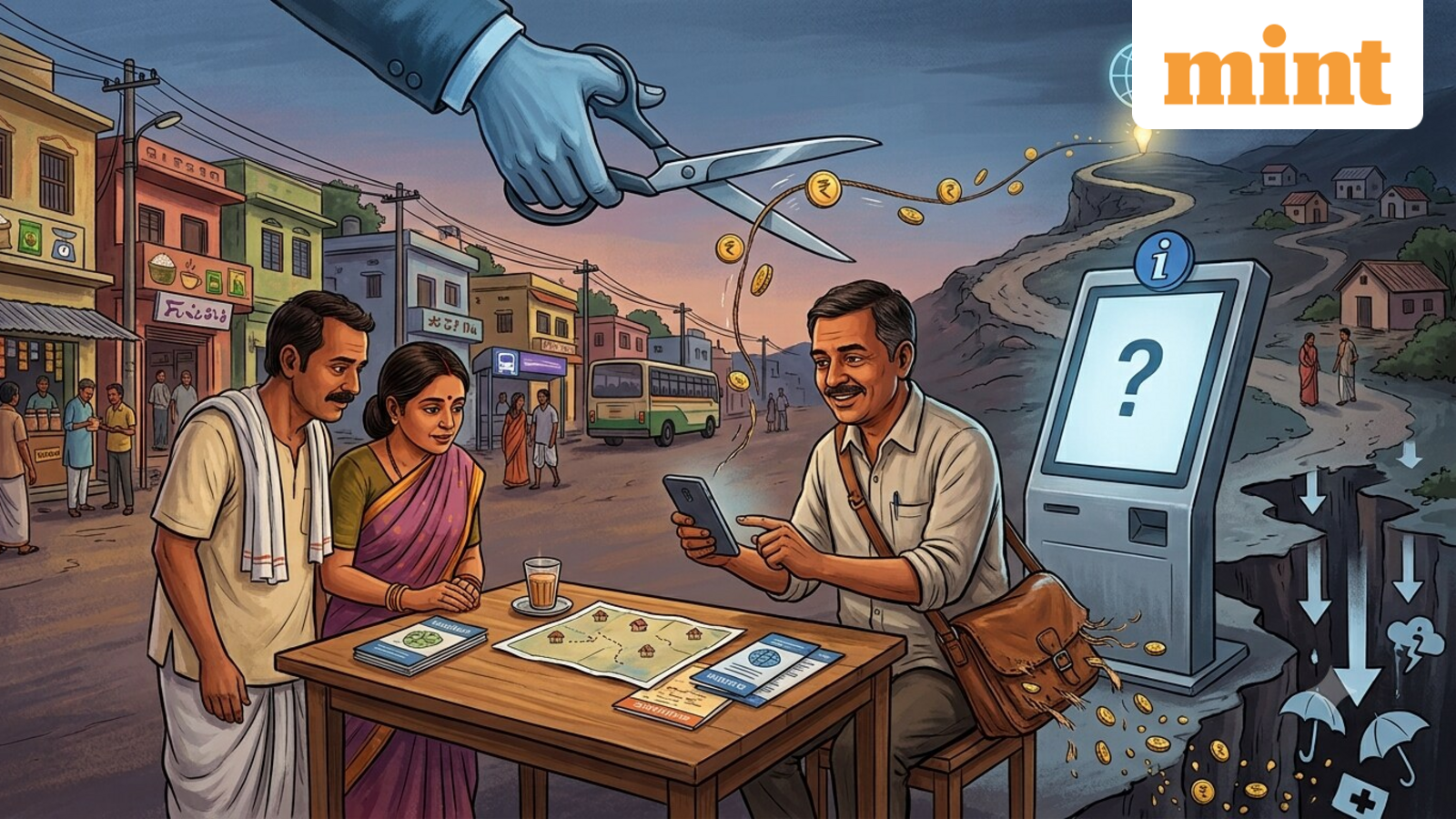
IRDAI insurance commission proposal: Could lower distributor payouts make insurance harder to access in smaller towns?
IRDAI has proposed changes to insurance commission structures in its latest consultation paper, including revised limits on distributor remuneration and an additional allowance for business from underserved areas. The proposed changes have raised concerns over whether lower payouts could make it harder for insurers and intermediaries to economically serve customers in Tier 2, Tier 3 and rural markets.
For first-time insurance buyers in smaller towns, the issue goes beyond the price of a policy. Local advisors often help customers compare products, understand exclusions and waiting periods, complete documentation and navigate claims. If lower payouts make smaller-ticket policies less viable for distributors, it could eventually affect the availability of such assisted insurance services in markets where insurance penetration is still developing.
Why smaller-town insurance distribution could be hit harder
The effort involved in selling an insurance policy does not necessarily fall with the premium. A first-time buyer can require multiple conversations and quotes before purchasing. Similarly, a motor policy involves several steps, including documentation, issuance, renewals and endorsements.
An insurance broker, speaking on condition of anonymity, said a ₹3,000 two-wheeler policy and a ₹30,000 family floater can require broadly similar effort from a distributor.
“The effort behind a small-town sale is fixed,” the broker said.
If the commission percentage is significantly reduced, the smaller-ticket policy is therefore more likely to stop covering the cost of servicing the customer, the broker said.
The impact could be particularly relevant for smaller towns, where policy premiums are generally lower than in metros. However, the broker said customers in these markets are also upgrading their insurance coverage. According to data from the broker’s platform, health insurance premiums per policy in Tier 2 and Tier 3 cities have increased by more than 70% since 2020.
This makes retaining the local distribution network important, the broker said, as customers gradually move towards higher-value insurance products.
How much could distributor earnings fall?
The broker estimates that the proposed commission structure could materially reduce distributor earnings on some policies.
For every ₹100 of new-business premium generated in motor insurance, a retail distributor currently earns around ₹36-38, according to the broker. Under the proposed structure, this could fall to about ₹5-7.
In health insurance, the distributor currently earns around ₹30-33 for every ₹100 of new-business premium, while the post-change earning could be around ₹15, the broker estimated.
The impact can be significant for individual advisors in smaller towns. According to the broker, an advisor in a Tier 3 town earning ₹8,000-15,000 a month from a mix of two-wheeler, car and family health policies could see earnings fall to around ₹3,000-6,000 under the proposed structure.
Travel, phone, licensing and other operating costs, however, do not fall proportionately with commissions, the broker said.
The consultation paper’s proposed additional allowance for underserved areas could partly address this concern. However, the broker said the allowance needs to be calibrated to the actual cost of acquiring and servicing customers in smaller towns.
Can digital insurance replace local advisors?
Lower distribution costs could encourage insurers and intermediaries to rely more heavily on digital and self-service channels. But the broker argues that technology is more likely to complement advisors than replace them, particularly for first-time insurance buyers.
The broker said its advisors already use technology to compare multiple motor and health insurance plans, issue policies digitally and communicate with customers through platforms such as WhatsApp.
This model is effectively “assisted digital” distribution. Technology handles comparison and paperwork, while the advisor explains the product and provides follow-up support.
For a first-time health insurance buyer in a smaller town, questions about waiting periods, coverage for parents, exclusions and claims can make human assistance particularly important.
The broker said its experience suggests that customers who buy insurance online without assistance are more likely to be urban, salaried and already familiar with insurance, while first-time buyers in smaller towns may still depend on local advisors.
What could keep small-town distribution viable?
The broker said insurers and intermediaries could take several steps to offset the impact of lower commissions.
First, the additional allowance for underserved areas should reflect the actual cost of acquiring customers in Tier 2 and Tier 3 locations rather than simply applying a percentage to an existing commission cap.
Second, commissions could be restructured rather than simply reduced. The broker suggested paying commissions over the life of a policy and clawing them back when a policy lapses early. This could encourage advisors to focus on suitable products and policy persistency.
Third, post-sale services such as claims assistance should also be considered when assessing distribution costs.
The larger question is whether lower acquisition costs can be achieved without weakening the human distribution network that helps first-time customers buy insurance.
For smaller towns, the outcome may depend on whether technology can make advisors more productive while keeping their economics viable, rather than simply replacing them with self-service channels.