RBI hikes repo rate by 25bps: What it means and how it impacts you | All FAQs answered
On 7 October, the Reserve Bank of India announced a 25-basis-point repo rate hike. It can affect loans, deposits and household budgets. Here is what such an increase means for you.
RBI hikes repo rate: FAQs answered
What is the repo rate?
The repo rate is the interest the RBI charges banks for short-term borrowing. Banks approach the RBI when they need funds for daily operations or to meet customer demands.
What does a 25 basis point hike mean?
One basis point equals 0.01 percentage point. Therefore, 25 basis points means an increase of 0.25 percentage points.
Why does RBI increase the repo rate?
RBI raises rates to help control inflation, which means prices are rising. Higher borrowing costs discourage new loans and reduce spending. Lower demand can help slow price increases.
How does this affect banks?
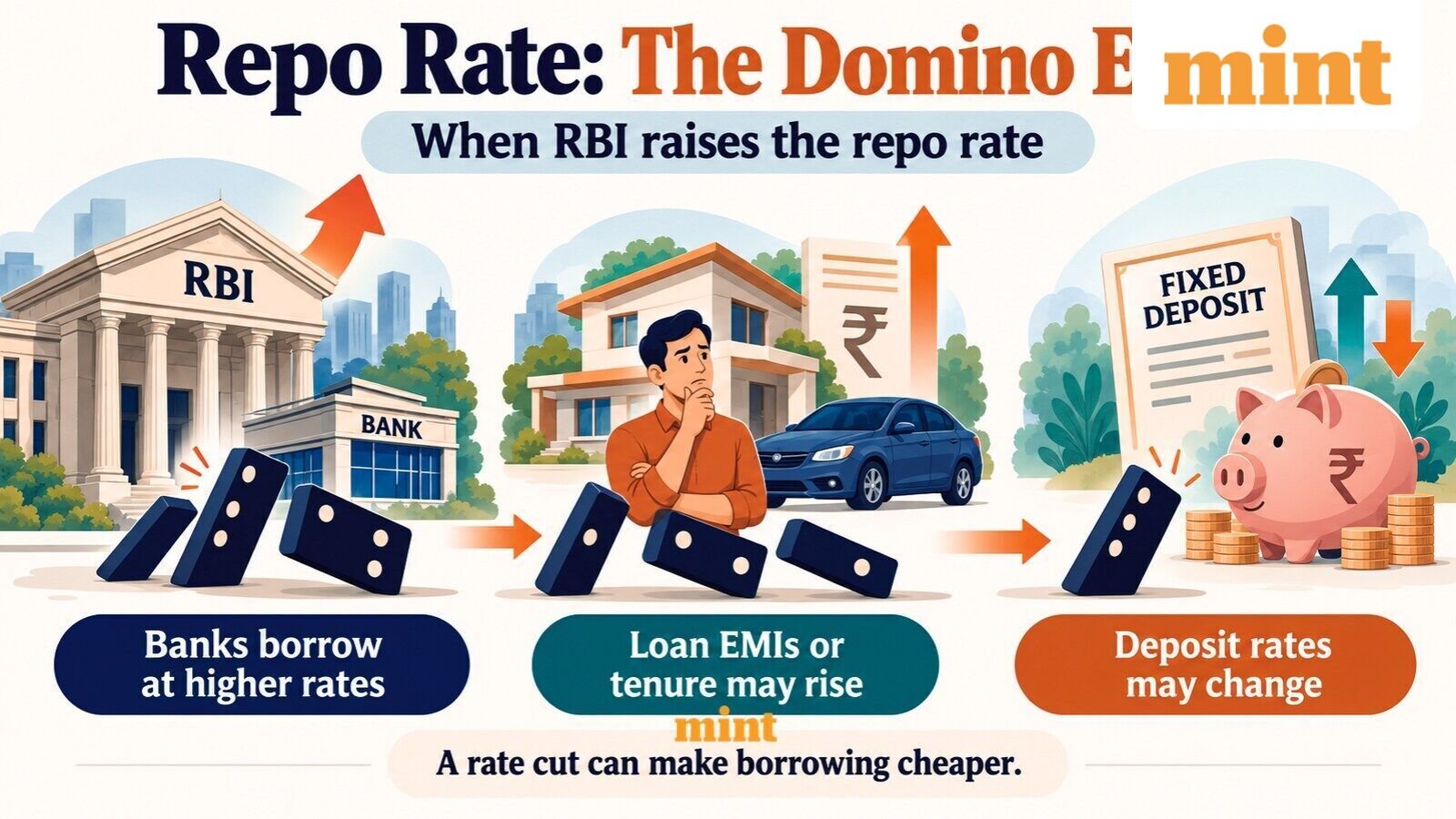
Banks pay more when borrowing from the RBI. They may pass these higher costs on to customers by increasing loan interest rates.
Will my home loan EMI increase?
Floating-rate loans linked to an external benchmark can become costlier. Your monthly instalment (EMI) or repayment period may increase. The impact depends on how your lender adjusts the loan.
What about car loans and personal loans?
Floating-rate car loans and personal loans linked to an external benchmark can also become costlier. Higher interest can increase monthly repayments or extend the repayment period.
Will loan repayments change immediately?
A repo rate increase does not necessarily change your repayment immediately. Linked floating-rate loans can reflect higher rates later.
Does a 25 basis point hike mean EMIs rise by 25%?
No. It means the repo rate rises by 0.25 percentage points. Your EMI change depends on how the higher interest rate affects your loan.
Can fixed deposit returns improve?
Banks may adjust fixed deposit rates when the repo rate changes. A hike can lead to higher deposit rates, but increases are not guaranteed.
Will savings account interest also change?
Banks may adjust savings account rates in response to changes in funding costs. However, every bank may not make the same adjustment.
How can the hike affect businesses and jobs?
Costlier loans can discourage businesses from borrowing for expansion. RBI balances inflation control with the need to support economic growth.
What happens when RBI cuts the repo rate?
Borrowing becomes cheaper, encouraging spending and business expansion. Floating-rate loan repayments may fall as lenders pass on lower rates.
Why should I follow RBI announcements?
They help you anticipate possible changes in loan repayments and deposit returns. This can help you plan your household budget.