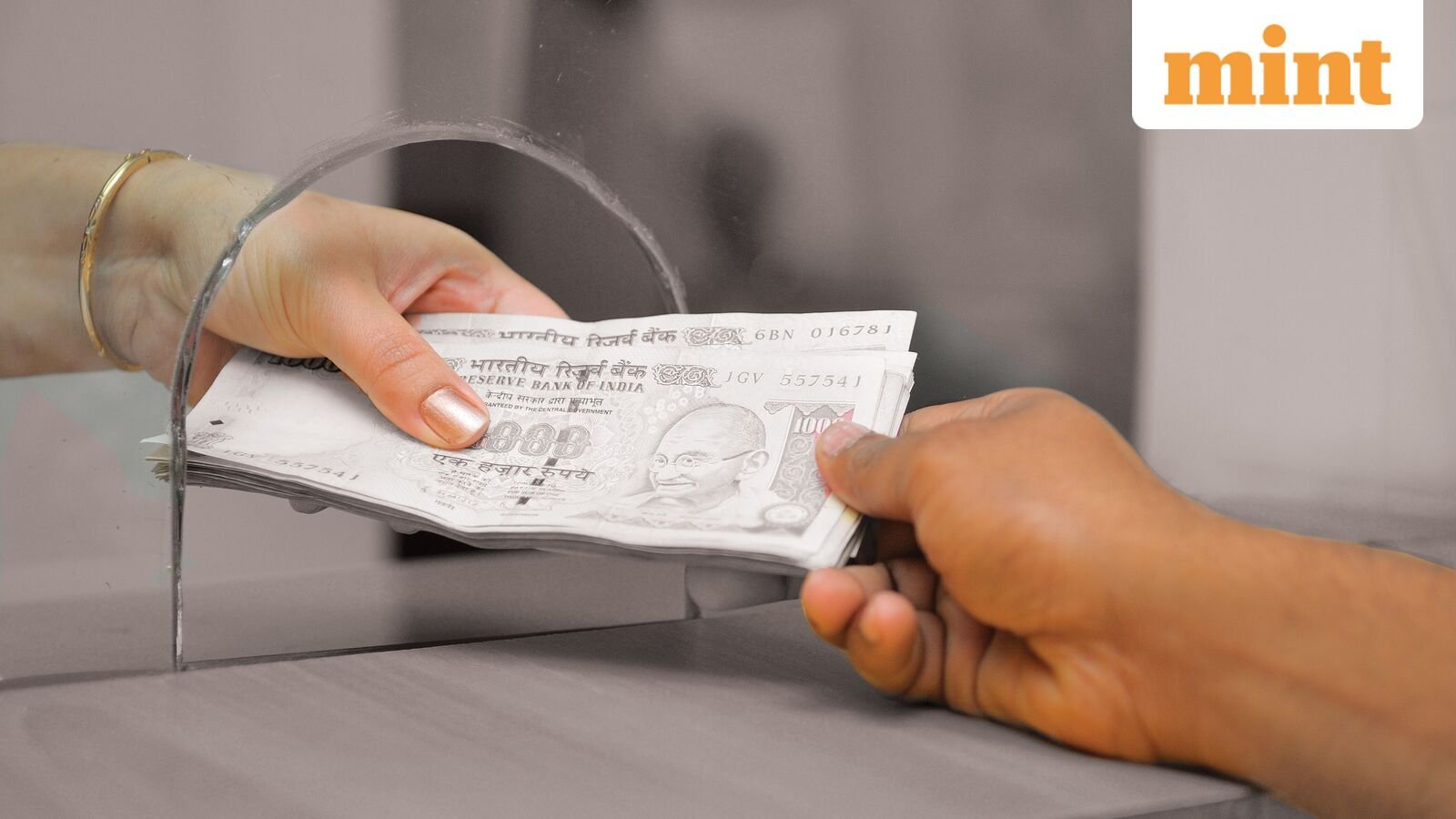
Reverse migration? Is cash finding its way back as currency with public surges to ₹41.8 lakh crore?
Cash in public hands is increasing over the past five years, according to data analysis by The Hindu. It further found that the margin between cash and UPI transactions is decreasing and charges on online transactions could act as a nudge towards more cash focused economy for customers.
Earlier this month, Parliament passed the Taxation and Other Laws (Amendment) Bill, 2026, which affects the Payment and Settlement Systems Act, 2007 and allows the government to bring back merchant discount rate (MDR) charges on transactions conducted through the unified payments interface (UPI) system.
The shift in legislation could lead to the scrapping of the zero MDR provision under Section 10A and allow banks and payments system providers (PSPs) to likely impose charges on high value UPI transactions.
More cash in public hands: Why is this significant?
However, even as the government debates MDR on big-ticket UPI transactions, The Hindu reported that growth in value of such operations has been on the decline over the past five years, while cash in public hands increased over the same period. It further noted that growth of UPI transactions is faster than growth of cash in hand, but the margin is increasingly narrower.
According to the report, growth of cash in public hands (money in circulation, minus that sitting in banks) reached 17% during FY21 amid the pandemic and fell till FY24 to around 4%. However, for FY25, this grew to 6.5%, in FY26 to 12% and in FY27, as of 31 July, was at ₹41.8 lakh crore — about 13% higher on a year-on-year (YoY) basis, it added.
Meanwhile, UPI in FY20 grew 133%, in FY21 grew 95%, in FY22 jumped 105% and in FY26 rose 20.3%. FY27 has seen further slowdown, at 18.7% growth till August, when compared YoY.
On pure comparison, 18.7% growth for UPI compared to 13% growth for cash is high difference. But the report further said that while UPI enjoys nil charges at present, similar to cash transactions, if this changes, public habits might shift more decisively towards cash. While the government has assured that MDR will only be applicable to merchants, concerns have been raised that the cost would be passed on to customers, impacting them as well.
Merchant Discount Rates, concerns: Explained
Regulated by the Reserve Bank of India, MDR is the fee businesses pay to banks and PSPs to process online transactions made by customers. Since 2020, this has stood at 0% for UPI and RuPay debit card transactions as the government sought to promote digital payments.
In practice, it works like this: A customer pays ₹1,000 for an item using credit or debit card, of this, a small percentage is deducted and split between the banks on the two ends, while the merchant receives the net amount. For UPI transactions at present, merchants receive the full transaction amount.
The Payments Council of India (PCI) has clarified that UPI has been free since launch in 2016 and customers can continue instant digital payments without charges.
It added that discussion around UPI charges has risen now as it evolves from a new payment platform into the world’s largest real-time payment system and concerns crop up over how to sustainably support the infrastructure that enables billions of secure transactions every month, while continuing to ensure that consumers and small merchants remain protected.