Private Colleges Cut Tuition Prices to Boost Enrollment
(Bloomberg) — A reckoning for college tuition prices is here.
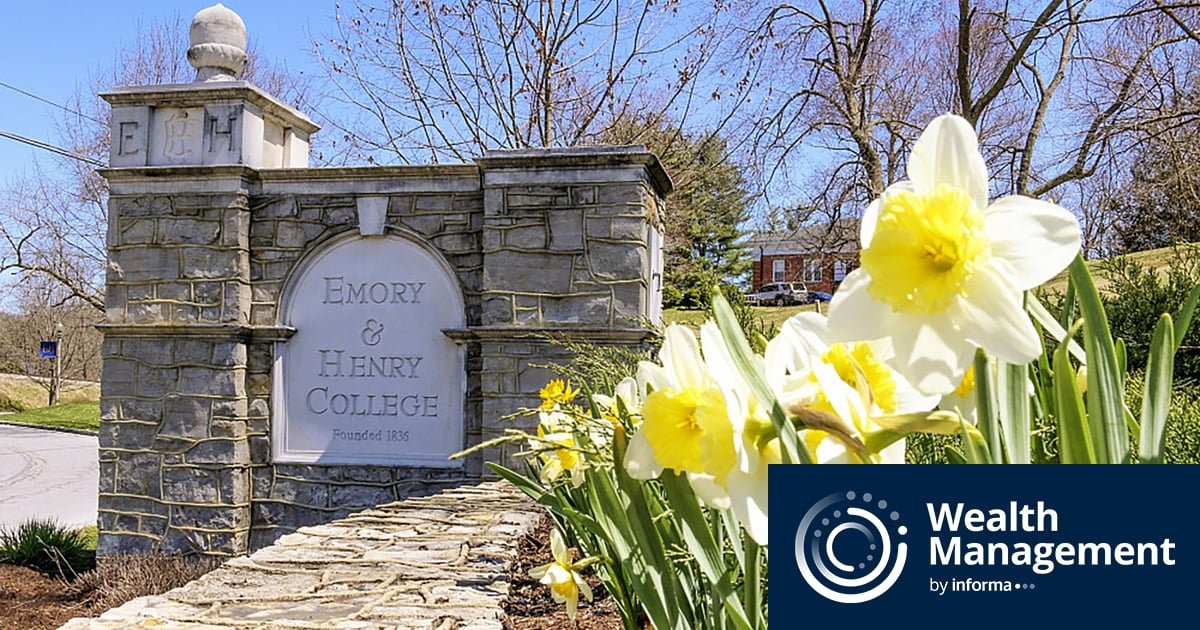
For years, Emory & Henry University offered generous merit scholarships of up to $23,000 to woo students wary of its near-$40,000 price tag. The discounts helped the private college in rural Virginia compete against well-regarded public institutions with lower advertised prices.
But this fall, the liberal arts institution slashed tuition in half to $19,990, part of a movement of small private colleges choosing to cut prices outright to try to boost enrollment. It’s a shift away from the rampant game of offering steep discounts on higher sticker prices, long used to attract students eager for savings.
“We just knew that we couldn’t be a school with a price tag of $40,000 and attract students, particularly those in the socioeconomic groups that are in our region,” Emory & Henry University President Lou Fincher said. “We couldn’t continue on that same path.”
At least five colleges have announced plans to cut tuition in fall 2027, including Concordia University, St. Paul, which lowered prices in 2013 and is planning another $5,500 cut. Oklahoma’s University of Tulsa is slashing tuition and fees to $25,000 from $54,000 starting next year, a step that officials say will make it the “most affordable private research university” in the American heartland.
US colleges are grappling with high costs and customers — 18-year-olds and their parents — who are skeptical of the payoff for a four-year degree with a bill that can approach $400,000. As the number of high school graduates declines, higher-ed leaders are taking more drastic measures to attract new students.
Even without tuition cuts, the reality is that most students typically don’t pay the listed price. Schools can also use merit scholarships as a “pricing tool” to encourage higher-income students to attend, a report by the Brookings Institution noted.
A survey of more than 250 private, nonprofit universities estimated that the schools provided enough aid to discount tuition and fees by an average of 57% for first-time students in the last academic year.
Whether to slash the published tuition price tag or not is on the minds of almost every private college’s leadership team, said Robert Bielby, a managing director at Huron, a consulting firm that advises universities.
“The question is, when do we hit the tipping point where it seems like it’s a viable pathway forward?” he said. “At some point, we’re probably going to see a full-scale reset in the industry. We’re just not there yet.”
There’s still no guarantee lower prices will be enough to help enrollment. A 2022 study found minimal evidence that tuition resets, when the price is lowered by at least 5%, resulted in long-term enrollment increases. A cognitive bias favors higher tuition when it’s paired with larger awards to defray costs.
“People really like scholarships and getting money,” Bielby said. “People like to go home to grandma and tell them they got a $25,000 scholarship.”
Because of the lower price, universities also get less incremental revenue from annual increases to tuition, usually around 3% or 4% each year, he said. That can add to budget strains.
The University of Tulsa, one of the schools slashing tuition, is expecting freshmen and transfer student enrollment to increase by 10% to 12% after the reset, according to an emailed statement.
The school needs the jump. Moody’s Ratings cut the school to junk in August, citing “massive structural deficits.”
Tuition-Cut Playbook
Leaders at Concordia University, St. Paul, have been preaching the merits of tuition resets to other college leaders after the institution cut its own price 33% starting in the 2013 school year. Since then, traditional undergraduate enrollment has climbed more than 70%. In September, the university announced it would cut tuition again by $5,500.
Other schools considering tuition resets have been turning to Concordia for advice.
Provost Eric LaMott meets with college officials in Zoom meetings and occasionally in person to walk them through how Concordia did it.
“When students and families see that high sticker price and then they don’t apply, that’s not great for the students and it’s not great for institutions,” LaMott said.
Carroll College, currently the most expensive college in Montana, consulted with Concordia about its reset. Carroll uses aid to discount its sticker price by about 66%. But it’s going to slash tuition 40% to $26,800 next year to shed that distinction.
“It’s a more honest look at what that true cost will be,” said Carroll President Jennifer Glowienka, who took office this year. “They’ll be looking at institutions like ours and seeing that that is a realistic pathway for them to receive a college education.”
Like Buying a Car
At Emory & Henry, Fincher’s team is trying to educate students and parents about the new $19,990 tuition. University-provided merit scholarships are now $5,000 or less. It’s also covering the full cost of tuition for Virginia students with a household income below $85,000, and based on certain thresholds.
Fincher acknowledged that many students and parents approach college like buying a car: they want to get a really good deal.
“No one wants to pay sticker price when you drive off the parking lot,” she said.
This fall, the lower-tuition approach appears to be panning out for Emory & Henry, which added 100 more new students than last year. It’s part of a bigger strategy. The school is also bringing in more commuter students and focusing more recruitment efforts on local high schools.
“What you see is a lot more student energy on campus,” Fincher said. “It’s hard to describe what having 100 more students on campus can do.”