Indian investors embrace crypto, overseas stocks: Is the diversification formula changing?
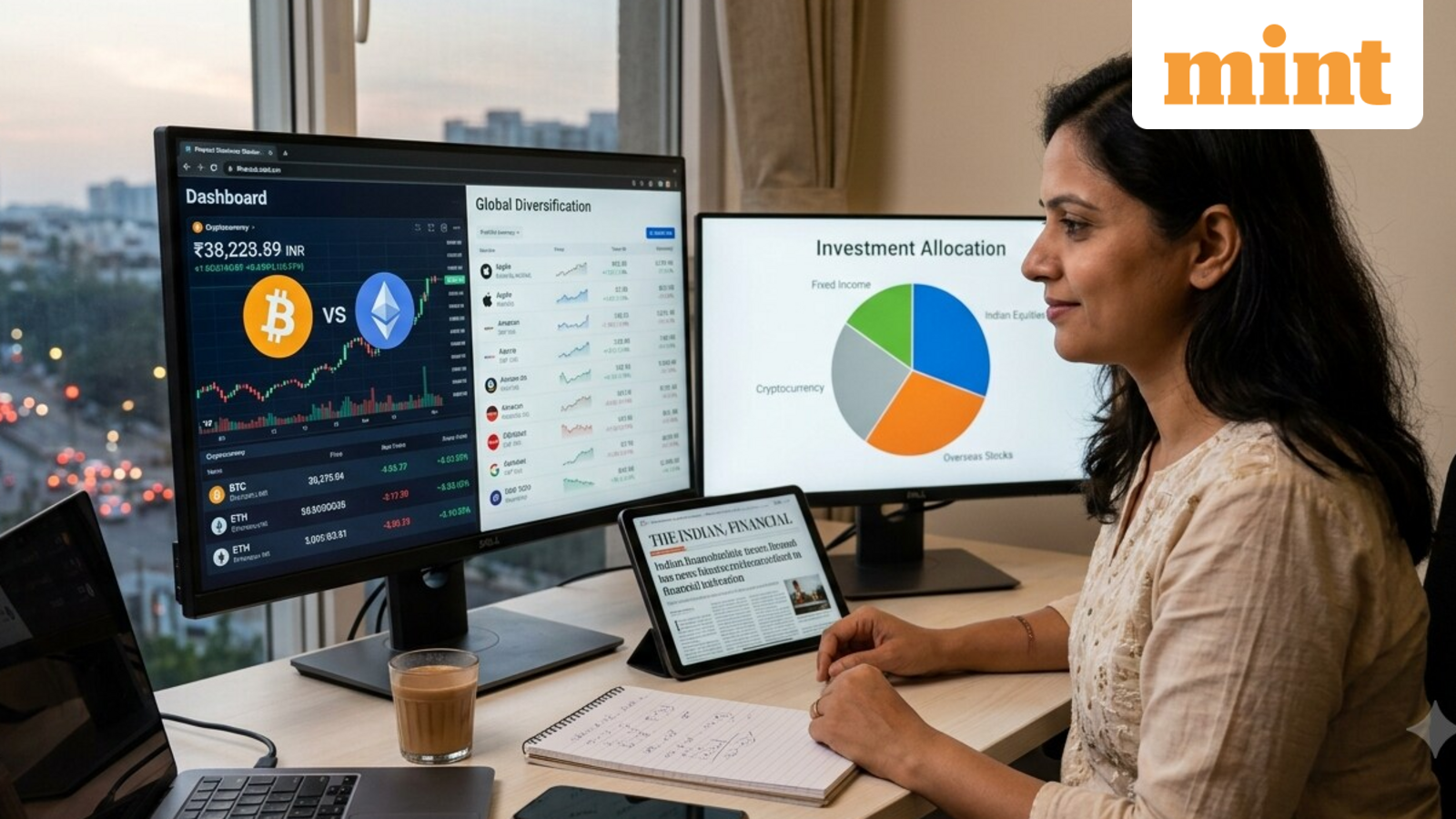
Indian investors are gradually looking beyond traditional avenues such as fixed deposits, mutual funds, and domestic equities, and adding overseas stocks and crypto to their broader portfolios. The trends show how the diversification formula is evolving amid global opportunities and new investment products.
Shift is not about chasing higher returns
Bhavin Patel, Co-Founder and CEO of LenDenClub and Vartis Platforms, said the change is not simply about investors chasing higher returns. It also reflects a greater willingness to understand how different asset classes fit into their financial goals.
“The way Indians invest is changing. Earlier, for most people, the choices were largely around stocks, mutual funds or fixed deposits. Today, investors are becoming more open to exploring different asset classes and understanding how they can fit into their overall financial goals,” Patel said.
Apart from crypto and overseas stocks, P2P lending is part of this broader shift. In the case of P2P lending, retail investors can participate in India’s credit economy through regulated platforms.
“As the category matures, investors will also become more discerning. The focus will increasingly move from simply looking at returns to understanding the underlying credit, diversification and how risk is managed,” Patel said.
Overseas investing gains traction, younger investors join the shift
The shift towards overseas investing shows how Indian portfolios are becoming more globally diversified. Here’s what the data shows:
- Avinash Shekhar, Co-Founder and CEO of Pi42, pointed to the $456.7 million Indians remitted towards overseas equity and debt in June as an indication that investors are looking beyond traditional domestic avenues.
- The investor profile is changing too. Pi42’s analysis of 2 lakh crypto futures traders found that 61% of new traders were between 18 and 25, suggesting that younger, digitally native investors are increasingly engaging with technology-led investment products, Shekhar said.
So are investors discarding traditional financial assets?
However, the shift does not necessarily mean traditional assets are being replaced.
“Indian investors are increasingly moving from a savings first mindset to a portfolio diversification mindset,” Shekhar said, adding that different asset classes can serve different objectives, including stability, growth, liquidity and global exposure.
Crypto, in particular, offers access to a global, 24/7 digital market, while overseas equities can provide exposure to companies and sectors that may not be available in India.
The next phase, both executives said, is likely to centre on informed allocation rather than simply chasing returns. Investors will need to assess risk, liquidity, regulation, taxation and diversification before deciding how much of their portfolio, if any, should be allocated to newer asset classes.