Buying term insurance in your 20s vs 30s vs 40s: How age, health and family responsibilities affect your cover needs
Buying term insurance early can reduce the premium for the same level of cover, but age is not the only factor that determines how much a policyholder pays. Health, lifestyle, occupation, policy term and the amount of cover also affect the premium.
For a ₹1 crore term insurance cover with a 30-year policy term, the annual premium under Aditya Birla Sun Life Insurance’s Salaried Term Plan is ₹8,064 at age 25, ₹10,464 at 30, ₹14,784 at 35 and ₹21,792 at 40, according to Kamlesh Rao, MD & CEO, Aditya Birla Sun Life Insurance. At 40, the premium is therefore about 2.7 times that at 25 for the same cover and policy term.
But whether someone should buy term insurance in their 20s depends on their financial responsibilities as much as their age.
Term insurance gets costlier as age at entry rises
Age is an important factor because insurers assess the risk of providing cover over the policy term. The premium difference can become substantial as the age at which a person buys the policy increases.
Rishi Mathur, chief marketing officer and chief distribution officer, alternate channels, Canara HSBC Life Insurance, said the cost of delaying term insurance goes beyond the premium. A healthy non-smoker buying a ₹1 crore cover till age 60 at 40 could pay significantly more annually than someone buying at 25, while getting fewer years of protection.
Health can further widen the gap. Conditions such as high blood pressure, diabetes and weight-related issues can emerge with age and may affect underwriting. Smoking and other lifestyle factors can also result in additional premium or affect the terms on which cover is offered.
Rao said health and medical history, lifestyle, occupation, cover amount and policy term can all influence premiums. Existing medical conditions may result in higher premiums depending on their severity and the insurer’s assessment of the associated risk.
This also means two people of the same age may not necessarily pay the same premium.
Buying early can lock in a lower premium, but need matters
For a young person with no dependants, buying a large term cover immediately may not always be necessary. If there are no major liabilities or people dependent on their income, the immediate need for substantial life cover can be limited.
However, buying earlier can allow an individual to secure protection when they are younger and potentially healthier. The premium is determined when the policy is purchased, subject to the policy’s terms.
“That is why buying in your 20s makes financial sense even without dependants,” Mathur said. He added that young earners may already have education loans, support their parents or expect to take on a home loan. Some policies also allow the cover to be increased after events such as marriage or the birth of a child.
The decision, therefore, should not be based only on getting the lowest possible premium. The need for cover generally becomes more significant when someone else’s financial security depends on their income or when liabilities would remain even after their death.
How much term insurance do you need when responsibilities grow?
The amount of cover should reflect the financial obligations that would remain if the policyholder were no longer able to provide for them.
For a single person, this could include outstanding loans and financial support provided to parents or other dependants. Once a person is married and has children, the calculation can include household expenses, children’s education, future financial goals and liabilities.
Rao said Human Life Value can provide a more individualised assessment by considering income, expenses, liabilities, future earning years and dependants. The required cover should also be reviewed as these circumstances change.
Mathur said that for a married earner with children, a broad starting point could be 10 to 15 times annual income, plus outstanding loans and goals such as children’s education, less existing savings. The policy should ideally continue until the youngest child is financially independent.
For someone who is single, Mathur suggested starting with cover sufficient to clear outstanding liabilities and protect any financial support provided to parents.
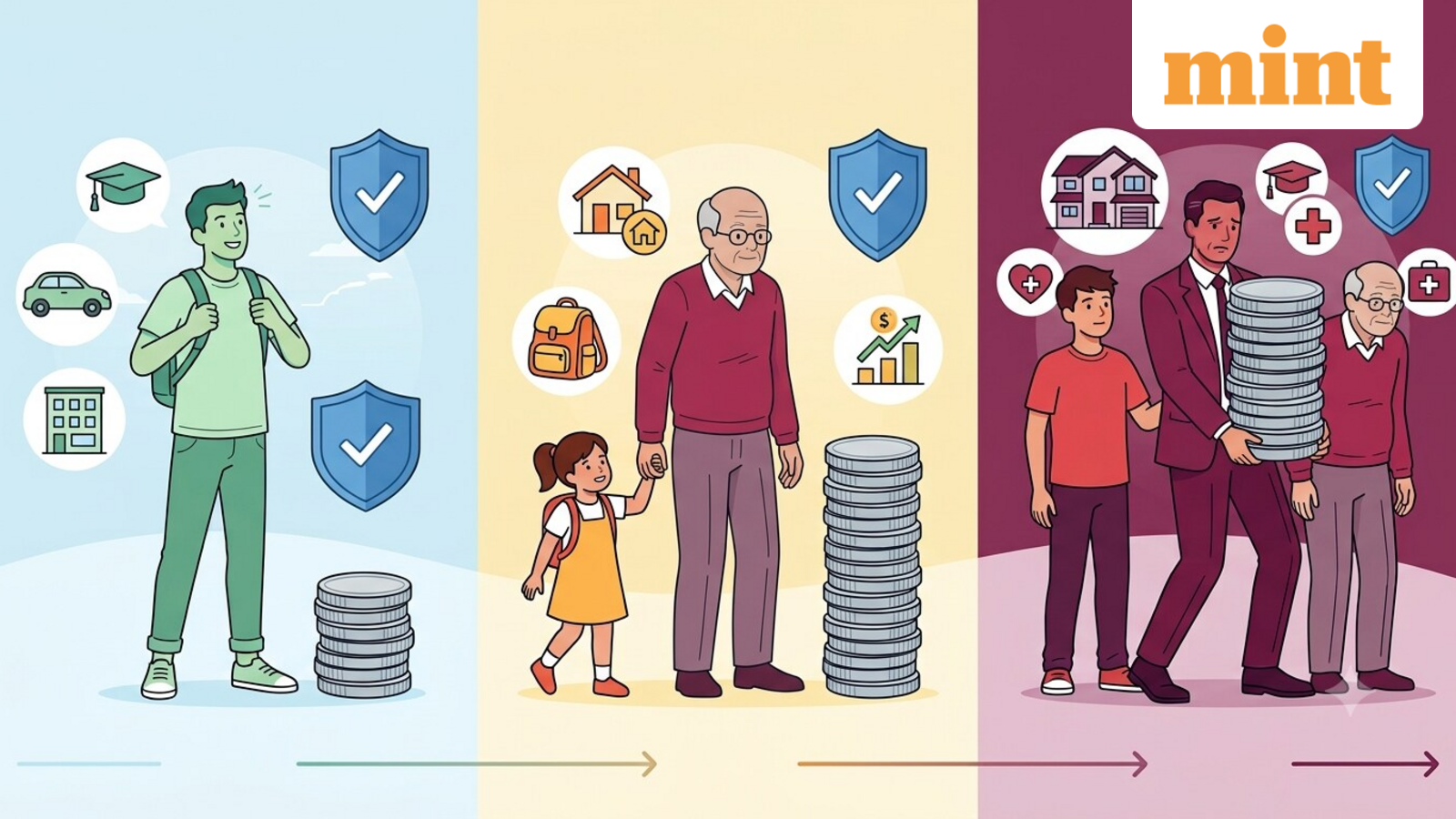
The key difference between buying at 25, 35 or 40, therefore, is not simply the premium. Waiting can mean paying more for the same cover, while the need for insurance itself usually changes as loans, dependants and financial responsibilities increase.