Data Center Securities Flash AI Concerns
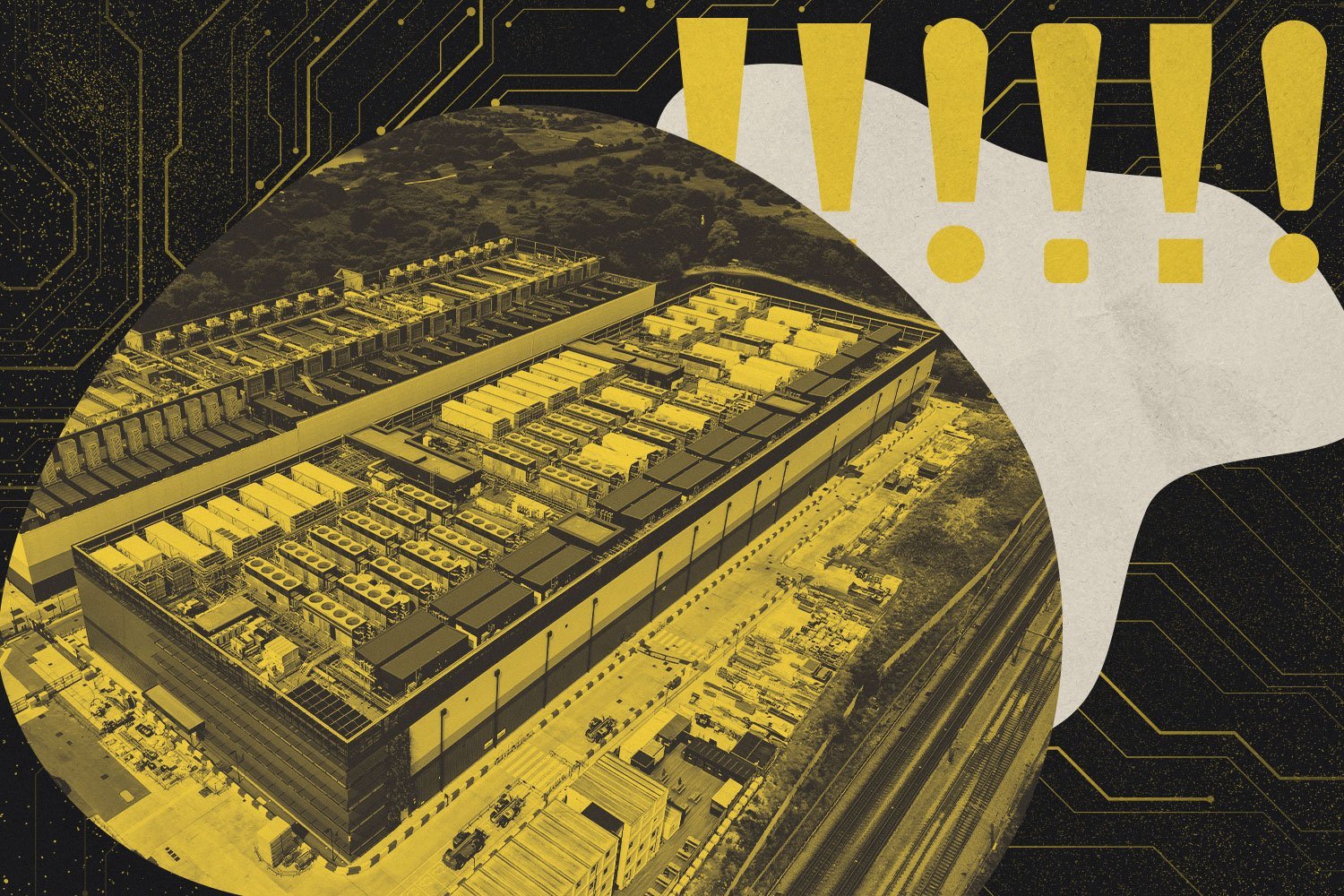
Real estate securities backing data centers are showing signs that investors are concerned over the massive amounts of financing that have built up in the AI race.
Because of their structure, data center asset-backed securities (ABS) and commercial mortgage-backed securities (CMBS) should, in theory, trade at prices similar to other securitized assets such as ABS products like pooled auto loans or credit card payments.
But in recent weeks these securities have become somewhat detached from the ABS market and are now trading with spreads closer to the corporate and high-yield bonds issued by AI hyperscalers like Google and Meta.
The first data center ABS deal happened in 2018. These are permanent financing loans that developers use to refinance their construction loans.
The majority of these deals so far have involved the first generation of data centers used to back cloud computing. The market is expected to grow as developers turn to ABS to refinance the AI data centers currently under construction.
“What’s happening in data center-securitization land is less correlated with what’s happening in broader ABS or CMBS and more correlated with all the debt supply on the AI infrastructure trade from corporates,” said Elana Lipchak, a researcher at Barclays covering the ABS market.
Spreads in the broader ABS market have been compressing as of late, and are trading near the tight end of their multi-year ranges, Lipchak said. But the spreads on data center ABS are moving in the opposite direction, either flattening or widening out. That divergence suggests investors are increasingly treating data center securities as part of the broader AI financing boom, rather than simply another corner of the securitized debt market.
Spreads on hyperscaler ABS were trading at 150 basis points over the 5-year Treasury earlier this month, according to Barclays. That’s 16 basis points wider than it was a year earlier.
That mirrors what’s going on in the market for corporate debt issued by hyperscalers to build out their AI infrastructure.
Those spreads were trading 31 basis points higher than a year earlier, at 165 basis points over SOFR.
The shift is telling. It means that investors who normally shop ABS because they like its securitized structure (whether the security is consumer loans or data center revenues) are now looking across the aisle and comparing it to AI debt.
The reason, Lipchak explained, is because the massive amount of debt AI hyperscalers are issuing is moving debt markets.
The largest AI companies have issued hundreds of billions of dollars’ worth of bonds so far this year to finance data center buildouts. That figure is so large that it’s affecting pricing in the world’s largest asset class: U.S. government bonds.
The impact has been so significant that it prompted Federal Reserve Chair Kevin Warsh to comment on it last week after the Fed raised interest rates for the first time in three years.
“The so-called hyperscalers are out in the market raising funding,” he said. “And so the competition for capital is real. And I think it partly explains the increase in yields.”
The data center ABS market is much smaller compared to the one for corporate AI debt, but it’s growing.
Lenders have issued $11.9 billion worth of data center ABS so far this year, according to Barclays. That’s compared to $15.5 billion from last year.
Whether or not 2026 surpasses last year’s volume depends heavily on how investors react to the deluge of debt on the corporate side.
Read more

Treasury yields reach highest points in nearly two decades, posing another headwind for CRE

Fed hikes interest rates for first time in three years

AI data center boom rewriting rules for real estate debt