NPS Swasthya from 1 October: What you need to know about the new pension option and health cover
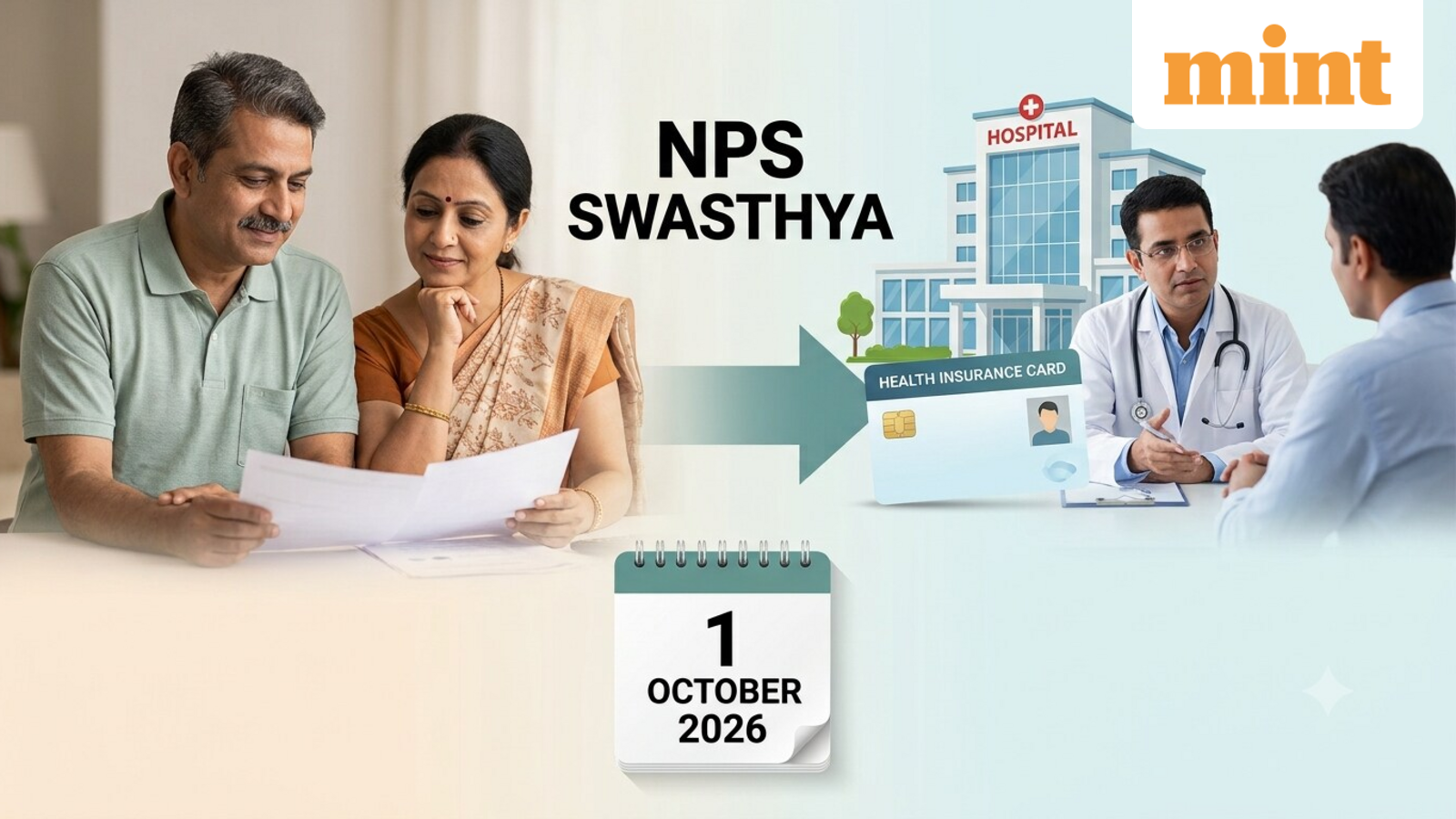
The National Pension System (NPS) is set to offer a new scheme that combines retirement savings with healthcare benefits. Called NPS Swasthya, the scheme will allow eligible NPS subscribers to build a separate corpus while also getting a super top-up health insurance policy.
NPS Swasthya is expected to be launched on 1 October 2026, NPS Diwas, by Union Finance Minister Nirmala Sitharaman, according to an Outlook Money report citing sources.
The Pension Fund Regulatory and Development Authority (PFRDA) issued the operational guidelines for NPS Swasthya on 18 September. Here’s what you need to know.
What is NPS Swasthya?
NPS Swasthya is a new NPS option designed to provide retirement savings along with healthcare benefits.
- A separate NPS Swasthya investment account, where your contributions are invested.
- A mandatory super top-up health insurance policy.
The super top-up insurance will cover eligible medical expenses once the applicable annual deductible is crossed. Separately, subscribers can also use their NPS Swasthya corpus for eligible healthcare expenses, subject to the scheme’s withdrawal rules.
The contributions to NPS Swasthya will be invested according to the investment pattern prescribed for the Central Government Scheme under the applicable PFRDA investment guidelines.
Who can opt for NPS Swasthya?
Any individual who is eligible to join NPS can enrol in NPS Swasthya, subject to the scheme’s conditions.
The standard health insurance covers the subscriber, spouse, and up to two dependent children under one family floater. Parents are not covered.
The entry age for the insurance is 18 to 70 years. Renewal can continue up to and including age 85, subject to the policy terms and applicable rules.
How much do you need to contribute initially?
The minimum initial contribution has three components:
- The first-year health insurance premium, including applicable taxes.
- ₹200 annual maintenance charge, plus applicable taxes.
- At least ₹1,000 towards the NPS Swasthya investment account. The minimum subsequent contribution is ₹10.
The insurance premium is not a fixed amount under the guidelines. It will be determined by the insurer based on the applicable insurance framework and the subscriber’s age group.
What health insurance cover will you get?
The standard super top-up policy will offer family-floater coverage with four deductible and sum-insured combinations:
- ₹10,000 deductible – ₹1 lakh cover
- ₹50,000 deductible – ₹5 lakh cover
- ₹1 lakh deductible – ₹10 lakh cover
- ₹3 lakh deductible – ₹30 lakh cover
The deductible is the amount you must pay towards eligible medical expenses in a policy year before the insurance cover starts paying for the remaining eligible expenses, subject to the policy terms.
The policy is designed to cover expenses such as inpatient hospitalisation, eligible day-care procedures, domiciliary hospitalisation, AYUSH treatment, prescribed modern treatments, and organ-donor medical expenses, subject to the final policy terms.
Can you withdraw money from NPS Swasthya for medical expenses?
Yes. A subscriber can make partial withdrawals for eligible healthcare expenses, including eligible outpatient and inpatient expenses.
However, the withdrawal is capped at 25% of the contributions made by the subscriber to the NPS Swasthya account. There is no limit on the number of such withdrawals, and there is no minimum waiting period for the first or subsequent withdrawal.
The money will not be paid directly to the subscriber. It will be settled with the hospital, healthcare provider, or other eligible entity.
What happens if the medical bill is higher than the withdrawal limit?
If eligible inpatient healthcare expenditure in a single instance is higher than the amount permitted through partial withdrawal, the subscriber can opt for premature exit.
In that case, the NPS Swasthya corpus will first be used towards the eligible inpatient healthcare expense. Any remaining amount will move into an NPS scheme under the All Citizen Model, and the NPS Swasthya account will close.
If the subscriber does not already have an NPS account under this model, the NPS Swasthya account will be converted into one.
What if there isn’t enough money to pay the renewal premium?
The renewal premium can be funded from the NPS Swasthya corpus, subject to the subscriber’s mandate and scheme rules.
If the available balance is insufficient and the premium remains unpaid after the applicable grace period, the insurance cover can lapse. In such a case, the NPS Swasthya account will close and move to an NPS scheme under the All Citizen Model.
Disclaimer: This is purely for educational and informational purposes and should not be construed as investment advice. Please visit the official website for the latest updates.