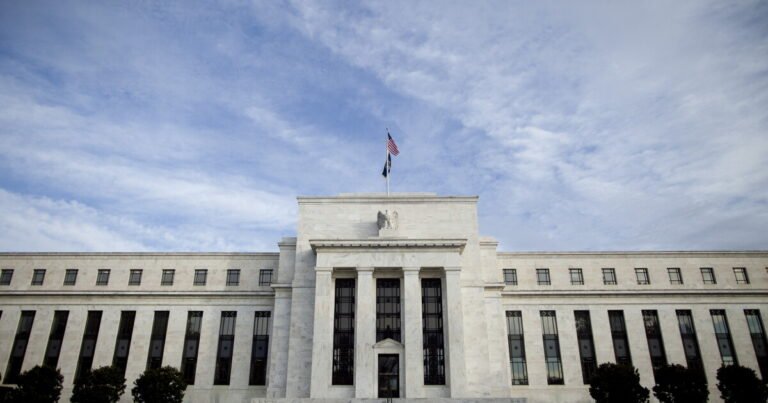
Fed Rate Hike Raises Costs of Funding Global Commerce
For banks, the decision reaches beyond the rates charged on loans and paid for funding. The Fed’s move also changes the economics of liquidity, including some of the money institutions position so they can execute payments in different currencies and jurisdictions.
Correspondent banking’s an example here. Most cross-border payments still rely on correspondent relationships. As detailed here by the Bank for International Settlements, the system is a network in which commercial banks transact through nostro and vostro accounts. Banks and intermediaries make a sequence of account updates, potentially including foreign exchange conversion when the sender and recipient use different currencies.
Liquidity must be available when those payments settle. In some arrangements, that requires prefunding.
Prefunding means maintaining balances in the accounts needed to make payments before those payments are executed. An examination of cross-border and multicurrency payment systems explains why: A settlement institution may be unable or unwilling to extend intraday liquidity to a foreign participant or provide liquidity in a foreign currency. Banks therefore can keep balances in the relevant accounts in advance.
The arrangement reduces the risk that a payment will be delayed or fail because funds are unavailable. It carries a financial cost, however. At least some cash sits idle, and the idle buffer balances as one potential cost of prefunding. It’s money that could be put to work elsewhere.
A Higher Price on Bank Liquidity
The Fed’s rate increase does not mean every prefunded balance suddenly costs a bank an additional 25 basis points, in lockstep with Wednesday’s boost. Correspondent balances may earn interest, currencies carry different interest rates and banks fund their positions differently.
What has changed is the return available on an alternative use of dollar liquidity.
The Fed says a bank is unlikely to lend to another bank or customer at a rate below what it can earn on reserve balances at the central bank. Its explanation of monetary policy transmission says changes in the rate paid on reserves provide an incentive for the federal funds rate to move with the Fed’s target. As of Thursday, the interest rate on those reserve balances will be 3.90%.
For low-yielding or noninterest-bearing dollar balances held elsewhere for payment purposes, the opportunity cost consequently rises. A bank still needs the liquidity to execute its customers’ payments, but money earmarked for that purpose may earn less than it could in reserve balances or other short-term assets.
Banks face another rate effect on the funding side of their balance sheets. Federal Reserve research on monetary policy and bank funding costs found that policy rate changes pass through to commercial banks’ funding costs, although the magnitude varies by funding source and monetary policy cycle. Non-deposit liabilities respond more strongly than deposits.

We’d love to be your preferred source for news.
Please add us to your preferred sources list so our news, data and interviews show up in your feed. Thanks!
Banks therefore have more reason after a rate increase to examine how much liquidity they keep positioned, where it sits and how efficiently it is used.
Corporate Working Capital Feels the Rate Increase
The consequences can reach the companies using those banks.
An importer can commit cash to inventory well before selling the resulting goods. If the company finances that interval through a floating rate credit facility, Wednesday’s decision can raise its financing expense.
Cross-border payments also demand liquidity. Payment delays do not necessarily mean the corporate payer’s cash itself remains unavailable for the entire settlement period, because timing and account treatment vary by payment arrangement. The broader working capital issue is that companies purchasing internationally must finance inventory and supplier obligations while banks and payment providers must maintain sufficient liquidity to execute those transactions.
The scale is substantial. PYMNTS Intelligence found, in work done with Mastercard, that 57% of U.S. small and mid-sized businesses (SMBs) source goods and inputs overseas, rising to 73% among businesses with $1 million to $10 million in annual revenue. Sixty-three percent of internationally active SMBs pay overseas suppliers predominantly in dollars. These firms use dollars because their bank accounts, cash flows and accounting are dollar denominated. Local currency bank wires can involve intermediary correspondent banks, additional fees and longer transfer times.
Banks remain central to those transactions. PYMNTS Intelligence found 64% of internationally active U.S. SMBs used traditional banks for cross-border payments in 2025, while 69% said they were likely to use them in 2026.
The Fed’s rate increase therefore tightens the calculation on both sides of the corporate banking relationship. Banks have a stronger financial incentive to minimize liquidity sitting unproductively across payment networks. Companies using floating-rate credit can wind up paying more to finance inventory and other working capital while also requiring reliable access to funds for overseas suppliers.
Speed gains urgency in this environment. PYMNTS Intelligence found 43% of SMBs with global suppliers identify faster payment processing and settlement as their top improvement priority, compared with 37% citing lower fees or better foreign exchange rates.
Faster settlement cannot eliminate the funding cost created by higher interest rates. It can make liquidity more efficient by reducing delays and, depending on the payment structure, reducing the buffers providers need to maintain. With the Fed paying banks more for reserve balances and commercial borrowing costs responding to the higher policy rate, the price of leaving capital waiting for a payment becomes dearer.