Gold hallmarking fee hiked to ₹75 from ₹45: What it means for jewellery buyers ahead of festive season
Gold jewellery buyers could see a new cost entering the pricing chain just ahead of the festive season. The Bureau of Indian Standards has raised the hallmarking fee payable by jewellers for gold articles to ₹75 per article from ₹45 earlier, while retaining the fee for silver articles at ₹35.
The change comes into effect from 14 September 2026, according to the Bureau of Indian Standards (Hallmarking) Amendment Regulations, 2026, notified in the Official Gazette. The amendment replaces Schedule IV of the BIS (Hallmarking) Regulations, 2018.
The timing is significant for the jewellery industry as India heads into the festive and wedding-buying season. However, the increase in the hallmarking fee does not mean that buyers will necessarily see a ₹30 additional charge on every gold jewellery article.
Gold hallmarking fee rises to ₹75
Under the amended regulations, jewellers submitting gold articles to recognised Assaying and Hallmarking Centres (AHCs) will now pay ₹75 per article, with a minimum fee of ₹200 per consignment.
The earlier fee was ₹45 per gold article, with the same minimum consignment fee of ₹200. The new rate therefore represents an increase of ₹30, or about 67%, in the per-article hallmarking fee.
For silver articles, the fee remains unchanged at ₹35 per article, with a minimum charge of ₹150 per consignment.
The notification also specifies the amount that AHCs will pay to BIS. For gold, this has been set at ₹7.50 per article, subject to a minimum of ₹20 per consignment. For silver, the corresponding charge is ₹3.50 per article, with a minimum of ₹15 per consignment. Applicable taxes are charged separately.
Will buyers have to pay the additional ₹30?
Not necessarily.
The ₹75 fee is the amount payable by jewellers to recognised AHCs for hallmarking. The notification does not prescribe a separate ₹75 charge that must be collected from consumers.
The eventual impact on buyers will depend on how jewellers account for the higher cost. A jeweller may absorb the additional expense or factor it into the overall pricing of jewellery. Therefore, buyers should not assume that the revised hallmarking fee automatically means every gold article will cost ₹30 more.
This distinction is important because the final price of jewellery already comprises several components, including the prevailing gold price, making charges and applicable taxes.
The minimum consignment fee also means that the per-article cost can vary depending on the number of articles submitted together. For instance, a jeweller submitting one gold article would be subject to the ₹200 minimum consignment fee rather than simply paying ₹75.
What does the hallmark tell gold buyers?
Hallmarking is intended to provide consumers with an independent assurance of the purity of precious-metal articles. BIS says hallmarked jewellery provides third-party assurance that the customer receives the stated purity of gold or silver for the price paid.
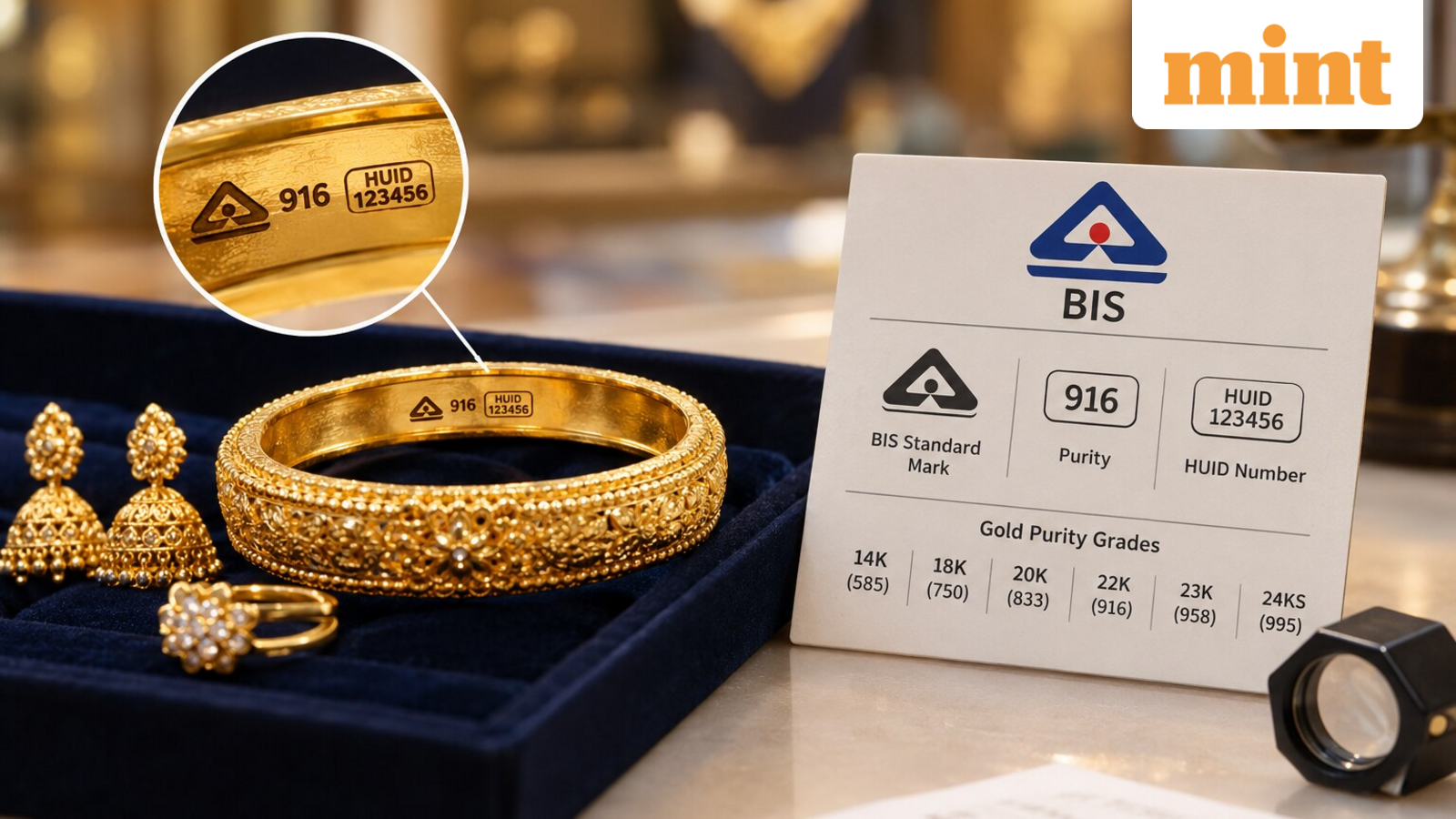
For gold jewellery, buyers should look for the prescribed BIS hallmark markings, including the BIS standard mark, purity or fineness and the six-digit Hallmark Unique Identification (HUID) number.
BIS permits hallmarking of gold jewellery and artefacts in six grades: 14K (585), 18K (750), 20K (833), 22K (916), 23K (958) and 24KS (995).
The HUID is particularly useful when checking a hallmarked article. Buyers can use the identification details to verify the hallmarking information rather than relying only on the jeweller’s verbal assurance about purity.