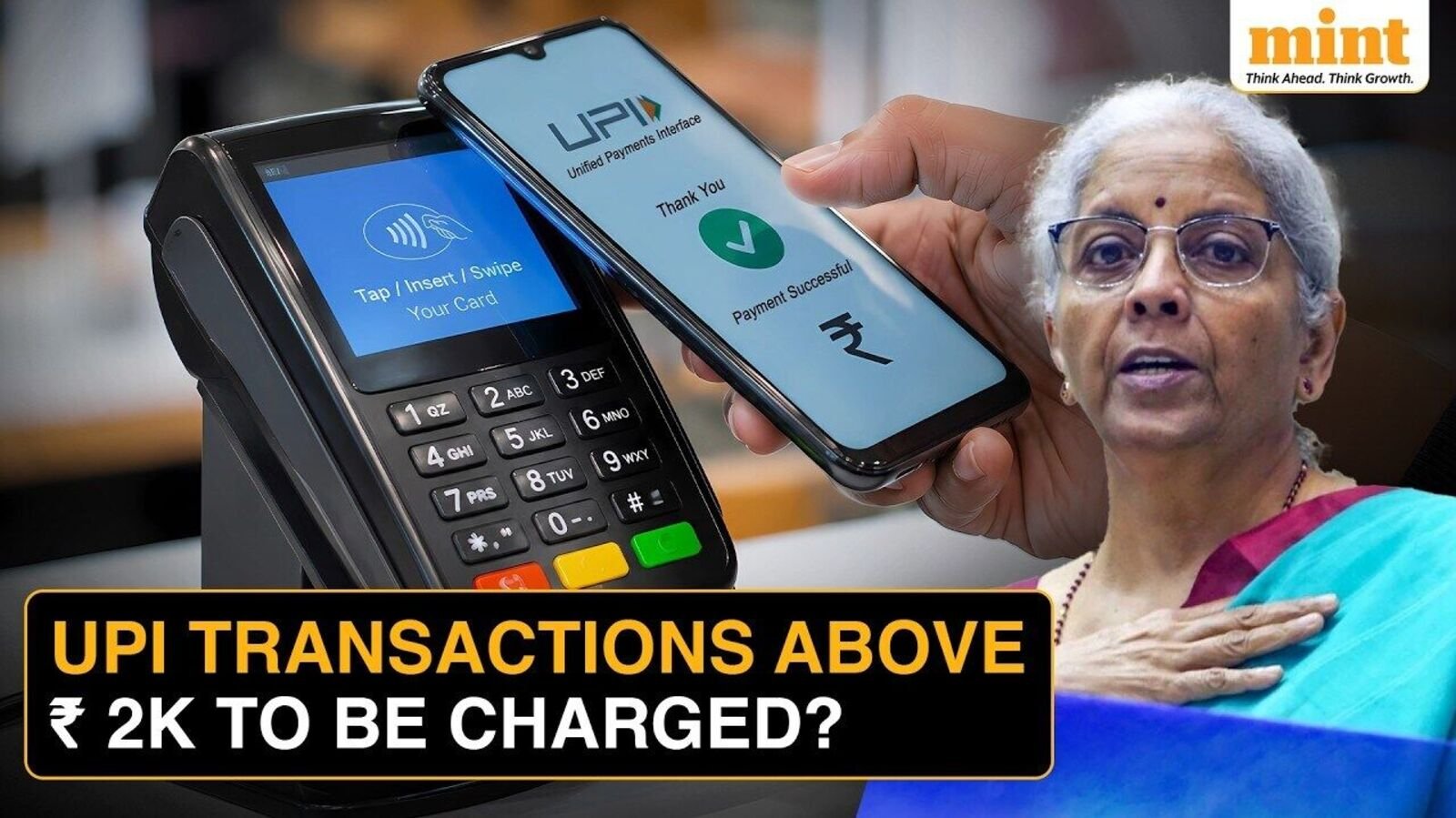
UPI and Services Steering Committee to take decision on MDR charges soon: What are issues on the table?
The 22-member UPI and Services Steering Committee is expected to reach a decision on merchant discount rate (MDR) charges for unified payments interface (UPI) transactions over ₹2,000 to merchants “soon”, PTI reported, citing sources.
The panel, comprising the Indian Banks’ Association (IBA), the Payments Council of India (PCI), and representatives of banks, payment service providers (PSPs), and various associations, will discuss and take a call on MDR, it added.
This comes after the Centre on Monday barred banks and or system providers from imposing any “direct or indirect” charges on RuPay debit card payments or UPI transactions up to ₹2,000 in value, under the amended Section 10A of the Payment and Settlement Systems Act, 2007.
The section provides an enabling framework for imposing an MDR on payments through UPI and other notified electronic payment modes. The amendment was passed in the Monsoon session of Parliament in August this year.
MDR charges on UPI: Here are the issues on the table
Sources told PTI that the committee would soon decide on the Merchant Discount Rate (MDR) for UPI transactions above ₹2,000, based on various factors, including self-sustainability and market expansion.
How is MDR related to charges on UPI transactions?
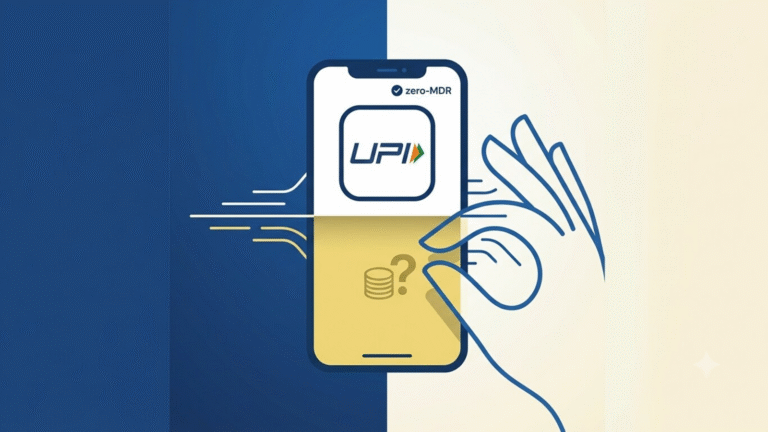
Regulated by the Reserve Bank of India (RBI), MDR is the fee that businesses pay to banks and PSPs to process customers’ online transactions. Since 2020, this has stood at 0% for UPI and RuPay debit card transactions, as the Centre sought to promote digital payments and mandated that there be no MDR for customers and merchants.
In practice, this works like this: A customer pays ₹1,000 for an item using a credit or debit card. Of this, a small percentage is deducted and split between the banks on both ends, while the merchant receives the net amount. At present, for UPI transactions, merchants receive the full transaction amount.
In March 2026, a Parliamentary Standing Committee on Finance had called for a “sustainable funding mechanism” for UPI, given that the zero-MDR framework is financially unsustainable in the long run.
Currently, the costs of such transactions and the upkeep of the UPI platform are borne by banks, NPCI, and payment service providers. The government currently subsidises part of the cost incurred by such players on payments of up to ₹2,000. The Budget for 2026-27 estimated the subsidy payout at ₹2,000 crore, compared with ₹2,196.21 crore paid in 2025-2026 and ₹1,922.77 crore in 2024-25.
Disclaimer: This story is for educational purposes only. We advise investors to check with certified experts before making any investment decisions.