UPI MDR charges explained: What high-value transaction limit is govt considering?
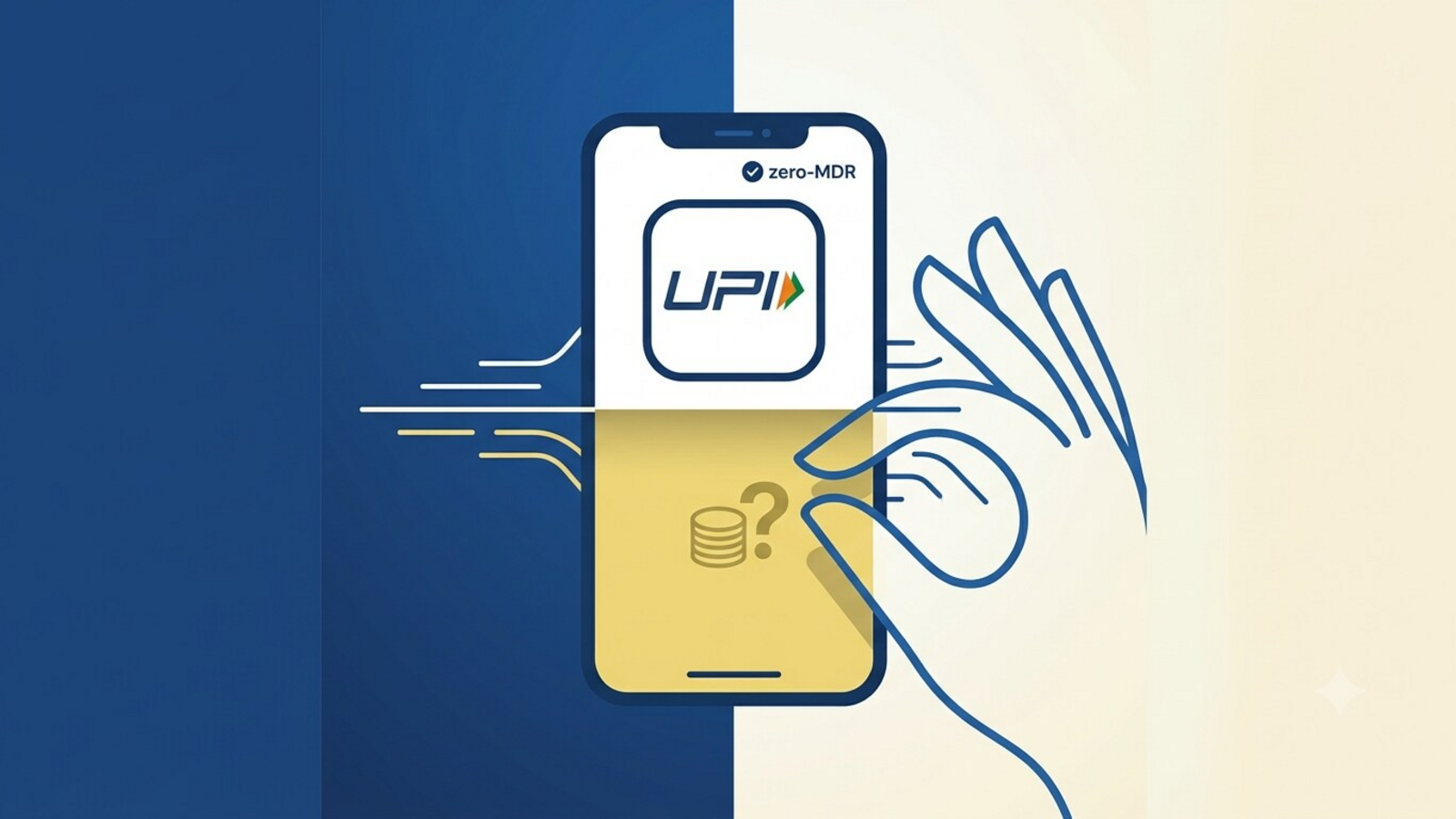
The government is considering bringing back the Merchant Discount Rate (MDR) for a limited category of high-value UPI transactions as it looks for a sustainable way to fund India’s rapidly expanding digital payments ecosystem.
A Parliamentary Standing Committee on Finance has recommended the early implementation of a calibrated, tiered MDR framework for higher-value merchant transactions while protecting small merchants and person-to-person (P2P) payments. However, the government has not yet finalised the transaction threshold or MDR rate, PTI reported.
What high-value UPI transaction limit is the government considering?
There is currently no confirmed transaction limit above which UPI payments would attract an MDR. According to a reply from the Department of Financial Services (DFS) to the Parliamentary panel, the government is examining the feasibility of restoring MDR for “certain high-threshold transactions/merchants”. It is also considering a tiered incentive structure that would gradually reduce government support for the UPI ecosystem over the coming years.
The exact threshold, MDR rate and categories of merchants that could be covered are yet to be finalised. According to a Business Standard report, the UPI and Services Steering Committee headed by the National Payments Corporation of India (NPCI) will decide the structure of any MDR and the threshold above which transactions could attract the fee.
What is MDR?
Merchant Discount Rate, or MDR, is a fee charged to merchants for accepting certain digital payments. The fee is generally shared among different participants in the payments ecosystem, including banks, payment service providers and payment infrastructure companies.
UPI previously had an MDR of up to 0.30% on merchant transactions until 2019. The government introduced a zero-MDR regime from January 2020 to encourage digital payments and reduce dependence on cash. Under the current system, merchants do not pay a transaction fee for accepting UPI payments, although banks and payment companies continue to incur costs for processing and maintaining the infrastructure.
Why is the government considering MDR?
The key issue is the growing cost of running the UPI ecosystem. The government currently provides incentives to promote RuPay debit cards and low-value BHIM-UPI transactions and compensate payment companies for losses arising from zero MDR.
The Parliamentary Standing Committee noted that the Centre has allocated ₹2,000 crore for this purpose. However, the industry’s estimated operational cost is around ₹20,700 crore. The panel has therefore raised concerns over the huge gap between government support and the actual cost of operating the payments infrastructure.
The Committee warned that continued dependence on inadequate government subsidies could affect investments in critical areas such as cybersecurity, fraud prevention and payment network infrastructure. It has therefore called for a self-reliant revenue model that reduces the burden on the government while ensuring that payment companies can continue investing in the ecosystem.
Will MDR apply to all UPI transactions?
No. The proposal being considered is for selected high-value merchant transactions rather than everyday UPI payments. The Parliamentary panel has specifically recommended safeguarding small merchants and P2P transfers.
This means an ordinary UPI transfer between two individuals is not currently proposed to attract an MDR. Similarly, the government has indicated that any potential charge would apply only to a limited category of merchant transactions above a specified threshold.
Will consumers have to pay for using UPI?
According to reports, there is currently no proposal for a blanket charge on UPI users. The proposed MDR would be associated with selected merchant transactions rather than a fee imposed on every individual making a UPI payment.
The government is also considering a nominal rate that would be lower than charges generally associated with debit or credit card transactions. The objective is to create a revenue stream for banks, payment service providers and payment infrastructure companies without undermining the widespread adoption of UPI.
Why does the Parliamentary panel want a tiered MDR?
The panel believes the current zero-MDR model is difficult to sustain as UPI volumes continue to grow. It has recommended a self-reliant, tiered revenue mechanism under which higher-value merchant transactions could generate revenue while small merchants and P2P transfers remain protected.
The panel said the legal framework to introduce such a calibrated MDR now exists following Parliament’s approval of amendments to the Payment and Settlement Systems Act, 2007. It has urged the government to notify and operationalise the framework quickly.
“The Committee, therefore, reiterates the recommendation to expedite the implementation of a self-reliant, tiered revenue framework for higher-value merchant transactions while safeguarding small merchants and P2P transfers,” the panel said, according to PTI.
What changed in the law?
Earlier this week, Parliament passed a Bill amending the Payment and Settlement Systems Act, 2007. The amendments remove the existing legal restriction that prevents banks and payment service providers from imposing MDR on notified electronic payment modes.
The changes create the legal space for the government to permit charges on UPI and other notified electronic payments. However, the law itself does not establish a specific UPI MDR rate or transaction threshold. Those details are still to be worked out.
The amendments also relate to Section 269SU of the Income Tax Act, under which businesses with annual turnover exceeding ₹50 crore are required to provide specified electronic payment facilities, including RuPay debit cards and BHIM-UPI QR codes.
Why does this matter for UPI?
UPI has grown into one of the world’s largest digital payments systems, and its scale means even relatively small operating costs can become significant. The Parliamentary panel has noted that UPI could eventually handle as many as 150 billion transactions a month and add around 600 million new users, according to Business Standard.