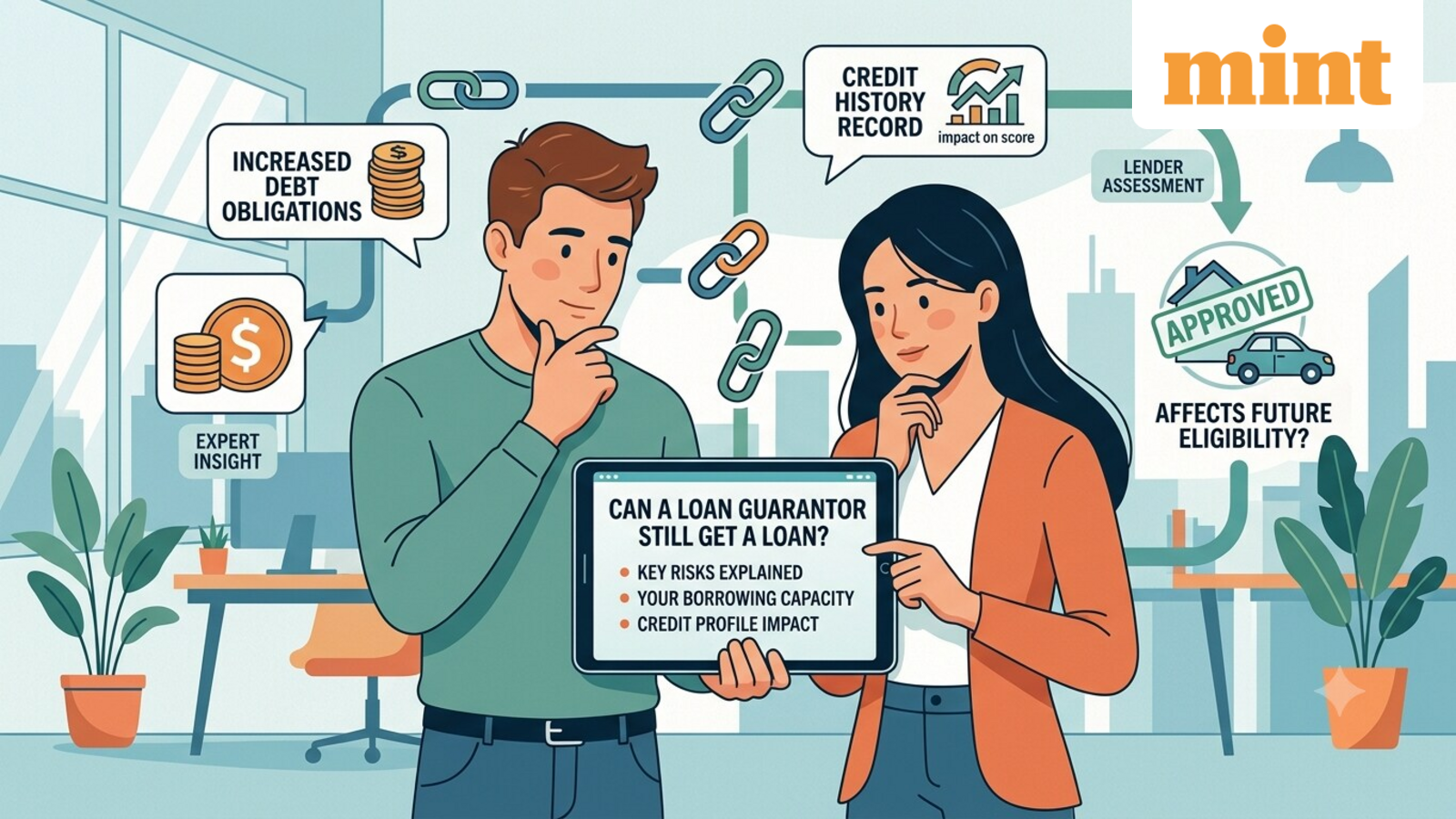
Can being a loan guarantor affect your chances of getting a loan? Expert explains
Becoming a loan guarantor for a friend, relative, or someone you know can seem like a generous act of support and affection. Still, in legal terms, it can have its own set of complications, as it can directly affect your future borrowing ability.
This is because the guarantee you take can affect how lending institutions assess and analyse your repayment capacity, creditworthiness, and overall credit profile. Along with your eligibility for future personal loans, home loans, car loans or any other fresh forms of credit that you aspire to secure can be affected if you are a guarantor for someone else.
This calls for proper due diligence and understanding of the basics before you commit to being a loan guarantor for anyone. Further, such a decision should not be based solely on emotions or close relations. Here we discuss all factors in detail:
What does it mean to be a loan guarantor?
A loan guarantor is an individual who agrees to repay the outstanding loan if the primary borrower fails to meet the payment obligations. By signing the guarantee, the guarantor assumes a legal obligation to the lending institution. This simply means that the lender may consider the guaranteed loan while analysing the guarantor’s ability to take on another loan.
This way, the guarantor also assumes legal responsibility to ‘stand in’ for the primary borrower if they are unable to meet their debt obligations, once the loan guarantor agreement is signed.
A guarantor can face the same repayment liability as the borrower
Kapil Makhija, COO, MinEMI, explained this in detail, stating, “Under Indian law, a guarantor’s liability is co-extensive with the borrower’s, meaning the bank can recover from you exactly as it would from him.”
This calls for a proper understanding of the loan agreement’s terms and conditions before becoming a guarantor.
He further added how such cases occur commonly and are a clear warning sign, “So lenders count the guaranteed EMI as your potential obligation, which shrinks your own loan eligibility, and the account appears in your credit report, so if the borrower delays payment, your score falls with his. We meet such cases regularly: applicants get rejected, and only later they tell us they had stood guarantor for a relative or friend. Sign a guarantee as if the loan is yours.”
Keeping these important observations in mind, let us discuss several critical factors an individual should carefully consider before becoming a guarantor on a loan agreement.
5 factors to check before becoming a loan guarantor
1. Understand the borrower’s repayment capacity
Check the borrower’s income, existing EMIs and financial stability. Your liability could arise if the borrower is unable to repay.
2. Assess the impact on your own borrowing plans
A guaranteed loan can reduce your available borrowing capacity. Consider whether you may need a home, car or personal loan soon.
3. Check your credit profile
The guaranteed account can reflect in your credit report. Delays or defaults by the borrower may negatively affect your creditworthiness.
4. Know the terms of the guarantee
Read the guarantee agreement carefully, including the extent of your liability, tenure, timelines and conditions under which the lender can seek repayment.
5. Do not rely only on personal relationships
Trust is important, but financial commitments require due diligence. Before signing, consider whether you could financially withstand repayment if circumstances change.
Eventually, becoming a guarantor is not merely a formality, a show of affection or favour. It is a significant financial commitment that can affect an individual’s current financial situation and credit score, and even jeopardise their overall credit profile. This way, a wrong decision can also complicate future loan eligibility and adversely affect borrowing capacity.
Therefore, individuals should carefully evaluate the risks, consult certified financial advisors, understand the terms, and sign a guarantee only when they are financially prepared for the obligations that may follow.
Disclaimer: This article is for informational purposes only and should not be considered financial advice. Readers should carefully review the loan guarantee terms and seek professional guidance before making any financial decision.