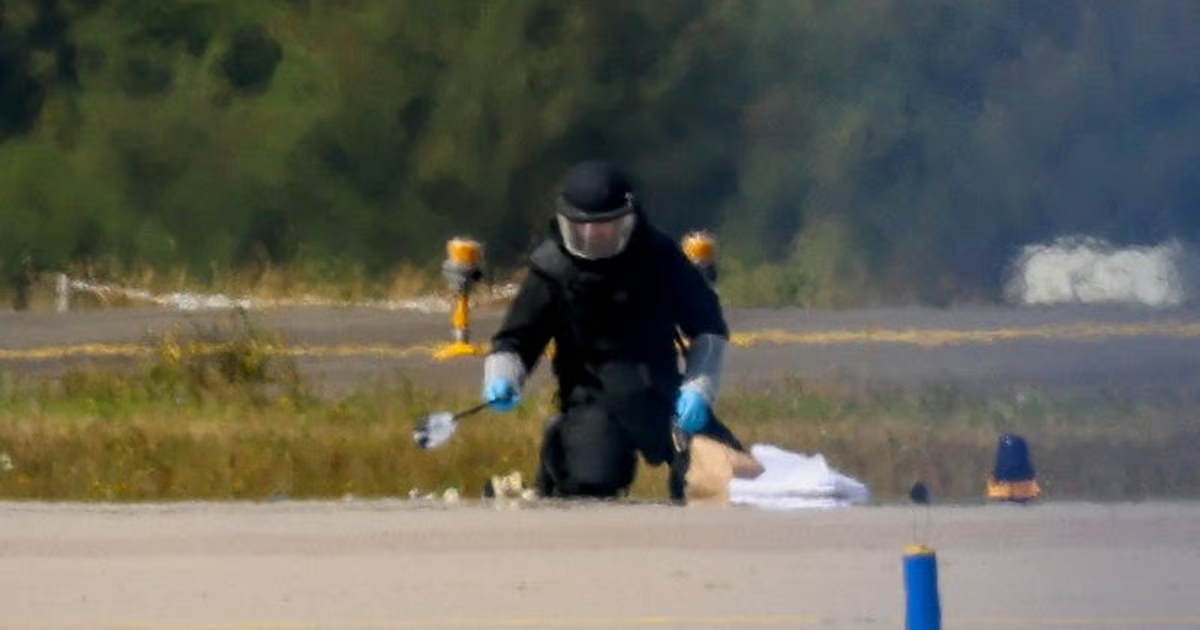
Germany Unveils Anti-Sabotage Shield After Failed Airport Drone Attack
Editorial & Advertiser disclosure
Global Banking & Finance Review® is an online platform offering news, analysis, and opinion on the latest trends, developments, and innovations in the banking and finance industry worldwide. The platform covers a diverse range of topics, including banking, insurance, investment, wealth management, fintech, and regulatory issues. The website publishes news, press releases, opinion and advertorials on various financial organizations, products and services which are commissioned from various Companies, Organizations, PR agencies, Bloggers etc. These commissioned articles are commercial in nature. This is not to be considered as financial advice and should be considered only for information purposes. It does not reflect the views or opinion of our website and is not to be considered an endorsement or a recommendation. We cannot guarantee the accuracy or applicability of any information provided with respect to your individual or personal circumstances. Please seek Professional advice from a qualified professional before making any financial decisions. We link to various third-party websites, affiliate sales networks, and to our advertising partners websites. When you view or click on certain links available on our articles, our partners may compensate us for displaying the content to you or make a purchase or fill a form. This will not incur any additional charges to you. To make things simpler for you to identity or distinguish advertised or sponsored articles or links, you may consider all articles or links hosted on our site as a commercial article placement. We will not be responsible for any loss you may suffer as a result of any omission or inaccuracy on the website.
Germany Plans Anti-Sabotage Shield to Bolster Defences Against Drone Attacks
Germany’s Response to Rising Security Threats
Overview of Recent Incidents and Government Response
BERLIN, Sept 6 (Reuters) – Germany is planning a broad package of measures to strengthen its defences against drone attacks, cyber intrusions and other forms of Russian sabotage after a failed airport drone attack last month, an interior ministry spokesperson said on Sunday.
Statements from Government Officials
• Interior Minister Alexander Dobrindt told the Bild am Sonntag newspaper, which first reported the plans, that Russia’s hybrid attacks had become a part of daily reality.
• “These attacks will increase, but we can defend and protect ourselves,” Dobrindt was quoted as saying.
Russia’s Response to Allegations
• Russia has long rejected allegations it is carrying out operations in Western Europe and has denied involvement in the German airport attack, with Foreign Minister Sergei Lavrov saying the accusations were “the start of a real war”, according to state news agency TASS.
Planned Security Measures
Expansion of Drone Defence Capabilities
• According to the ministry spokesperson, police mobile drone defence capabilities would be expanded under the plan, with rapidly deployable counter-drone units stationed in cities to protect the airspace above critical transport hubs and government districts.
Legal Authority for Critical Infrastructure Companies
• Companies operating critical infrastructure, such as power utilities and defence manufacturers, would be granted the legal authority to not merely detect drones but also actively fend them off.
Establishment of a National Protective Shield
The “Cyberdome” Initiative
• A national protective shield, or “cyberdome”, would be established, involving a network of digital sensors designed to detect and intercept attempted hacking attacks.
Use of Advanced Technologies
AI and Surveillance Enhancements
• The government also intends to expand the use of AI-supported technologies, biometric facial recognition and video surveillance, for example at railway stations, to identify suspected attackers preparing acts of sabotage.
Reporting and Editorial Information
(Reporting by Miranda Murray; Editing by Joe Bavier and Toby Chopra)