The Real Estate Dispute Behind the Kips Bay AMC Closure
The Kips Bay AMC is, as far as New York movie theaters go, just fine.
But now the theater is at the center of a real estate dust-up that has gotten local politicians and residents up in arms, hoping to save their beloved 15-screen chain multiplex.
The real estate transactions at the center of the apparent closure are a little murky. Nevertheless, we’re not likely to see another movie theater take its place in Manhattan, brokers tell me.
The controversy at the theater started last week, when Variety broke the news that the location at East 31st Street and Second Avenue would be closing for good at the end of 2026.
An AMC spokesperson told the magazine that the closure was due to “the property owner’s decision to exercise its contractual right to terminate the theatre’s lease before its scheduled expiration.”
Then came the uproar. Local electeds started making noise, and looking for ways to preserve the theater. Residents started a petition, now signed by nearly 8,000 people, to “save” the AMC.
Assemblymember Keith Powers then said that NYU Langone Health had purchased the site. No sale or lease has been recorded in the city’s property portals, but Powers and other elected officials seem sure of it. In a letter signed by six other officials, including Rep. Jerrold Nadler and Manhattan Borough President Brad Hoylman-Sigal, Powers requested a meeting with the hospital system to talk about the future of the site.
“[W]e were disappointed to learn that this acquisition took place without any notification of, or engagement with, local elected officials or residents,” the politicians wrote.
NYU Langone has not spoken publicly about any acquisition and did not respond to a request for comment from The Real Deal.
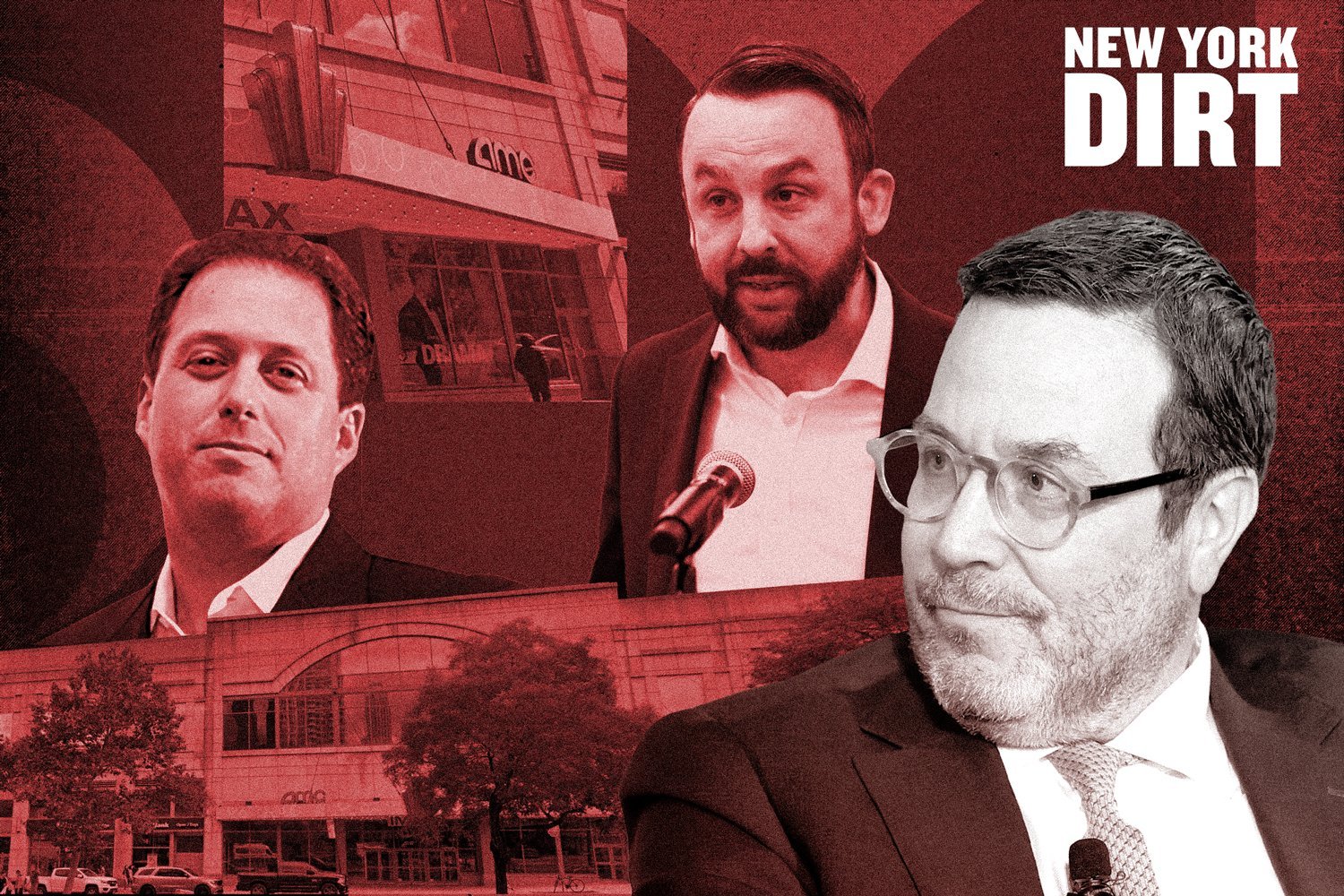
What is clear is that AMC’s lease, signed in 2024, was set to expire in May 2027, according to city records. The complex that houses the theater is owned by a limited partnership affiliated with JD Carlisle Development, a large but low-profile New York commercial landlord (so low profile that it lacks a website).
Evan Stein, JD Carlisle’s president, who has signed some of its borrowing and leasing paperwork, didn’t respond to a request for comment Wednesday about what exactly is going on with the site.
But the closure and its attendant controversy have sparked dozens of articles and TikToks, all about a theater that is, I’m willing to say, fairly unremarkable. Plus, far from any train.
The AMC’s supporters see the site differently. One petition calls the theater “a beacon of community bonding and cultural enrichment.” Another calls it “the best place in NYC to be at on a gummy,” but mentions that the downstairs is “lowkey cursed.”
The rhetoric from opponents of the closure has also highlighted NYU’s accumulation of Manhattan real estate, with some focused on how it is kind of annoying to walk past a hospital.
“One block east is what a medical campus does to a street: blank walls, security desks, ambulance bays and nothing open to a person who simply lives here,” one AMC support site reads. “It is a fine hospital. It is not a neighborhood.”
The closure of the theater will indeed likely be a hit for restaurants in the area that depend on the “dinner and a movie” crowd. But it’s not like moviegoers in the area are truly out of places to go. There are several movie theaters, including two other AMCs, a Regal Cinemas and an Angelika theater all above East 10th Street.
That said, we will likely not see any new theaters opening in the area, AMC or otherwise, said David Firestein, managing partner at retail brokerage TSCG. Firestein negotiated leases in-house for AMC in the 1980s, then became the exclusive broker for the company in the 1990s. (He was part of the deal to bring AMC to its Times Square Empire location, once called the busiest movie theater in the country.)
Streaming and Covid hit the theater business hard, Firestein said, as did advance ticket sales. Moviegoers used to arrive at the box office to find their preferred film was sold out, and agree to see something else. Screens have been closing across the country.
“There’s still a place for them but the number of screens is, I think, just going to keep dropping over time,” Firestein said.
The businesses, which require a lot of space, are difficult to situate and typically sign for long leases because of the steep capital investment needed for a buildout, he added.
“Theater deals are really difficult to do and sometimes they take years,” Firestein said. “It was always difficult to find the spaces, and it was always difficult to make the math work.”
Firestein said he hopes the theater business survives and believes it will, even without the Kips Bay AMC.
“There will just be less of them,” he said.
What we’re thinking about: A judge will hear oral arguments tomorrow in the suit challenging New York’s rent freeze. The hearing will help signal which way the wind is blowing on the case. Stay tuned.
A thing we’ve learned: In 1999, the co-op board at The Ardsley rejected Mariah Carey’s application to buy Barbra Streisand’s unit in the building, with Curbed implying the issue may have arisen from Carey’s choice of a short skirt for the interview.
Elsewhere:
— The Mamdani administration laid out additional measures Wednesday to tackle Legionnaires’ disease, CBS reported. The health and buildings departments will collaborate on identifying unregistered cooling towers, one source of the illness, and the city will additionally launch a map-based tool for residents to look up cooling towers.
— The mayor on Tuesday signed a City Council bill making roadway cafes legal year-round, ushering in the return of outdoor dining shacks.
— The city has completed a redesign of Brooklyn’s Ashland Place, according to a press release from the Mayor’s Office. Work to turn the street from one-way to two way and add a bike lane started in 2022 but was stopped “after interference from the previous administration,” according to the release. The street had locally been called “Crashland,” and the southernmost block had seen 27 crashes in about two years, Patch reported.
Closing Time
Residential: The most expensive residential sale recorded Tuesday was $9 million for a 3,057-square-foot condominium at 127 East 79th Street on the Upper East Side. The sellers paid $9.1 million in 2013.
Commercial: The most expensive commercial transaction was $16.4 million for a 13,650-square-foot mixed-use property at 143 Ludlow Street on the Lower East Side. SMA Equities previously purchased the property for $7 million in 2012.
New to the Market: The highest price for a residential property hitting the market is $15 million for a 5,750-square-foot house at 116 East 61st Street in Lenox Hill. John Carbone with Sotheby’s International Realty has the listing.
Breaking Ground: In the Soundview section of the Bronx, Westorchard Management filed an application to construct three 12-story buildings at 829 Soundview Avenue and 831 and 851 Rosedale Avenue. Each building will have 99 units for a total of 297 units. The buildings will measure a combined 224,687 square feet.
— Matthew Elo and Mary Diduch
Read more

UES cinema may fade to black as owner puts site up for sale

Union Square Regal inks new lease with Related