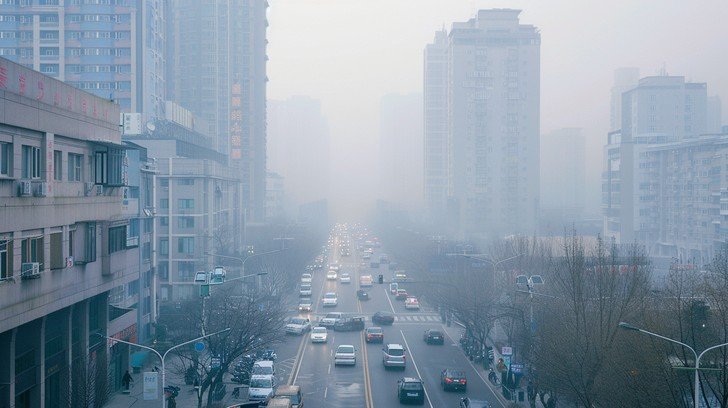
Americans Vacating Regions Susceptible to Poor Air Quality
Americans are increasingly relocating from areas with a high risk of poor air quality, although the rate of this movement has slowed compared to the pandemic period, as indicated by a recent report from Redfin. Data showed that in 2025, there was a net outflow of 277,740 individuals from high-risk U.S. counties, a figure that is less than half of the peak net outflow of 603,270 recorded in 2021. Further, this outflow has decreased annually since that time.
Certain high-risk areas are defying this trend. Cities such as Boise, ID, Lake Tahoe, CA, and Provo, UT, experienced an influx of thousands of residents last year, implying that factors such as affordability and lifestyle preferences are outweighing concerns about potentially poor air quality. Conversely, more individuals are moving into U.S. counties classified as low risk for poor air quality, although this influx is occurring at a slower pace than during the pandemic. In 2025, low-risk counties saw a net inflow of 296,342 residents, which is approximately half of the 594,556 inflow recorded in 2021; this trend of declining inflows has continued each year since.
Relocation patterns are closely linked to housing costs. Many high-risk counties experiencing the greatest loss of residents—such as Los Angeles County, Kings County (Brooklyn), Orange County, and King County (Seattle)—are among the most expensive in the nation. In contrast, several high-risk counties that are gaining residents, including Ada County, ID (Boise) and Weld County, CO, are relatively affordable.
Top 10 At-Risk Counties With the Largest Net Inflows (2025):
| Rank | U.S. County | Net domestic inflow | Share of homes facing high risk of poor air quality | Median home-sale price (July 2026) |
| 1 | Ada County, ID | 8528 | 100 % | $537,438 |
| 2 | Riverside County, CA | 7758 | 76.1 % | $609,260 |
| 3 | Placer County, CA | 7074 | 100 % | $674,997 |
| 4 | Canyon County, ID | 5684 | 100 % | $423,260 |
| 5 | Weld County, CO | 3857 | 24.2 % | $499,902 |
| 6 | Henry County, GA | 3723 | 12.2 % | $334,875 |
| 7 | Clark County, WA | 3400 | 100 % | $555,958 |
| 8 | Utah County, UT | 3162 | 24.9 % | $514,391 |
| 9 | Kootenai County, ID | 3161 | 100 % | $562,626 |
| 10 | Nassau County, FL | 2578 | 51.2 % | $511,111 |
The decline in outmigration also indicates a reduction in the pandemic-driven departure from significant employment centers. In 2025, Santa Clara County, CA, experienced a loss of 19,775 residents, a decrease from 58,753 in 2021. Similarly, Los Angeles County’s net outflow decreased to 105,471 from 195,168, while Kings County’s outflow fell to 38,847 from 100,839.
Air quality remains a significant concern as the frequency and intensity of wildfire smoke increase. For example, the Spokane Complex fires enveloped large areas of Washington, Oregon, and Idaho in hazardous smoke in early August, while Canadian wildfires disseminated unhealthy smoke across the Midwest and East Coast in July. Although air quality may influence some long-distance relocations—particularly for individuals with severe respiratory issues—it is unlikely to be a primary consideration for the majority of Americans. Almost the entire nation is vulnerable to smoke and/or smog at least occasionally.
“Wildfire smoke doesn’t respect state lines,” said Daryl Fairweather, Chief Economist at Redfin. “My family left Seattle for a small town in Wisconsin during the pandemic. We had many reasons for moving, but a bad smoke event was the final straw. Then the smoke followed us. This summer, Wisconsin and the entire Midwest had stretches of awful air from fires hundreds of miles away. That experience evolved the way I think about climate migration: You can choose a place with lower risk, but there’s no smoke-free bubble to move to. For most people, the answer isn’t packing up and leaving—it’s adapting to a world where bad-air days can show up almost anywhere.”
Air Filtration, Quality & Residential Differences
A recent survey conducted by Redfin revealed that 36% of house hunters in the U.S. consider a clean home—defined as one equipped with advanced filtration systems for air and water—to be an essential requirement for their next residence. This makes it the most significant priority among potential buyers. House hunters prioritize clean air over other features such as scenic views, smart-home technology, or luxury amenities like swimming pools or fitness centers. This trend reflects the growing incidence of wildfire smoke throughout the nation and the measures that Americans are adopting to cope with it.
Ada County, ID—home to Boise and Eagle—experienced a net increase of 8,528 residents last year, marking the highest net inflow among counties classified as high-risk. Following closely is Riverside County, CA—home to Palm Springs and Temecula—with a gain of 7,758 residents, while Placer County, CA, which includes part of Lake Tahoe, saw an increase of 7,074 residents. Canyon County, ID, and Weld County, CO, complete the top five.
The influx of residents to these areas can be attributed in part to their relative affordability, especially when compared to coastal markets. The average median sale price in the top ten counties is approximately $522,000, which, although higher than the national median, remains significantly lower than that of coastal job centers such as Los Angeles, San Francisco, New York, or Seattle, WA. Additionally, some remote workers are opting to relocate to more affordable inland regions of the country. Many of the pricier locations also face challenges related to poor air quality.
In contrast, Los Angeles County experienced a net loss of 105,471 residents last year, representing the largest net outflow among U.S. counties facing air quality concerns. Following Los Angeles County are two boroughs of New York City: Kings County (Brooklyn) and Queens County (Queens), both of which reported net outflows of approximately 38,000 residents. Two other high-cost regions in California, Orange County and Santa Clara County, round out the top five.
Overall, housing expenses are another significant factor driving Americans to relocate from New York and California. The average median sale price in these five counties stands at $1.1 million, while the average for all ten high-risk counties experiencing the largest population declines exceeds $900,000—over twice the national median. Although the rate of migration from these areas has decreased, some remote workers continue to depart from job centers in search of more affordable regions in the country.
Note: This information is derived from a Redfin analysis of domestic migration data sourced from the U.S. Census Bureau (excluding immigration) and climate-risk assessments from First Street, a division of MSCI. Redfin categorizes a high-risk county as one that ranks in the top 10% for the proportion of homes at high risk of poor air quality, specifically those with 12.2%-100% of homes facing such risks. The migration data for 2025 spans from July 1, 2024, to July 1, 2025. Net outflow indicates the number of individuals who moved out of an area compared to those who moved in, while net inflow reflects the number of individuals who moved in versus those who moved out.
To read the full report, click here.