Judge Dismisses Mark Nussbaum’s Bankruptcies
Mark Nussbaum’s attempt to wind down his former law firms in bankruptcy court was blocked by a judge who said the filings were made in bad faith.
Nussbaum, who is accused of running a Ponzi scheme through his law firms’ escrow accounts, put his defunct law firms, Nussbaum Lowinger and Mark J. Nussbaum & Associates, into bankruptcy court in April after growing frustrated with the dissolution process in New York state court.
The Manhattan District Attorney charged Nussbaum with grand larceny for diverting over $15 million of clients’ escrow funds. Nussbaum has pleaded not guilty.
Nussbaum’s bankruptcy lawyers argued that bankruptcy court was a better venue for handling cases involving an alleged Ponzi scheme than the state court. They claimed that bankruptcy court is “exceptionally familiar with Ponzi schemes” and the process has a “well-developed jurisprudence” to resolve matters more efficiently than state court.
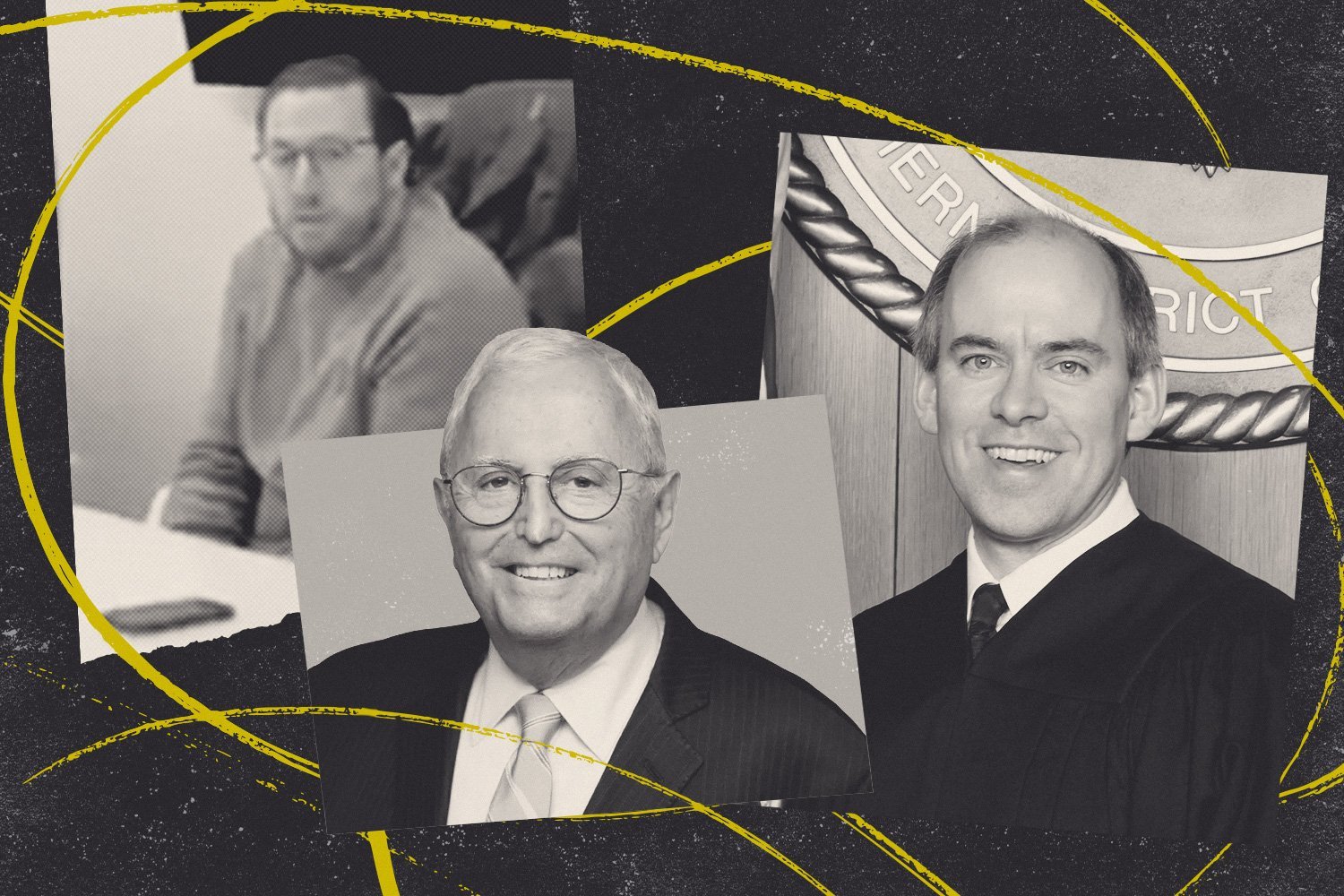
But U.S. Bankruptcy Judge Sean Lane questioned Nussbaum’s motives for bringing the firms into bankruptcy, writing that the filings appeared driven by his “desire to restart the process, with no plausible rationale other than to delay the discovery of additional assets.”
Lane also raised concerns about Nussbaum’s restructuring officer, Ephraim Diamond, who is related to Nussbaum’s ex-law partner Samuel Lowinger. In his 24-page Aug. 14 ruling, Lane described Diamond as “handpicked” despite his “familial ties” to Lowinger.
Creditors are seeking to collect over $400 million from Nussbaum’s former law firms, according to a court filing. Some clients put tens of millions of dollars in the firm’s escrow accounts, which Nussbaum used to make hard money loans to real estate dealmakers. He also deployed a strategy called “showing capital,” in which borrowers used escrow money to prove to lenders they had enough cash to close a deal.
But Nussbaum ran into bigger trouble when he diverted $336 million from his client accounts to his business partner and real estate investor Mendel Steiner. Steiner died by suicide in January 2025 and Nussbaum shut down Nussbaum Lowinger days later.
He appointed Sheldon Eisenberger to oversee an assignment for the benefit of creditors, or ABC, an alternative to bankruptcy. Eisenberger was tasked with pursuing outstanding debts to repay Nussbaum Lowinger’s creditors and obtained a default judgment for more than $300 million against two companies formerly controlled by Steiner.
But the relationship between Nussbaum and Eisenberger became increasingly strained. Eisenberger sued Nussbaum’s personal attorney, alleging the attorney helped Nussbaum divert assets. Eisenberger later discontinued the lawsuit under a stipulation that Nussbaum and the attorney cooperate in turning over the materials.
Three weeks later, Nussbaum hired Ephraim Diamond as a restructuring officer and put his defunct law firms into bankruptcy. Four days after that, the law firms terminated the ABC agreement with Eisenberger.
Lane pointed to that sequence in questioning whether the bankruptcy filings were intended to benefit creditors. Nussbaum’s decision to terminate the agreement without court approval or notifying creditors, the judge wrote, “undermines the debtors’ contention that these bankruptcies were filed in good faith to serve creditors’ interests.”
Lane also found that the debtors — Nussbaum Lowinger and Mark J Nussbaum & Associates — had no realistic path to reorganization, no employees and no cash flow.
“The court historically looks with skepticism upon efforts to change venues in such circumstances,” Lane said.
The wind-down of Nussbaum Lowinger will now move back to state court, where Eisenberger will continue his uphill battle of collecting on Nussbaum’s debts.
Mark Nussbaum declined to comment. An attorney for Eisenberger did not respond to requests to comment.
Read more

Creditors seek at least $400M from Mark Nussbaum’s former law firms

Manhattan DA charges dealmaker Mark Nussbaum with grand larceny