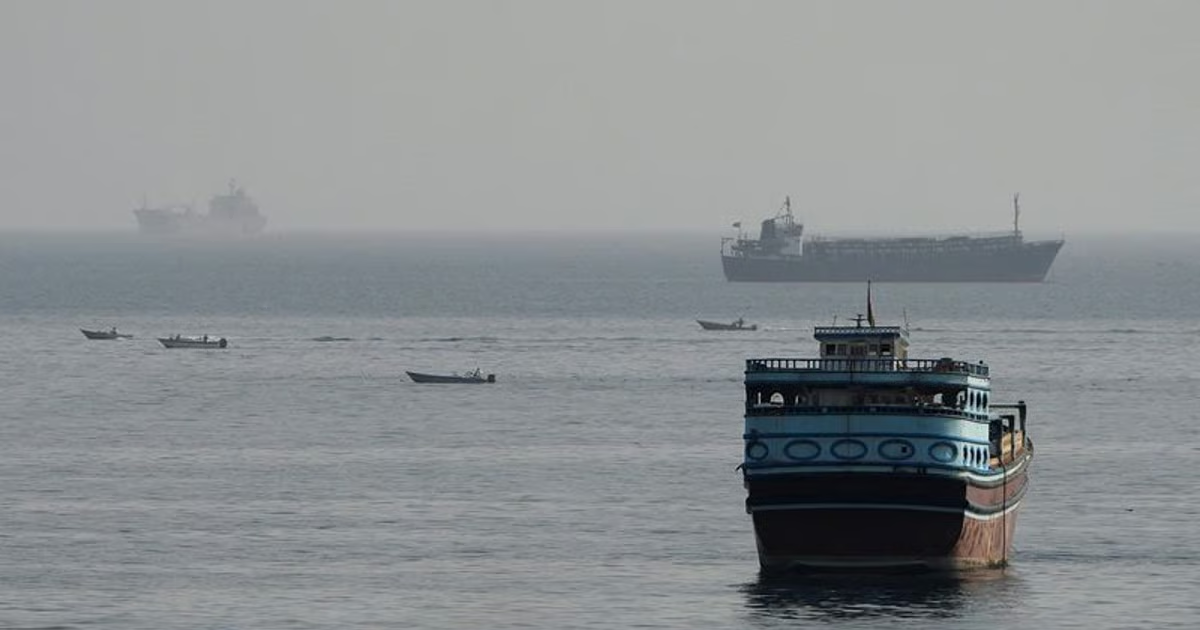
Iran and US Dispute Control Over Strategic Strait of Hormuz Waterway
Iran and US Clash Over Control, Security in the Strait of Hormuz
Escalating Tensions and Strategic Control in the Strait of Hormuz
Iran’s Assertion of Authority
DUBAI, Aug 13 (Reuters) – The Strait of Hormuz is “under Iran’s control and management”, the recently appointed head of Iran’s Basij paramilitary unit said on Thursday, a day after U.S. President Donald Trump said the United States had “total control” of the strategic waterway.
Hossein Taeb said the U.S. had sought to disrupt what he described as the Islamic Republic’s popularity in the region by launching another war in the Strait of Hormuz, but had once more been defeated despite claiming Iran had neither an air force nor a navy.
“Today you see that the Strait of Hormuz is under the management and control of the Islamic Republic,” Taeb said, according to the semi-official Fars news. He added that Iran was continuing on its course in complete security.
Impact of Military Actions on Shipping and Navigation
Closure of the Strait and U.S. Response
After the start of the war, which began with U.S.-Israeli strikes on Iran on February 28, Tehran effectively shut the strait, through which a fifth of the world’s oil and liquefied natural gas was previously shipped.
The U.S. subsequently imposed a naval blockade on Iranian shipping and ports, while saying it would protect freedom of navigation for vessels travelling to and from non-Iranian ports.
Iran’s Restrictions on Vessel Passage
Iran’s joint military command, Khatam al-Anbiya Central Headquarters, said later on Thursday that no vessel could transit the Strait of Hormuz without Tehran’s permission.
“The baseless claims made by the United States regarding the normal passage of vessels through the Strait of Hormuz … are nothing more than lies and falsehoods,” the command said in a statement published by state media.
Diplomatic Efforts and Breakdown
Interim Ceasefire Agreement
In June, the two countries reached an interim agreement declaring a permanent ceasefire and calling for a swift return to freedom of navigation in the Gulf.
Resumption of Hostilities
The deal unravelled a few weeks later after Iran resumed limited attacks on vessels that it said were sailing contrary to the arrangements under the agreement, prompting the U.S. to restart strikes on Iran’s southern provinces, which Washington said were aimed at degrading Tehran’s ability to target vessels in the Gulf.
Iran’s Conditions and Future Warnings
Conditional Reopening of the Strait
Separately on Thursday, senior military political official Rasoul Sanaei-Rad said that Iran would not reopen the strait unless the other side fulfilled its commitments under the interim deal, adding that the reopening of the waterway was not something the U.S. can achieve unilaterally, according to Fars news.
Warnings of Stronger Response
Sanaei-Rad also warned that Iran would respond more forcefully in any future conflict, saying: “In a possible future war, we will stand more firmly and more offensively.”
Reporting and Editorial Credits
(Reporting by Elwely Elwelly and Dubai Newsroom; Editing by Sharon Singleton, Aidan Lewis)