
Mortgage Rates Today, Friday, July 10: A Little Higher
Despite a break in the fighting today, mortgage rates have been creeping higher this week as the Iran ceasefire seemingly falls apart. This week’s aggressions quickly drove up oil prices and bond yields, and we’ve seen mortgage rates head upward, too.
The average interest rate on a 30-year, fixed-rate mortgage rose to 6.44% APR, according to rates provided to NerdWallet by Zillow. This is two basis points higher than yesterday and eight basis points higher than a week ago. (See our chart below for more specifics.) A basis point is one one-hundredth of a percentage point.
Now, so far as mortgage rates are concerned, the Iran war is once again the main character, and if tensions continue to escalate we could see rates go higher. That’s especially true if markets start to believe the Federal Reserve might consider a rate hike sooner rather than later. For more on what’s happening with the Fed, and how it relates to mortgage interest rates, keep reading below the chart.
P.S.: While the economy never sleeps, markets are closed on the weekends. The rates you see Friday are unlikely to change much (if at all) until Monday.
Average mortgage rates, last 30 days
🤓 Kate on Rates: July 9, 2026

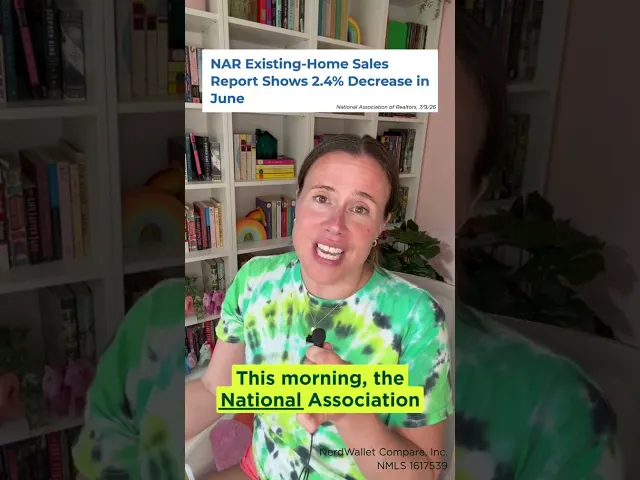
📈 What influences mortgage rates?
As I mentioned above, over the past month-plus mortgage interest rates have been more responsive to the type of domestic news that normally drives rate changes. For the most part, that’s economic data and statements from members of the Federal Reserve. These are parts of the same whole, as economic data is often interpreted from the perspective of the Fed — how will the central bankers think about and react to these numbers?
But for the Federal Reserve to feel confident about making that move, the central bankers also need to feel assured that the labor market is healthy. Higher interest rates slow inflation by discouraging business borrowing and expansion, which can also slow hiring.
Lately it had seemed like this wouldn’t be a problem since the labor market was doing surprisingly well. But those expecting fireworks from last week’s Employment Situation Summary from the Bureau of Labor Statistics got more fizzle than spark. June job gains came in well below projections, at 57,000 compared to an anticipated 100,000 or more.
The jobs data felt like assurance that the central bankers could comfortably remain in wait-and-see mode, especially with the U.S.-Iran ceasefire and the reopened Strait of Hormuz potentially alleviating war-driven inflation. (Inflation would still be a fire in need of putting out, but at least no one would be pouring gas on it. Expensive, expensive gas.)
But if the ceasefire falls apart, inflation fears will ratchet back up — and a Fed rate hike, already no longer an “if” but a “when,” could potentially come sooner. Both of those forces will likely push mortgage rates higher.
Refinancing might make sense if today’s rates are at least 0.5 to 0.75 of a percentage point lower than your current rate (and if you plan to stay in your home long enough to break even on closing costs).
With rates where they are right now, you could start considering a refi if your current rate is around 6.94% or higher.
🏡 Should I start shopping for a home?
There is no universal “right” time to start shopping — what matters is whether you can comfortably afford a mortgage now at today’s rates.
🔒 Should I lock my rate?
Rate locks protect you from increases while your loan is processed, and with the market forever bouncing around, that peace of mind can be worth it.
🤓 Nerdy Reminder: Rates can change daily, and even hourly. If you’re happy with the deal you have, it’s okay to commit.
🧐 Why is the rate I saw online different from the quote I got?
In addition to market factors outside of your control, your customized quote depends on your:
Even two people with similar credit scores might get different rates, depending on their overall financial profiles.
👀 If I apply now, can I get the rate I saw today?
Maybe — but even personalized rate quotes can change until you lock. That’s because lenders adjust pricing multiple times a day in response to market changes.

![Marriott Bonvoy, Bevy Cards Enhance Bonus Offers [Limited Time]](https://bekun.shop/wp-content/uploads/2026/08/nw-pixel-v1.gif)