Should You Forget SpaceX, Starlink, and Small Satellites? USAF Orders 2 Big Billion-Dollar Satellites From Boeing.
Amazon (AMZN -0.66%) is building a constellation of 3,000-plus small “Amazon Leo” satellites to provide broadband internet service from low earth orbit. Blue Origin, Amazon’s Jeff Bezos-founded cousin company, wants to build its own constellation of 5,400 small satellites to provide similar communication services specifically for enterprise, data center, and government customers.
And of course, there’s Starlink. With approximately 10,800 small satellites in orbit, the SpaceX (SPCX -2.85%)-owned satellite communications business already dwarfs Amazon Leo and Blue Origin Terawave, combined. Viewed not in competition with the others, though, but in conjunction, Starlink helps demonstrate the global belief that large satellites have become passe — and small satellites are the future.
Or are they?
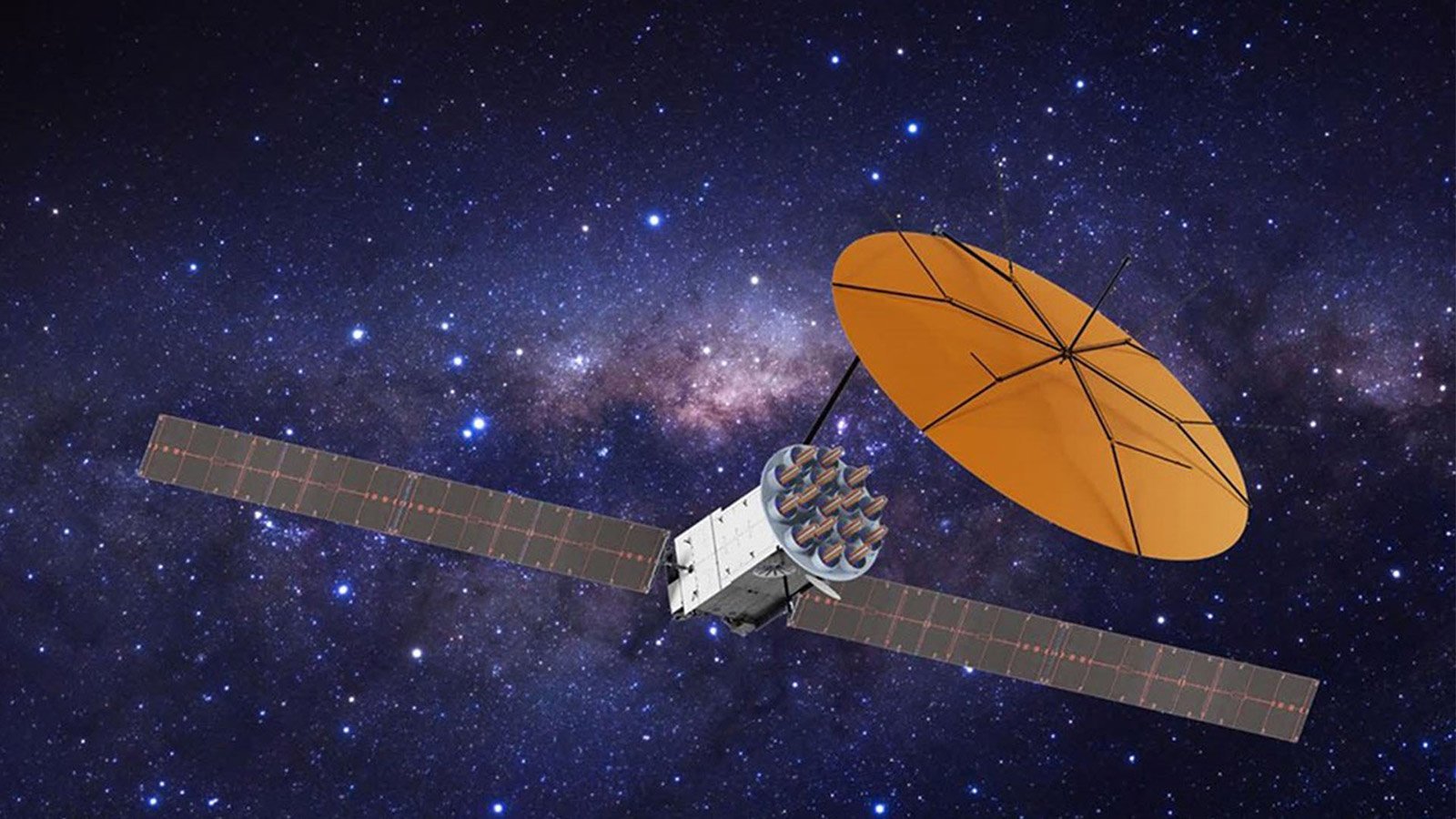
Image source: Boeing.
U.S. Air Force bets big on big satellites
Replacing large satellites in orbit with small satellites makes a lot of sense.
From a security perspective, it’s harder for a hacker, a pirate, or a hostile foreign power to take over or destroy a satellite constellation comprising thousands of parts than a network with just a few dozen multiton satellites circling slowly in geostationary orbit.
From a technology perspective, too, when you consider the pace at which processor speeds are increasing, and launch costs are falling, it makes sense to build a lot of cheap little satellites with short lifespans, and iterate and update and replace them over time — rather than anchor your business to a single large satellite whose technology becomes obsolete a year after it launches.
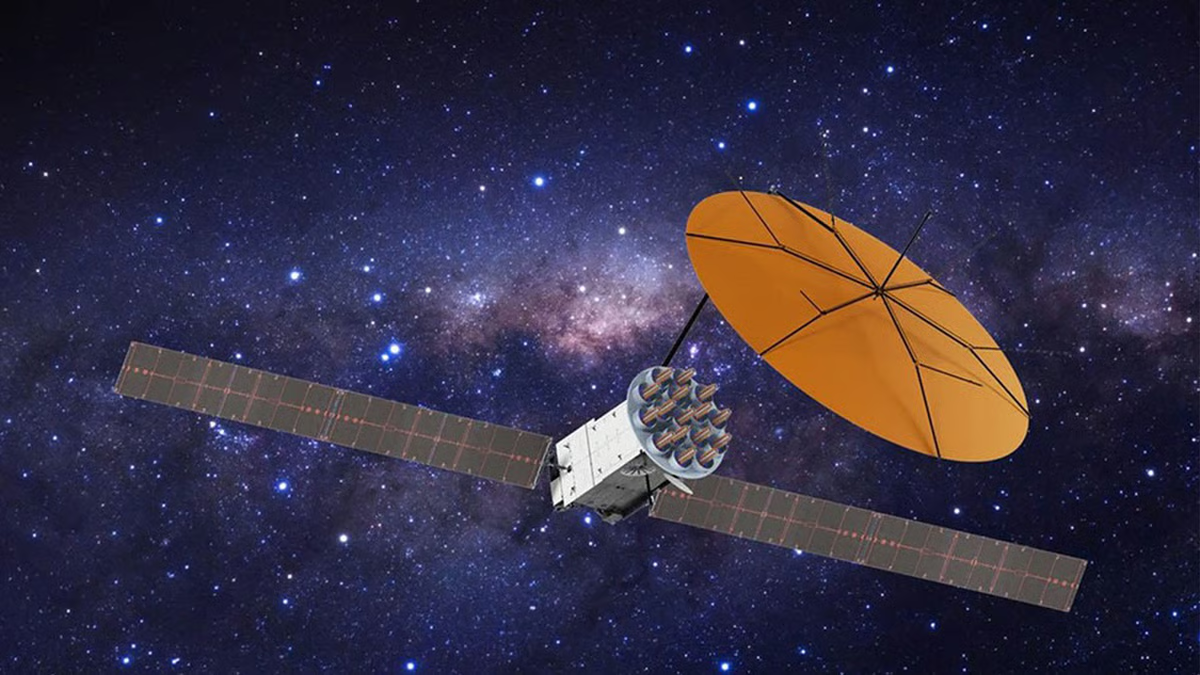
And yet, might there be some advantage to launching large satellites? Because just last month — in the middle of this global movement toward small satellite constellations, the U.S. Air Force awarded Boeing (BA +0.12%) $2 billion to build two large Mobile User Objective System (MUOS) satellites that it expects to remain in service through 2035.

Today’s Change
(0.12%) $0.25
Current Price
$209.48
Key Data Points
Market Cap
Day’s Range
$208.26 – $212.47
52wk Range
$176.77 – $254.35
Volume
182.8K
Avg Vol
6.2M
Gross Margin
4.83%
What is MUOS?
Originally built by Lockheed Martin (LMT +2.46%), which bid on this new contract and lost, MUOS is an ultra-high-frequency system that Boeing says is “designed to sustain and improve a critical communications capability used by military users operating on the ground, at sea and in the air, especially in places where reliable connections are harder to maintain.”
MUOS comprises five original Lockheed-built satellites. Boeing will supplement the existing system and ensure it continues to function after Lockheed’s original satellites begin aging out of service.
What does this contract mean for space stocks?
And that’s probably the important fact for space investors to focus on. Yes, the Air Force is buying large satellites. Yes, it’s paying $1 billion for each, whereas small satellites from Rocket Lab (RKLB -8.70%) and Planet Labs (PL -8.50%) price in the mere millions. But the reason the Air Force is buying big satellites is to replace big satellites it’s already bought.
This doesn’t mean bigger is better. It just means the Pentagon has locked itself into operating big satellites for this particular MUOS project. For future projects, the Pentagon may well favor smaller over larger satellites — just like everyone else on Earth.
Rich Smith has positions in Rocket Lab. The Motley Fool has positions in and recommends Amazon, Boeing, Planet Labs PBC, and Rocket Lab. The Motley Fool recommends Lockheed Martin. The Motley Fool has a disclosure policy.