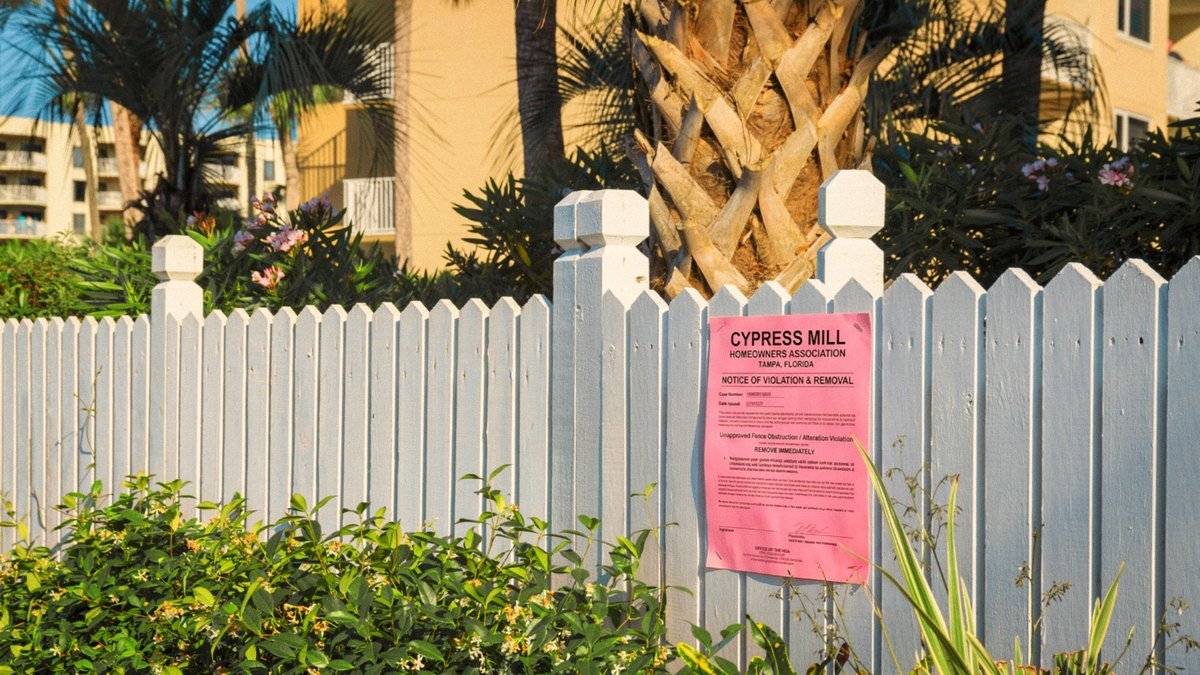
Their HOA Approved Their Fences. Now Homeowners Face a Costly Teardown.
Almost six years ago, Laura Burns-Sierra hired Home Depot to install a fence around her property in the Cypress Mill community near Tampa, FL. She submitted the plans to her homeowners association, received written approval and had the fence professionally installed.
Now, another organization says the fence has to come down.
“We couldn’t do anything, any construction, any fences, nothing, without HOA approval,” Burns-Sierra tells Realtor.com®. “I followed the procedures to the T.”
Burns-Sierra is among a group of homeowners in the Sun City Center neighborhood caught in an unusual dispute between their HOA and the Cypress Mill Community Development District, or CDD. The latter says fences installed within drainage easements are interfering with its ability to maintain the community’s stormwater infrastructure and now need to be removed.
The conflict has left residents facing hundreds or even thousands of dollars in unexpected expenses—and raises an important question for homeowners everywhere:
Is an HOA’s written approval enough to protect you when another governing body has authority over your property?

2 organizations, 2 sets of rules
At the center of the dispute is a distinction many homeowners may not realize exists.
An HOA generally oversees community standards, including architectural approvals, landscaping, and fence design. A CDD, meanwhile, is a special-purpose local government that can be responsible for infrastructure such as roads, drainage systems, and stormwater ponds.
In Cypress Mill, those responsibilities overlap on portions of homeowners’ properties designated as drainage easements.
Jonathan Ellis, a Florida attorney experienced in HOA law—but is not involved in the dispute directly—tells Realtor.com that HOA approval doesn’t necessarily authorize a homeowner to build within an easement.
“The HOA is telling you we don’t have an objection to the fence,” Ellis explains. “That doesn’t mean now you can build the fence and don’t worry about federal law, municipal law, or requirements of the CDD.”
In other words, the HOA may have properly approved the fences under its own rules without resolving whether they complied with the district’s separate requirements.
Ellis says the similar names of the HOA and CDD can add to the confusion, particularly for homeowners who aren’t familiar with the distinction between the two organizations.
Homeowners say they followed the rules
Burns-Sierra says the community’s drainage ponds had been maintained for years without her fence becoming an issue.
She had her fence installed in May 2021, after receiving written approval from the HOA. About five years later, around Sept. 1, 2026, she and other residents received notice that the structure encroached on a drainage easement and would have to be removed by Sept. 18.
Burns-Sierra says maintenance contractors eventually arrived outside her home prepared to remove her fence and sought $625 for the work.
She refused, saying she wanted time to investigate the district’s authority and understand why a fence that had been approved years earlier was suddenly unacceptable.
“I am not going to pay you no money to tear down my fence,” she recalls telling the workers.
Neighbor Victor Abreu faced a similar predicament, although his circumstances were different.
Abreu tells Realtor.com that he received written HOA approval to install a gate connecting his home to an existing fence belonging to his neighbor.
When the CDD subsequently demanded that the structures obstructing the drainage easement be removed or relocated, Victor complied.
On Oct. 19 he paid a contractor $1,000 to install a new section of fencing closer to his house, losing part of a garden he estimates had cost approximately $1,500.
The new arrangement also created a wider opening between neighboring properties, raising concerns about privacy, security, and access to the pond behind their homes.
Victor says he believes communication broke down between the two organizations.
“I would blame both of them,” he says. “I would say 50-50.”
Why the district says the fences must go
The Cypress Mill CDD maintains that the drainage easements are essential to the neighborhood’s stormwater management system.
In a written response to Realtor.com, district counsel Whitney A. Sousa said the ponds and drainage areas are subject to environmental permits and oversight, including requirements administered by the Southwest Florida Water Management District.
The district has a legal responsibility to ensure contractors can inspect, maintain, and repair the system.
Mason Leon, the CDD’s on-site manager, tells Realtor.com that the fencing situation eventually made one pond inaccessible to the district’s aquatic maintenance contractor through authorized access routes.
According to Sousa, the issue was brought before the CDD board on Aug. 13, 2026. A subsequent review identified 11 properties with fences or other structures encroaching on drainage easements.
The district determined that the encroachments must be removed to preserve access for maintenance equipment, vehicles, and contractors.
Importantly, Sousa acknowledged that better coordination between the HOA and CDD might have prevented the dispute.
“Ideally, these easements would have been identified during the HOA’s review process, and the CDD would have been contacted before the fences were approved or installed,” she wrote.
The district plans to work with the HOA to clarify approval requirements going forward.
For homeowners already affected, however, the district expects them to cover the costs of removing or relocating their fences.
Sousa said residents requesting additional time have received extensions. The district does not believe those expenses should be spread across the neighborhood through CDD assessments.
Who is responsible when an HOA approves the wrong thing?
Although residents are understandably frustrated, Ellis cautions against assuming the HOA is legally responsible simply because it approved their projects.
“Normally it’s the unit owner that’s responsible,” he says, referring to securing all necessary permissions before construction.
He explains that an HOA’s approval generally addresses its own governing documents, including covenants, conditions, and restrictions. It doesn’t eliminate the need to comply with separate drainage easements, building regulations, or other legal requirements.
Contractors may also have a role in identifying restrictions before beginning work.
Ellis notes that some communities permit fences within easements on the condition that homeowners remove them when access is needed.
The Cypress Mill CDD, however, has determined that all identified encroachments must be removed.
For homeowners like Burns-Sierra and Abreu, the distinction between an HOA’s authority and the district’s legal responsibilities has proved expensive.
What homebuyers should know before installing a fence
The dispute offers a cautionary lesson for anyone purchasing a home or planning an outdoor renovation.
Ellis recommends determining which organizations have authority over a property before undertaking improvements.
“Homebuyers want to make sure when they’re buying a home that they know of each of the entities that has a say over their property,” he says.
That means checking recorded plats, property surveys, and easement documents before installing fences, patios, pools, or other improvements. Homeowners should also determine whether approvals are required from an HOA, CDD, municipality, county, or utility provider.
And when multiple organizations are involved, written approval from one shouldn’t be mistaken for permission from all of them.