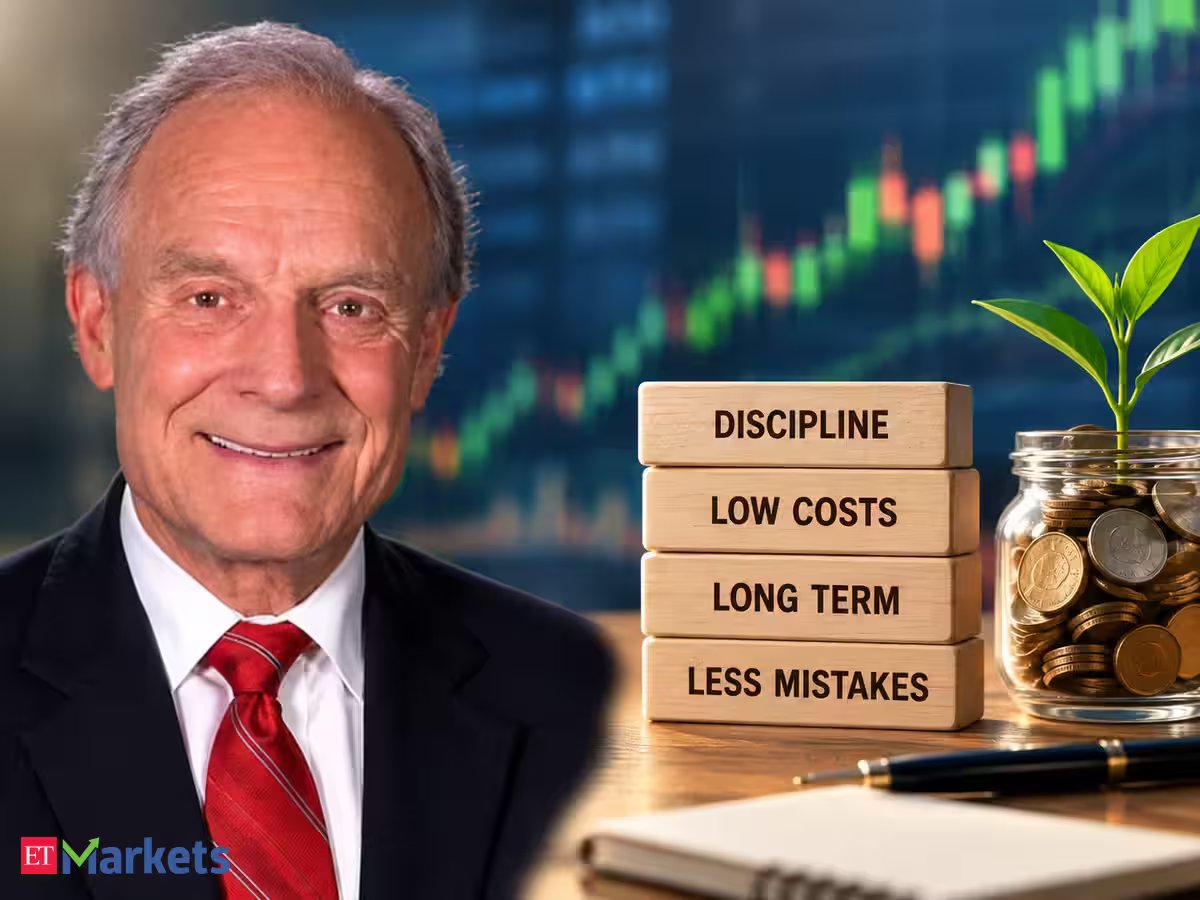
How to win the investing game? Charles Ellis says make fewer mistakes, focus on long-term goals
This is the central message of Charles D. Ellis, a veteran investment adviser and author of Winning the Loser’s Game. Ellis argues that the investment landscape has changed significantly over the decades, making it increasingly difficult for individual investors to consistently outperform the broader market.
His philosophy challenges the belief that investors must constantly search for winning stocks or trade actively to build wealth. Instead, he emphasises the importance of recognising personal limitations, managing risks and sticking to a well-defined investment strategy.
Why investing has become a loser’s game
Ellis compares investing with tennis to explain why many investors struggle to outperform the market. In amateur tennis, the winner is often the player who makes fewer unforced errors rather than the one who produces spectacular shots.
He believes the same principle applies to investing. Investors can undermine their returns through unnecessary trading, emotional decisions, excessive risk-taking and attempts to predict short-term market movements.

According to Ellis, the stock market was once more accessible to individual investors seeking to outperform professional participants. However, the growing presence of skilled institutional investors and professional fund managers has made finding an advantage increasingly difficult.
With market participants devoting substantial resources to research, analysis and execution, individual investors face formidable competition when trying to identify opportunities that others have overlooked.Ellis’s argument is that investors should reconsider whether beating the market is a realistic objective. Rather than competing directly with professionals, they can focus on building wealth through a simpler, lower-cost and more disciplined approach.
Why trying to beat the market can backfire
The temptation to outperform the market often encourages investors to trade frequently, chase popular stocks and react to short-term developments.
However, such activity can increase transaction costs and expose portfolios to avoidable risks.
Ellis advocates a simpler approach for most individual investors: gain broad market exposure through low-cost index funds instead of continually trying to pick winning stocks.
Index investing lets investors participate in the performance of a broad market segment without predicting which individual companies will outperform. Lower investment costs can also help preserve long-term returns.
The underlying principle is that investors do not need to win every market battle to achieve their financial goals. They need a strategy that lets them stay invested and benefit from long-term economic and corporate growth.
The importance of controlling emotions
Ellis believes the hardest part of investing is often psychological rather than intellectual. Investors may understand the importance of long-term planning but struggle to follow their strategy when markets become volatile.
During rallies, the fear of missing out can encourage investors to buy stocks at inflated valuations. During corrections, fear can prompt them to sell investments at unfavourable prices.
Such behaviour can turn temporary market fluctuations into permanent losses. Investors who repeatedly change their strategies in response to headlines or market sentiment may also miss periods of recovery.
Ellis therefore emphasises patience and what he describes as a form of benign neglect: maintaining a long-term investment approach without becoming distracted by every market development.
This does not mean ignoring investments altogether. It means avoiding unnecessary interventions when the original investment rationale and financial goals remain unchanged.
Why avoiding large losses matters
A key element of Ellis’s philosophy is the importance of protecting capital. Investors who take excessive risks in pursuit of unusually high returns can expose themselves to losses that are difficult to recover from.
For example, a portfolio that falls 50% must subsequently gain 100% just to return to its original value. This illustrates why avoiding severe losses can be as important as generating gains.
Ellis encourages investors to assess their financial objectives realistically and avoid taking risks beyond their capacity to absorb losses. Borrowing excessively to invest, becoming overconfident after a market rally and allowing emotions to dictate decisions can all damage long-term wealth creation.
His approach does not suggest eliminating all investment risk. Rather, it calls for taking risks deliberately and ensuring they are consistent with an investor’s financial circumstances and time horizon.
Discipline matters more than constant activity
Ellis also cautions against treating investing as a source of excitement or entertainment. Constantly searching for the next multibagger, tracking market movements throughout the day or switching investments in pursuit of higher returns can distract investors from their broader objectives.
Instead, he recommends establishing clear long-term goals, selecting an appropriate investment strategy and maintaining the discipline to follow it.
Investors should understand their financial requirements, risk tolerance and investment horizon before committing money to the market. Their portfolios should reflect these considerations rather than short-term market enthusiasm.
For investors who choose to manage their own portfolios, research and an understanding of investment products are essential. Those who seek professional assistance should also evaluate the competence, incentives and costs associated with their advisers and fund managers.
Mistakes investors should learn to avoid
Ellis’s investment philosophy highlights several common errors that can undermine wealth creation.
- Trying too hard to outperform: Constantly searching for winning stocks can lead to unnecessary trading and higher costs.
- Impatience: Expecting immediate results can encourage investors to abandon sound strategies prematurely.
- Excessive borrowing: Leverage can magnify losses and make it harder to withstand market downturns.
- Overconfidence: Assuming that past success guarantees future performance can lead to poor risk assessment.
- Emotional investing: Fear and greed can push investors into buying or selling at the wrong time.
- Unrealistic expectations: Pursuing returns beyond what a portfolio can reasonably deliver can encourage excessive risk-taking.
Recognising these patterns can help investors build a more consistent approach to managing money.
The takeaway: Plan your investments and stick to the strategy
Ellis’s message is not that investors should never make mistakes or avoid taking risks altogether. Instead, it is that long-term success depends on understanding one’s limitations, setting realistic objectives and avoiding decisions that can cause lasting financial damage.
For many investors, this means focusing less on outperforming the market and more on maintaining a diversified portfolio, controlling costs, managing risk and remaining patient.
The broader lesson is that successful investing does not necessarily require extraordinary predictions or constant activity. A sensible plan, followed consistently through changing market conditions, can be more valuable than repeatedly attempting to outsmart other market participants.
(The article is based on Charles D. Ellis’s investment philosophy and his book Winning the Loser’s Game.)
(Disclaimer: This article is for educational purposes only and should not be construed as investment advice.)