Beyond Data: Why Context is the Next Frontier in Trading AI
Two traders can receive the same market signal and reach different decisions. One may be considering a new position; the other may already have substantial exposure to the same instrument.
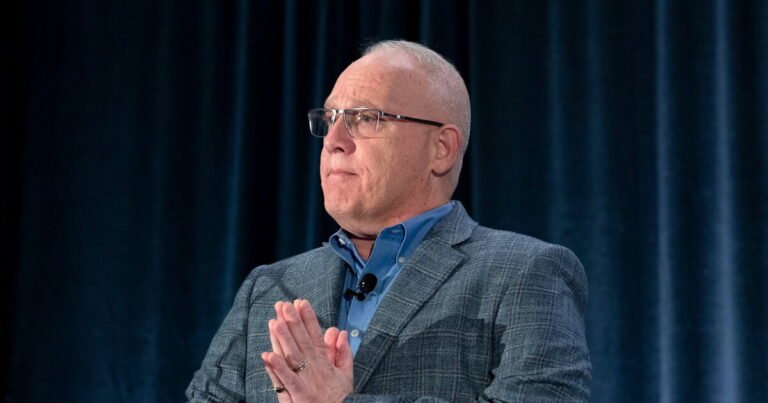
This was the central point I explored at iFX EXPO Asia 2026 in Hong Kong. As artificial intelligence (AI) needs to consider a trader’s circumstances alongside market data.
From Trading Signals to Contextual Intelligence
Machine-learning models can analyse historical market data to identify patterns that might offer trading opportunities.
A signal based on historical prices does not, by itself, account for a trader’s open positions. If it suggests buying EUR/USD (Euro against the US Dollar), someone already holding a large buy position would need to check whether adding to it fits their risk limits.
Contextual intelligence looks at how three types of information interact when traders make decisions.
• Personal context covers the trader’s strategy, capital, trading habits, and risk tolerance.
• Market context includes economic developments, volatility, and liquidity, or how easily an instrument can be traded.
• Trade context concerns the position itself, including its size, intended holding period, and stop-loss and take-profit levels.
If market volatility rises while a trader holds an open position, the range of potential gains and losses may widen. Whether this calls for an adjustment depends on the position’s size and direction, the trader’s strategy, and their risk limits.
If the trader then adds to the position, their exposure increases. A contextual AI system would need to reassess the position against the trader’s strategy and risk limits, taking higher volatility into account.
Scenario Analysis Before a Market-Moving Event
Consider a trader holding a forex position 30 minutes before a major economic announcement. An AI workflow could examine how the position might be affected by different market reactions, using current market data and information about the trader’s exposure.
The analysis would outline possible outcomes rather than predict how markets will respond to the announcement.
The trader could then assess whether the position still fits their risk limits. Depending on their trading plan, the trader might decide to maintain it open, reduce their exposure, or close it before the announcement.
Different Markets Can Carry the Same Risk
A trader might hold buy positions in gold (XAU/USD), EUR/USD, and the Nasdaq-100, assuming their risk is spread across different markets. Yet all three can be affected by changes in US interest-rate expectations.
On 23 September 2022, gold prices, EUR/USD, and US equity indices all declined amid expectations of further interest-rate increases and growing recession concerns. A trader holding buy positions across these markets could have faced losses on several trades at once.
A contextual AI system could examine these overlapping exposures and assess how simultaneous market movements might affect the account. The trader could then review their total exposure before deciding whether any adjustments are necessary.
AI can Generate a Strategy, That Does Not Validate it
Towards the end of my iFX EXPO discussion, I raised a concern about how traders sometimes use generative AI.
Someone might ask a chatbot to produce a profitable trading strategy and receive detailed trading rules, an explanation of the approach, or even computer code.
A detailed answer can easily be mistaken for a tested one.
Large language models (LLM) can generate inaccurate information and make unsupported assumptions. Without reliable data, a defined methodology, and proper testing, traders have little basis for judging whether the proposed strategy is sound.
I would encourage traders to start with a specific problem in their trading process and use AI to investigate it with reliable data and a clearly defined methodology. The findings can then be checked against actual trading records and market conditions.
For me, the next stage of trading AI moving towards contextual trading intelligence systems that build on existing trading tools. Such systems could support traders as they evaluate opportunities, manage positions, and review their performance, with the analysis adapting as market conditions and individual circumstances change.
Ultimately, the value of trading AI should not be measured by how confidently it generates a signal, but by how effectively it helps traders understand the risks, assumptions and implications behind a potential decision.
AI can broaden the analysis. Context can make it more relevant. Human judgement remains essential.
About the Author
Dr Parker Tian is Head of EBC AI Lab at EBC Financial Group. He presented The Data Isn’t Enough: Contextual Intelligence for Trading Decisions at iFX EXPO Asia 2026 in Hong Kong, exploring how AI-assisted analysis can support trading decisions.
EBC Financial Group was recognised as Most Trusted FX Broker and Best CFD Broker at the World Finance Forex Awards 2026. At the UF Awards APAC 2026 awards ceremony held in conjunction with iFX EXPO Asia in Hong Kong, EBC Financial Group was awarded the Best Broker – APAC.