France And The UK Face Surging Crypto Crime As Economic Protests Rock Italy And Other European Nations
France has recorded a sharp and sustained increase in violent crimes linked to cryptocurrency holdings, with official figures showing 90 cases of kidnapping, abduction, extortion, threats, and violent theft between 1 January and mid-August 2026—roughly one incident every two and a half days.
Authorities also reported 223 arrests and 126 imprisonments in the first seven months of the year.
Independent trackers place France at the top of global rankings for such “wrench attacks,” ahead of the United States and the United Kingdom.
Earlier data from the National Prosecutor’s Office for Organized Crime indicated roughly 20 incidents in 2024 and 67 in 2025, confirming a clear upward trajectory.
High-net-worth individuals and their relatives have been disproportionately affected.
Organized groups have used home invasions, overnight captivity, and physical coercion to force transfers of digital assets.
More than 40 percent of French victims have been family members or close associates rather than the primary holders.
Investigators link the pattern to large-scale leaks of personal and financial data.
These include a 2024 compromise of French tax records that exposed identities and crypto-related information, a January 2026 breach at the French tax-reporting firm Waltio affecting roughly 50,000 users, and a 2026 incident in which Revolut transmitted customer KYC documents, account details, and Bitcoin transaction histories after responding to fraudulent requests sent from a compromised Italian government email domain.
Hardware wallet makers Ledger and Trezor have also seen customer shipping addresses, names, emails, and phone numbers exposed through third-party logistics and e-commerce partners, creating usable targeting lists for criminals even when the wallets themselves remain secure.
These attacks are unfolding against a backdrop of pronounced economic strain in France.
The IMF projects GDP growth of only 0.4 percent in 2026, among the weakest outcomes in the euro area, while public debt stands near 119 percent of GDP and the deficit is expected to remain elevated.
Inflation has been pushed higher by energy prices, household purchasing power has weakened, and unemployment is forecast to rise.
On 17 October 2026, nationwide protests over the cost of living, school conditions, and public services drew an estimated 550,000 participants.
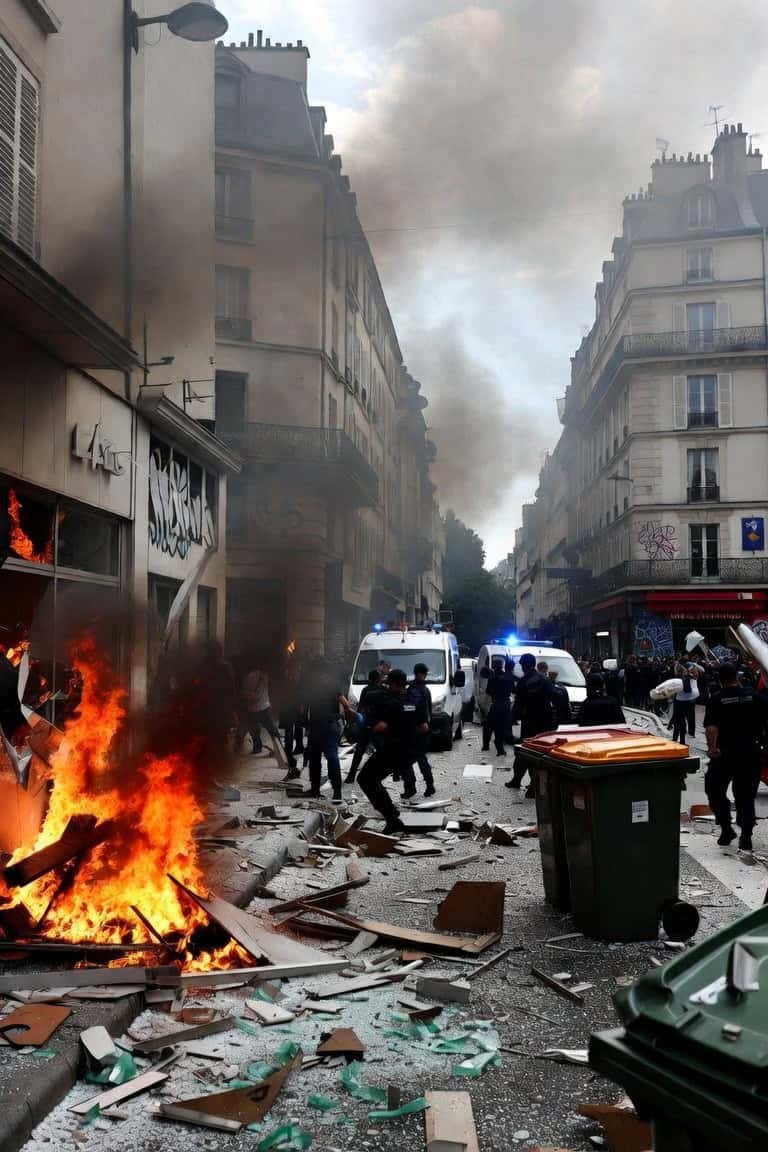
In Paris, clashes involved tear gas and water cannon; buildings were set alight and shops looted. In Limoges the historic town hall burned, with its roof partly collapsing.
Marseille saw protesters enter the town hall, while Lyon’s tourist office was torched.
Violence and looting were also reported in Rennes, Toulouse, Angers, Grenoble, and other cities.
More than 1,200 people were arrested nationwide.
Economic hardship does not mechanically produce crime, but periods of stagnating wages, rising essential costs, and fiscal pressure have historically coincided with higher rates of opportunistic and organized property crime; the current crypto-focused violence fits within that broader context of strained living standards and eroded public confidence.
Italy has experienced parallel unrest.
Students, unions, and residents have marched in Rome, Milan, Bologna, and Turin against sharp increases in living and fuel costs that have not been matched by wage growth.
Real wages have stagnated or declined over longer periods, and September inflation reached 4.2 percent, driven largely by energy.
Clashes in Milan included stone-throwing, fires, and arrests; truck drivers and farmers blocked roads in southern regions over fuel prices.
These actions remain smaller in scale than France’s but reflect the same regional pressure from elevated energy costs and limited income growth.
The present difficulties are not yet comparable to the subsistence crisis that preceded the French Revolution of 1789, when poor harvests drove bread prices so high that urban wage-earners devoted as much as 80 percent of their earnings to the staple and rural laborers faced comparable hardship.
The direction of travel—rising essential costs outpacing incomes amid fiscal and geopolitical stress—is nonetheless visible.
Rapid adoption of digital technologies, including generative AI, has added further strain.
Deepfake voice and video impersonation has already enabled large frauds, such as the roughly €95 million loss at an Italian private bank through synthetic executive communications.
Across Europe, AI-assisted phishing, cloned voices, and scalable scams are eroding trust and increasing losses for individuals and institutions, compounding the vulnerabilities created by data leaks.
The ongoing confrontation involving Iran has intensified these pressures by constraining oil flows through the Strait of Hormuz.
Stockpiles held outside the reach of a U.S. naval blockade have been exhausted, exports have been sharply reduced, and benchmark crude prices remain elevated.
The resulting energy shock is feeding European inflation and transport costs while geopolitical uncertainty persists.
The United Kingdom has also recorded a rise in violent crypto-related crimes, including home invasions and knife-point extortion of large sums, with security firms ranking it behind only France and the United States in recent tallies.
Europe as a whole is navigating simultaneous socioeconomic pressures—high public debt, energy-driven inflation, and stagnant real incomes—and geopolitical disruptions that ripple through supply chains and markets.
The combination of targeted physical crime enabled by leaked data, widespread cost-of-living protests, and external energy shocks underscores the interconnected challenges facing the region.