CrowdStrike vs. Figma: Comparing Revenue Trends Between Two High-Growth Tech Companies
CrowdStrike: A Steady Upward Revenue Trajectory
CrowdStrike (CRWD +2.82%) primarily generates its core operational revenue through both direct and partner-assisted subscription sales of its centralized cybersecurity software platform and its associated cloud-based protection modules to various large global enterprise customers worldwide.
It appointed a new chief product officer to lead its internal product organization in July of 2026, and it formally expanded an existing technology integration agreement with OpenAI to incorporate newer software models into CrowdStrike’s platform in early September.
Figma: Consistent Quarterly Revenue Expansion
Figma (FIG -2.88%) earns the majority of its operational revenue by selling tiered subscription access to its collaborative, browser-based software tools designed specifically for visually creating, prototyping, and building interactive digital user experiences.
It transitioned its existing chief technology officer to the newly created role of chief architect in August of 2026, while it experienced a temporary service outage affecting general user connectivity for several hours during the previous month.
Why Revenue Matters for Investors
Revenue provides a starting point to help investors understand the total amount of money a business brings in before deducting any operational expenses. This metric helps investors measure a company’s overall size, market footprint, and long-term trajectory.
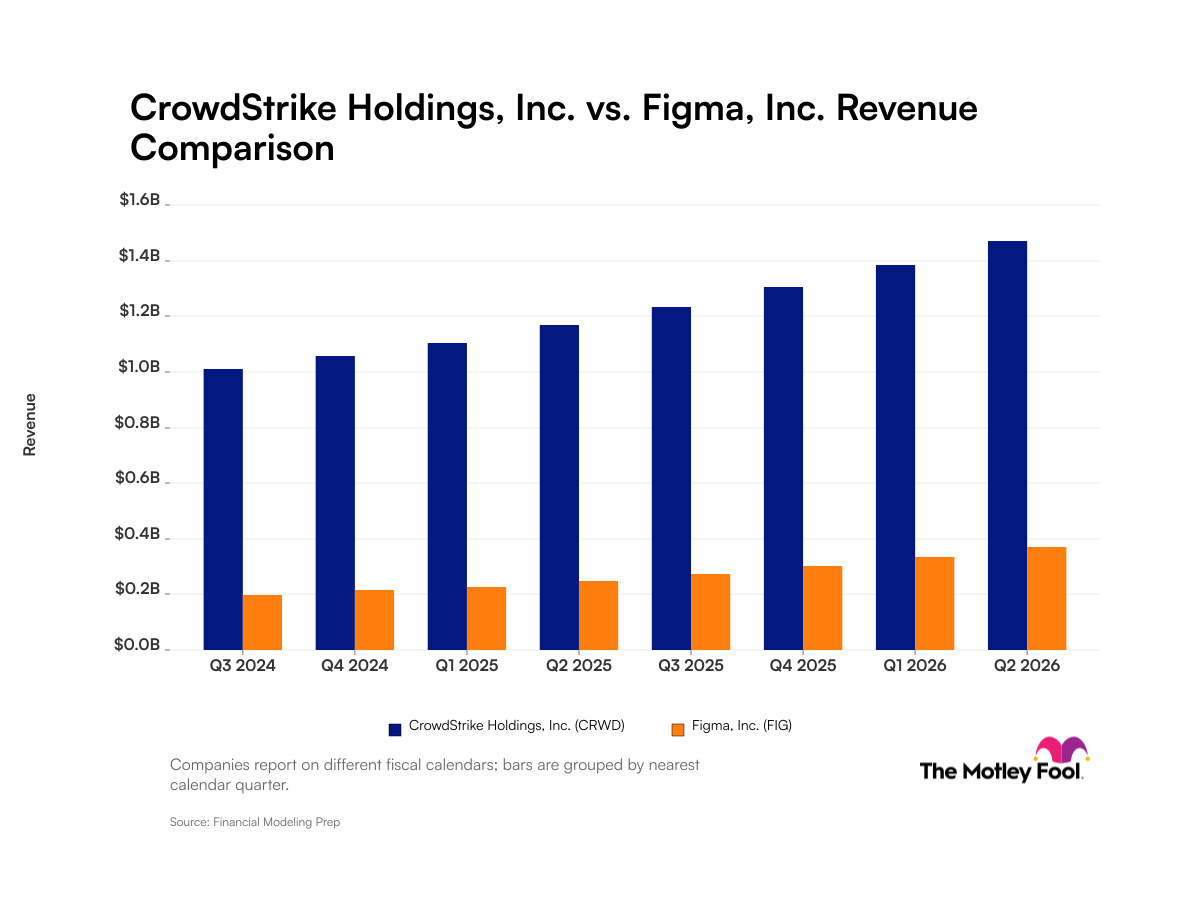
Quarterly Revenue Totals for CrowdStrike and Figma
| Calendar quarter | CrowdStrike Revenue | Figma Revenue |
|---|---|---|
| Q3 2024 | $1.0 billion (quarter ended Oct. 31, 2024) | $198.6 million (quarter ended Sept. 30, 2024) |
| Q4 2024 | $1.1 billion (quarter ended Jan. 31, 2025) | $216.9 million (quarter ended Dec. 31, 2024) |
| Q1 2025 | $1.1 billion (quarter ended April 30, 2025) | $228.2 million (quarter ended March 31, 2025) |
| Q2 2025 | $1.2 billion (quarter ended July 31, 2025) | $249.6 million (quarter ended June 30, 2025) |
| Q3 2025 | $1.2 billion (quarter ended Oct. 31, 2025) | $274.2 million (quarter ended Sept. 30, 2025) |
| Q4 2025 | $1.3 billion (quarter ended Jan. 31, 2026) | $303.8 million (quarter ended Dec. 31, 2025) |
| Q1 2026 | $1.4 billion (quarter ended April 30, 2026) | $333.4 million (quarter ended March 31, 2026) |
| Q2 2026 | $1.5 billion (quarter ended July 31, 2026) | $370.1 million (quarter ended June 30, 2026) |
Data source: Financial Modeling Prep. Data as of Sept. 25, 2026.
Foolish Take
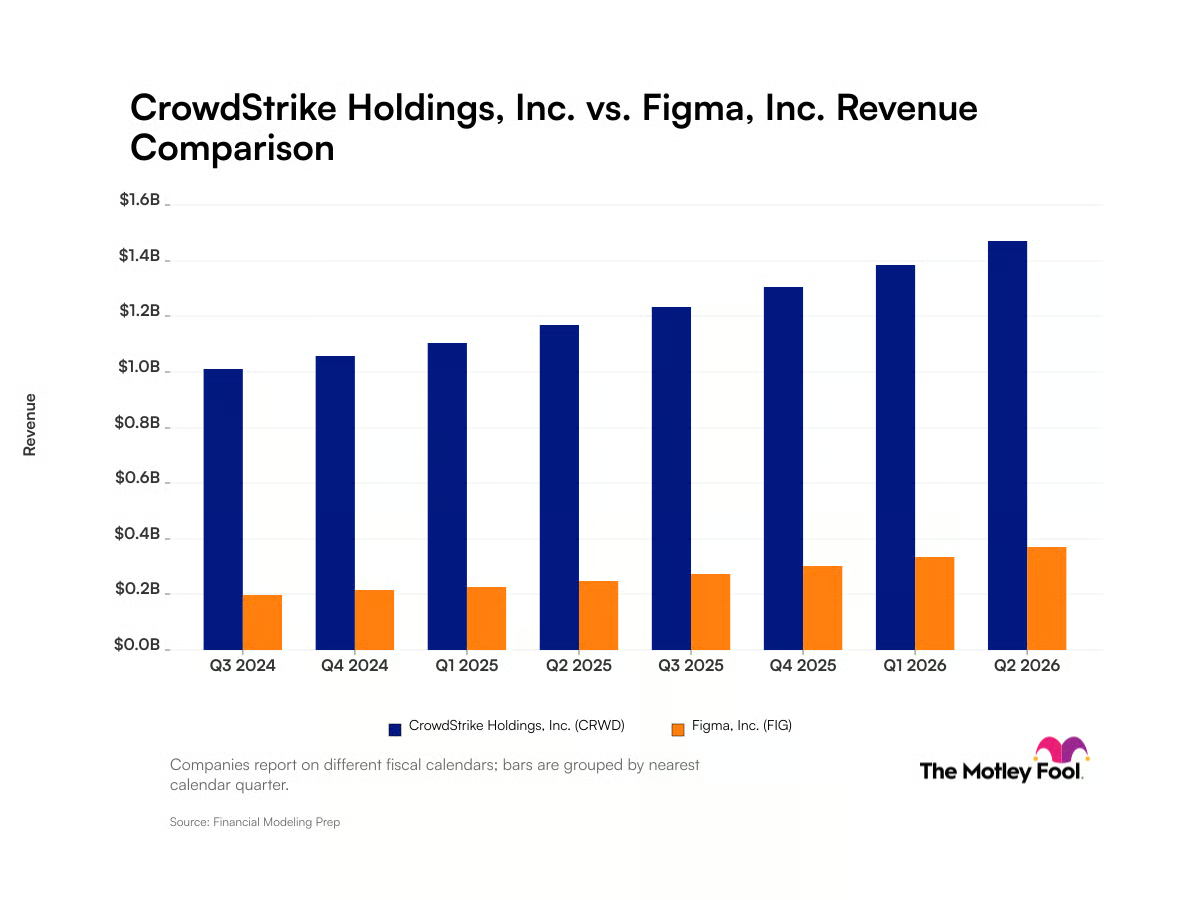
CrowdStrike’s far greater sales totals compared to Figma demonstrate the former’s success at capturing the large market for cybersecurity. That said, both are enjoying excellent revenue growth.
George Kurtz, CrowdStrike’s founder and Chief Executive Officer, called the company’s fiscal second quarter, ended July 31, “the best quarter in CrowdStrike’s history.” Its Q2 revenue of $1.5 billion represented 26% year-over-year growth.
Not to be outdone, Figma’s Q2 sales of $370.1 million was a whopping 48% year-over-year increase. The design enterprise’s revenue growth was helped by incorporating artificial intelligence capabilities into its platform and charging based on usage.
CrowdStrike’s partnership with OpenAI signals the cybersecurity company’s own strengthening of AI usage. In a world where AI can hack organizations with unprecedented speed and skill, CrowdStrike’s solutions are in high demand, as demonstrated by its record net new annual recurring revenue of $333 million, representing 51% year-over-year growth.
Despite the consistent rise in revenue, both companies are not profitable. CrowdStrike exited its fiscal Q2 with an operating loss of $33.2 million. Figma posted a much larger Q2 loss from operations of $117.3 million.