Warren Buffett Paid About $1.3 Billion for Berkshire’s Coca-Cola Shares. They’re Now Worth About $37 Billion.
In August 1994, Berkshire Hathaway (BRKA +1.08%)(BRKB +1.21%) ended a seven-year buying spree in Coca-Cola (KO +2.06%). All told, Warren Buffett spent about $1.3 billion on what are now 400 million shares of the drinks giant.
And Berkshire still owned all of those shares at the end of June, according to its last quarterly filing. With Coca-Cola stock at around $93 as I write, near its record high, the stake is worth about $37 billion.
Even more impressive, Berkshire now gets about $848 million a year in Coca-Cola dividends. That’s about 65% of what it originally spent on the shares, every single year.
Could someone buying the stock near today’s record expect anything similar? I doubt it. And I think the reason has more to do with the price Buffett paid than with the business he bought.

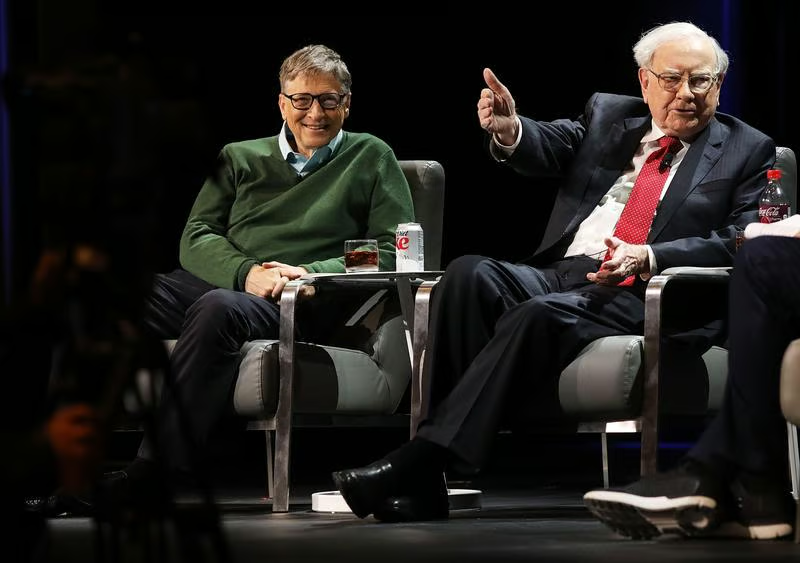
Warren Buffett and Bill Gates. Image source: Getty Images.
Bigger dividend checks
Buffett laid out why this investment did so well in Berkshire’s 2022 shareholder letter.
“All Charlie [Munger] and I were required to do was cash Coke’s quarterly dividend checks,” he wrote, after noting Berkshire’s yearly dividend from Coca-Cola had climbed from $75 million in 1994 to $704 million in 2022.
The checks kept getting bigger from there. Berkshire took in $816 million in Coca-Cola dividends in 2025, according to the conglomerate’s latest annual letter. In February, Coca-Cola boosted its quarterly dividend around 4% to $0.53 a share, its 64th consecutive annual increase. On Berkshire’s 400 million shares, the new rate means around $848 million a year. The 1994 check has grown more than elevenfold.
But the growth has slowed. Between 1994 and 2022, Berkshire’s Coca-Cola dividends compounded at around 8% yearly. The rise from $704 million to the current $848 million rate means growth closer to 5% a year.
Buffett bought a far higher yield
The pace of raises counts, but so does the starting point. Berkshire’s $75 million in dividends in 1994 was around 5.8% of what it paid for the shares. In other words, Buffett was already getting a solid yield the year Berkshire finished buying, before three decades of raises were added to it.
I’d say that starting yield did as much of the work as the raises did.
A buyer today starts from a much lower base. At around $93, Coca-Cola’s $2.12 yearly dividend comes to a yield of about 2.3%. Put the same $1.3 billion into the stock today, and it’d pay about $30 million a year in dividends, under half of what Berkshire got in 1994.
Even if Coca-Cola keeps raising its payout about 5% a year, a buyer at today’s price would need almost two decades to earn a 5.8% yield on what they paid.
Is Coca-Cola stock a buy near a record high?
Sure, Coca-Cola’s business is doing well. Showing its momentum, the company grew organic revenue (sales growth excluding currency moves, acquisitions, and divestitures) 6% for the second quarter of 2026 versus the same period last year.
On a non-GAAP (adjusted) basis, earnings per share climbed 11% year over year, and 14% in the year’s first six months. And management now expects adjusted earnings per share to grow 9% to 10% in 2026, helped by currency. That suggests slower growth in the second half than in the first.
But the stock has arguably run ahead of that growth. Coca-Cola shares have risen around 34% since 2025 ended, adding more than $9 billion to the value of Berkshire’s stake.
KO Coca-Cola
$93.90+$1.90 (+2.06%)
NYSE · As of 4:00 PM ET 10/16/26
At about 29 times its adjusted earnings for the last four quarters, Coca-Cola stock costs much more than the 23 times earnings it fetched at the end of 2025. Based on next year’s expected earnings, its price-to-earnings ratio is still around 26.
That’s a hefty price for a business expected to grow earnings at a high-single-digit pace. It also means a new buyer might be relying on more than steady dividend growth. They probably need the stock to keep most of this year’s higher valuation, too.
In the end, Coca-Cola is still the sort of business Buffett bought. But Berkshire’s result came from buying it when the dividend already paid a solid yield, then waiting over 30 years. At around 29 times earnings and a 2.3% yield, a new buyer gets the same business without that starting point.
For investors who already own the stock, holding on looks reasonable to me. But I’d want a higher starting yield than 2.3% before buying in.