‘Medicare for All’ to ‘Take on Big Pharma’: What’s Behind Healthcare Slogans
NerdWallet will be defining some of the slogans and catchphrases that are appearing in campaign ads and coverage in the weeks leading up to the election. This is the second in the series.
Healthcare costs remain one of voters’ top economic concerns heading into the election. An Oct. 6 KFF Health Tracking Poll finds that 6 in 10 voters say they’re worried about affording healthcare, while nearly half say the cost of healthcare is extremely important for candidates to address.
As in previous election cycles, 2026 candidates are framing healthcare issues with a populist message: The problem isn’t just whether Americans can access healthcare, but whether they can afford it — and who benefits from those high costs.
Here are three of the main messages candidates are using in their campaigns to address coverage, affordability and corporate power:
-
“Medicare for All” — a proposal to restructure how Americans get health coverage.
-
“Lower healthcare costs” — an affordability message focused on reducing what patients and families pay for care and coverage.
-
“Take on Big Pharma” — a promise to challenge pharmaceutical companies’ drug pricing power and influence.
Let’s break those down further.
Meet MoneyNerd, your shortcut to smart money moves
NerdWallet’s twice-weekly newsletter offers practical, no-fluff guidance to help you spend smarter, save more, and make confident money decisions. Delivered free to your inbox.

What does ‘Medicare for All’ mean?
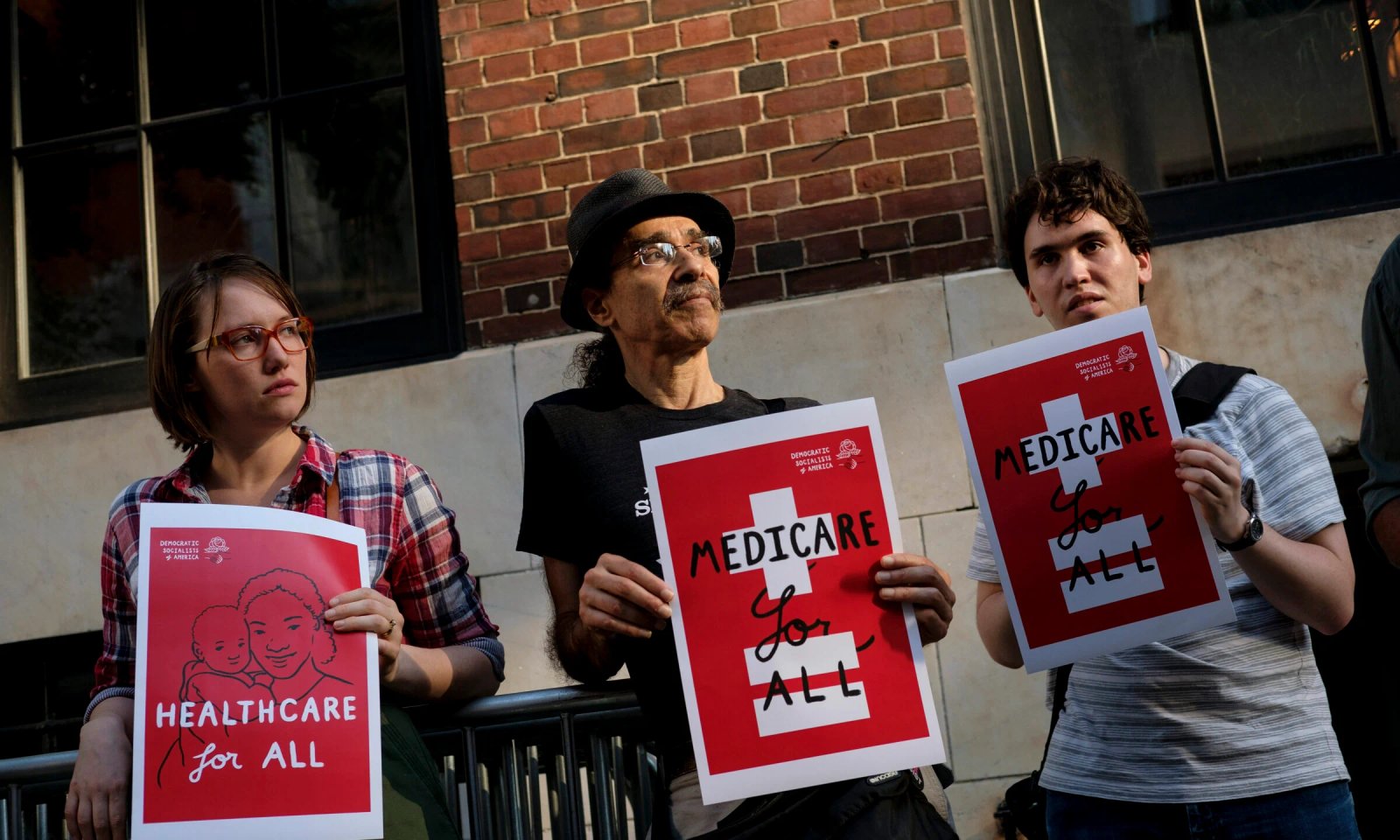
“Medicare for All” refers to a single-payer or universal government-sponsored system that provides universal coverage through a public program modeled on Medicare. Currently, older Americans are the primary recipients along with other eligible groups.
Two-thirds (66%) of Americans support Medicare for All, according to the KFF poll — an all-time high since the KFF poll began asking about it in 2016. Support is highest among Democrats (84%) compared to independents (72%) and Republicans (34%).
Proposals during the 2026 election vary, but the typical vision would offer comprehensive coverage with low or no premiums, deductibles or copays. The government would also have more leverage to negotiate prescription drug prices.
Supporters say Medicare for All could make healthcare more affordable and accessible, while opponents say it would raise taxes, impact private health insurance and potentially lead to longer waits for medical care.
Several candidates have made Medicare for All an important part of their campaigns.
-
In Michigan, Abdul El-Sayed, a Democrat running for a U.S. Senate seat, has proposed expanding Medicare to everyone and include vision, dental and hearing, without premiums, copays or deductibles.
-
In New Hampshire, Carleigh Beriont, a Democrat running for a seat in the House, promotes a single-payer system that provides healthcare for all for life. Benefits would include vision, dental and mental health coverage.
-
In Illinois, Lt. Gov. Juliana Stratton, a Democrat running for the Senate, supports Medicare for All, and her campaign has emphasized that healthcare is a right, not a privilege. Stratton has also pointed to her work expanding healthcare access and lowering prescription drug costs in Illinois.
-
In Massachusetts, Dan Koh, the Democratic nominee for the U.S. House in the 6th District, supports a Medicare for All system that would automatically enroll Americans while allowing people to keep private insurance if they want to.
What does the promise to ‘lower healthcare costs’ mean?
“Lower healthcare costs” is a broader slogan than Medicare for All. It enables candidates to focus on affordability measures without calling for an entire overhaul of the existing healthcare system.
Proposals may include things like lowering premiums, out-of-pocket costs and prescription drug prices; increasing price transparency; expanding health savings accounts; or targeting insurers and middlemen.
-
In the Minnesota gubernatorial race, U.S. Sen. Amy Klobuchar (D) says she would focus on lowering healthcare costs and build on her work to fight pharmaceutical companies. Her campaign says she wants to lower premiums, prescription drug prices and protect access to care. She has previously said she opposes single-payer “Medicare for All” legislation.
-
In Arizona, U.S. Sen. Mark Kelly (D), who is running for reelection, has focused his campaign on prescription drug reform to negotiate lower drug prices, capping out-of-pocket expenses for seniors, protecting healthcare benefits for veterans and points to his record in supporting the passage of a law banning surprise medical bills.
-
In the Georgia gubernatorial race, Republican Rick Jackson proposes making healthcare more affordable and accessible by utilizing technology to modernize and “cut out the middlemen,” lower prescription costs and expand service in underserved rural communities.
What does ‘Take on Big Pharma’ mean?
“Take on Big Pharma” is shorthand for proposing measures to lower Americans’ high costs for prescription drugs. The intent is to reel in the power large pharmaceutical companies have over pricing and politics.
Several candidates specifically include “Take on Big Pharma” as part of their platforms.
-
In Texas, U.S. Senate candidate Ken Paxton, a Republican, says he would work with President Donald Trump to “Make America Health Again” by holding pharmaceutical companies accountable, increase transparency and put consumers ahead of corporate profits.
-
In New Hampshire, U.S. Senate candidate Chris Pappas, a Democratic congressman, says he has a record of challenging Big Pharma, pointing to legislation he helped pass enabling Medicare to negotiate for lower prices, cap the cost of insulin at $35, and limit out-of-pocket costs for seniors. In July, Pappas co-sponsored a bill to require the Trump Administration to make drug pricing deals more transparent and have independent experts review those deals to determine whether they’re actually saving money for patients and taxpayers.
-
In Georgia, Sen. Jon Ossoff (D) has criticized pharmaceutical companies’ political influence, arguing that it contributes to high prescription drug prices. He points to his role in passing laws to lower prescription drug costs for Medicare recipients, including a $2,000 annual out-of-pocket cap and a $35 monthly insulin cap.
-
In Iowa, Ashley Hinson, a Republican congresswoman and Senate candidate, says she will work across party lines to “put the squeeze on Big Pharma and big health insurance companies” in order to lower drug prices and premiums.
How to learn more about what you’re voting for
To find out more about what’s on your ballot, start with your state or local election office. The U.S. Election Assistance Commission and Can I Vote both provide directories linking voters to official state election resources. You can also find out what positions candidates are taking using VOTE411 from the League of Women Voters.
(Photo by Drew Angerer/Getty Images News via Getty Images)