Gusto adds accounting firm-centered enhancements to platform, partner program
- Key insight: The real reason Gusto is directly funding accounting firms’ marketing and business development.
- What’s at stake: Which accounting partners will secure Gusto’s direct funding to scale their practices.
- Supporting data: 50% of planned marketing costs Gusto will match for accounting partners.
Payroll and human capital solutions provider
Processing Content
Gusto Pro
Gusto Pro now includes a set of built-in AI-guided workflows to reduce manual work in payroll prep and reports. The new features allow accountants to run payroll from Gusto Pro itself, instead of opening each client’s individual account. They can connect Gmail to draft hours, reimbursements and deductions, instead of re-entering what clients send over. (A Gusto spokesperson said connectors for Outlook, Google Drive, and OneDrive are coming soon). Accountants get full transparency into what has changed since the last payroll run. The user stays in control throughout: Gusto flags anomalies for the accountant’s review rather than pushing them through automatically.
“These are really repetitive things that [users] want some more AI assistance with, but they don’t want to actually fully automate,” said Lauren Snyder, product lead for Gusto Pro, in an interview. “They still want to have that oversight and control and judgment, and so we bake that into a really flexible workflow for both payroll prep and report automation that still gives the accountant a lot of control and oversight on how they want to customize it for them. Maybe that’s using a different connector for one client than another. Maybe that’s automating a little bit more for this payroll versus the last one.”
The new Gusto Pro also features automated reporting via smart generation. Gusto learns which reports a firm pulls after every payroll run and generates them automatically going forward, personalized for the firm.
“We try to take that mental load off of the accountant’s plate of trying to find and figure out which reporting automation they need to run,” said Snyder. “We can recognize, based on behaviors, which reports you run regularly, and we can automate the delivery of those. And then it’s up to the accountant to actually put themselves back into that advising seat and less into the kind of hunting for [reports] or setting up a reporting workflow.”
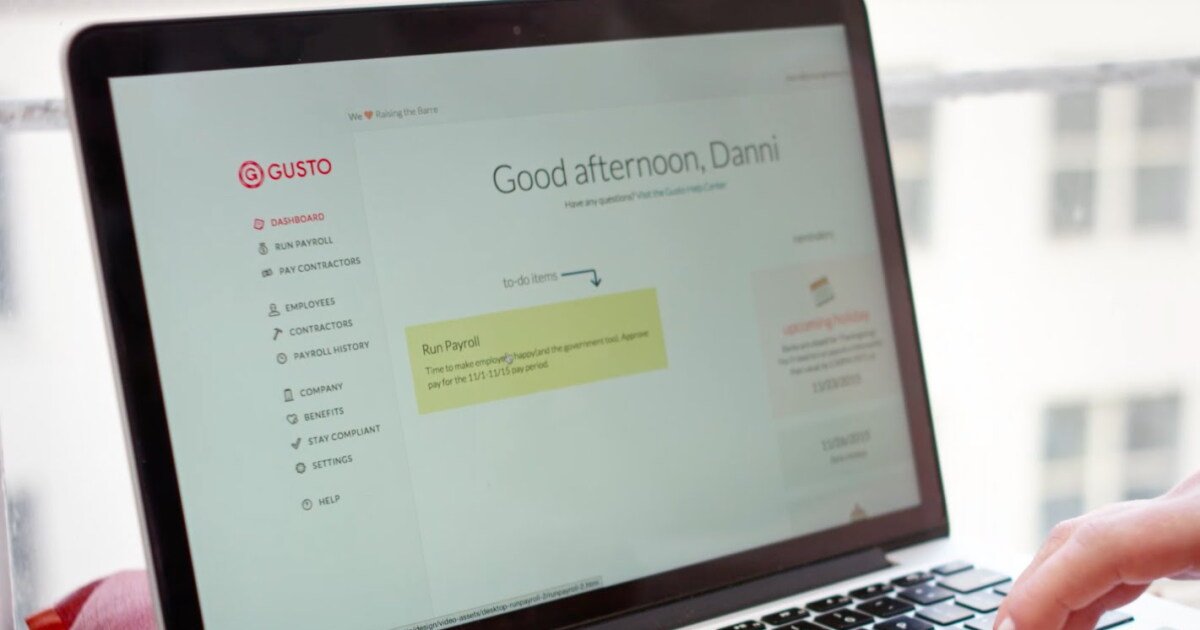
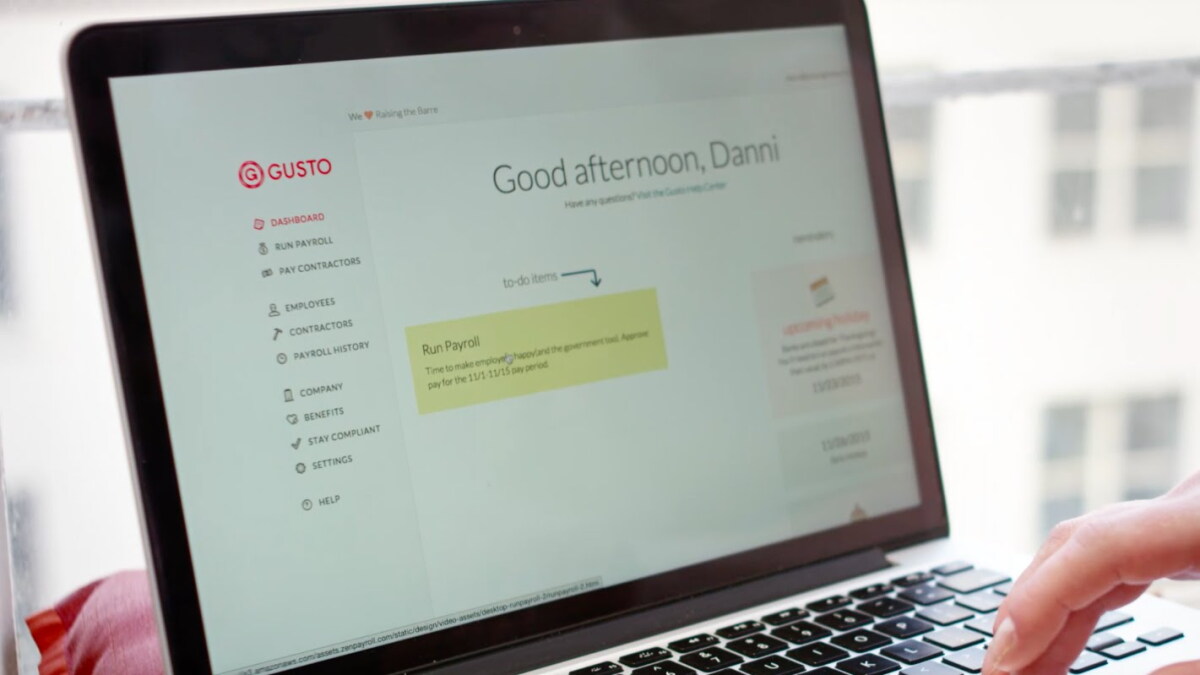
The reports then land in a new simplified dashboard alongside other information such as clients, work-to-do, onboarding and AI workflows, centralized across all clients versus having to dig for reports, client-by-client. The dashboard is also where users access the new Pro Gus, an AI assistant designed for Gusto Pro partners and built to give them faster answers to client questions. Gus Pro also provides multiclient visibility across their entire book of business.
“It’s all connected in the dashboard, so you’ll be able to actually see that single pane of glass across your book of business, where you’ll be able to see and run those workflows,” said Snyder. “You’ll be able to see and run the reports, and that’s also where the Gus assistant is, that is able to see across your book of business all from that dashboard.”
She confirmed that the new features will not affect the price of Gusto. Gusto Pro remains a free benefit for all partners in the Gusto Pro Partner Program.
While not formally part of the Gusto Pro launch, the company also launched its new
Gusto Partner Program updates
The company also announced major updates to the Gusto Partner Program, which helps firms scale their practices via revenue sharing, technical resources and strategic support. The program now includes actual funding opportunities, connection to consultants and access to new AI tools.
There are two kinds of funds accountants can access. One is market development funds, which are intended to be put toward marketing and lead generation activities such as email campaigns, webinars, events and paid social promotion. They usually come in the form of a reimbursement from Gusto that helps fund a portion of the firm’s own marketing activity. The funds must be tied to a specific, pre-approved activity, not to the general marketing budget or day-to-day spending and must drive net-new clients on Gusto specifically.
“Think about [if] we want to expand our marketing team,” said Colleen Oates, head of indirect go to market at Gusto. “We want to run social campaigns, all kinds of lead generation type of engagements, and so we, Gusto, come to the table and we match those funds with the firm, so we kind of can extend their budget from a marketing perspective.”
The other is Partner Development Funds, meant for a broader range of projects such as AI adoption and implementation, CAS pricing and strategy, operational efficiencies and matching with the right clients. These are mostly delivered as Gusto-funded services, not cash to the firm. At launch, the funds are used to access a curated roster of vetted consultants called Firm Business Consultants, who provide prepackaged engagements, paid for directly by Gusto. The Business Development Funds must go toward building the firm’s own business (staffing, a new service line, entering a new market and sales/practice-development training). When these funds are launched in early access in October, they will only be available to firms for use with vetted, pre-approved vendors in the Firm Business Consultants directory. Right now, there are five consultants offering a total of seven different packages.
“One of those packages could look like doing four workshops with you to assess what your AI strategy should be, and then come back with a recommended approach,” said Oates. “Another vendor might come in and say, ‘I’m going to teach your team how to build out your Google Ad strategy.’ Another one might be coming in and saying, ‘OK, you’ve had an issue with scaling your internal team, I’m going to provide you with an operational rollout of how you should structure things.’ Each vendor offers a slightly different package.”
Oates noted that the specific amount of funds can vary depending on package. For Marketing Development Funds, co-investment funds vary and are based on anticipated revenue expected from the planned marketing activity. Gusto funds up to 50% of the planned cost. For Business Development Funds, the funding amounts of individual packages vary depending on what they include, such as short-term group workshops, membership-based training sessions and extended 1:1 engagements.
Accountants apply for both kinds of funding through the new Partner Marketing Hub, which also allows access to AI agents, campaign building and ready-to-launch marketing resources. People can choose to apply for specific “preloaded campaigns in a box,” or the AI itself can recommend them based on a firm’s business goals such as trying to get acquired or grow revenue by a certain percent.
“There’s all kinds of different business objectives, so you could do it in a proactive or reactive way,” said Oates.
Only partners in the Silver and Gold tier qualify for Marketing Development Funds and Business Development Funds. However, Starter and Bronze tier firms are able to access the Partner Marketing Hub’s self-serve campaigns and AI agent tools. They can also choose to simply contact the relevant vendors directly.
Oates said she and Snyder came up with the idea after hearing numerous accounting partners mention the same challenges over and over again, such as not having capacity to onboard new people, or lacking a plan to sell their services. At first the plan was to develop sales and marketing agents (
“It’s not just adopting the agents, but thinking more holistically. … For me, what’s really important about this is that we can build a partner program that really flexes to the needs of the markets and not be super stuck in ‘this is the revenue share, these are the funds, this is exactly how we use it’ because things are changing so quickly,” she said. “We want to make sure that we can ebb and flow around it.”
Introductory bullet points created by AI with editorial review.