Lost your credit card? 5 steps you should take immediately to avoid fraud
A credit card is an important tool for day-to-day financial transactions. Losing one can be stressful, especially when contactless payments are enabled. Since eligible low-value contactless transactions may not require a PIN, a lost card could potentially be misused before you realise it is missing.
The good news is that quick action, vigilance and following the right steps can significantly reduce the risk of unauthorised transactions. Here are five steps you should take after losing your credit card to protect your finances, credit score and overall credit profile from potential adverse impacts.
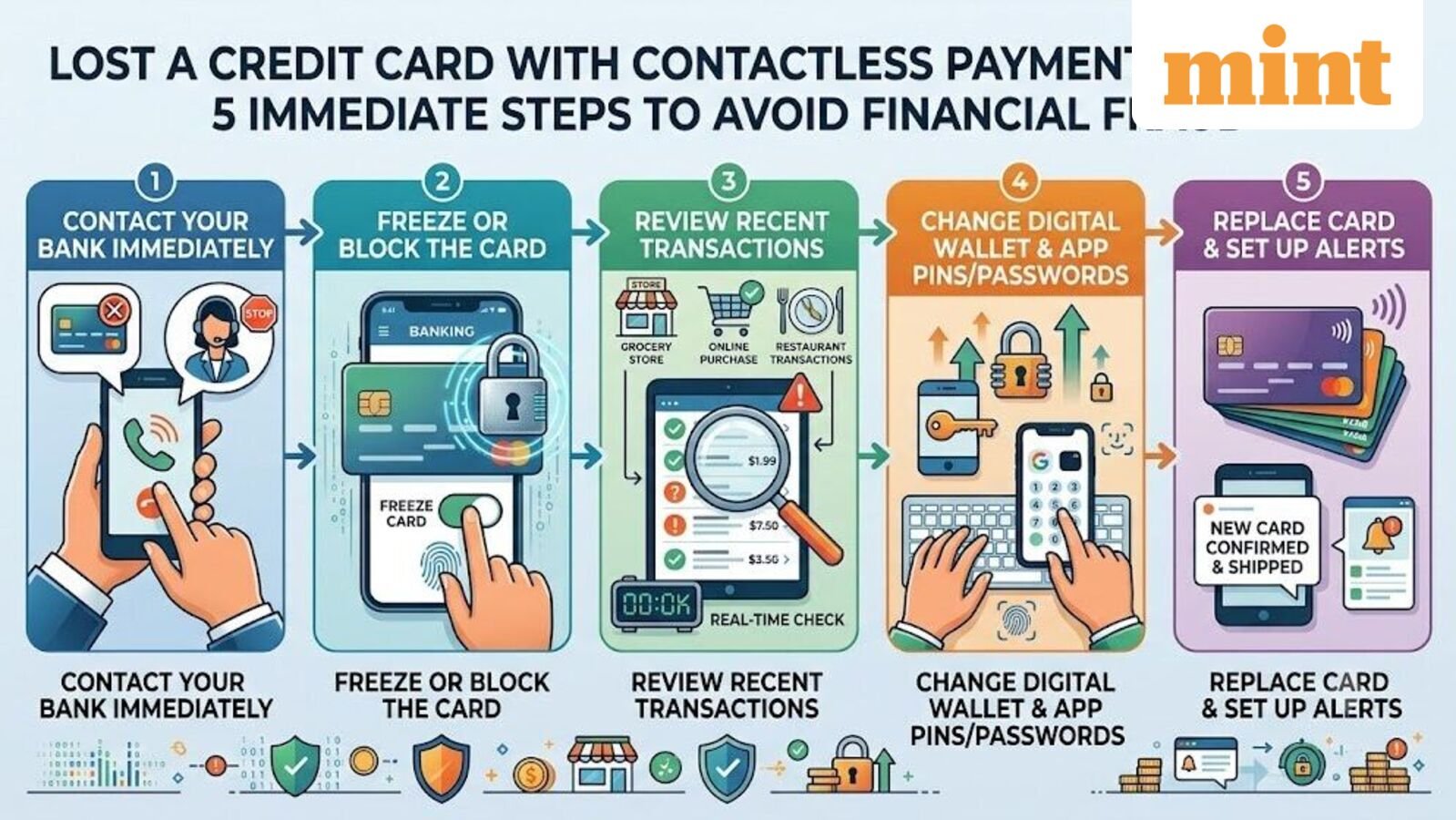
5 steps to take immediately after losing your credit card
1. Contact your bank immediately
The first step is to contact your bank or credit card issuer and promptly block the lost card. If your banking app offers a temporary freeze option, use it immediately while you contact the issuing bank and report the loss.
Do not rely solely on the temporary freeze. Inform your card issuer about the loss, even if you have already blocked the card through the app. Also, do not wait to see if you find the card before reporting it.
2. Freeze or block the credit card via the banking application
If you are unable to contact your bank immediately, check whether your credit card app allows you to temporarily freeze the card or disable contactless transactions separately.
If this option is available, use it immediately. This can provide an additional layer of protection while the card is being permanently blocked or replaced by the issuer.
3. Review recent transactions for unauthorised transactions
Carefully review your recent credit card transactions and account alerts for any unauthorised activity. Pay particular attention to transactions made after you noticed that the card was missing.
If you spot any discrepancies, report them immediately to your credit card issuer through its customer service channel. You should also send an email to the bank’s official email address, if available, to create a written record of the complaint.
Maintaining a record of the loss, the card-blocking request and any disputed transactions can be useful if you later need to challenge an unauthorised transaction.
4. Secure your digital wallets, PINs, and app passwords
Once you have reported the loss and had the card blocked, ask your bank to permanently cancel it and issue a replacement with a new card number.
You should also check digital wallets and online accounts where the old card may have been saved. Update the card details for recurring payments and online purchases once you receive the replacement. This can help prevent failed recurring payments and missed due dates.
5. Replace the card and set up real-time transaction alerts
Keep the bank’s confirmation of the card block for your records, preferably in digital form. The confirmation should include details such as the complaint or reference number and, where applicable, information about any disputed transactions.
Once the replacement card is issued, set up real-time transaction alerts. These notifications can help you quickly identify suspicious activity and report it to the bank without delay.
Why acting quickly matters
A lost credit card does not simply mean that money will definitely be lost. The key is to understand that as soon as possession is lost, a legal complication arises. This is because the credit card is associated with an individual’s identity and can also facilitate financial transactions.
The key, hence, is to report the loss as soon as possible and monitor the credit card account closely. You should also ensure that you don’t panic in such a situation. As banks may have specific timelines and procedures for reporting unauthorised transactions, delaying the complaint process could complicate the situation.
What else should the credit card user keep in mind?
It is also vital to keep in mind that, as a rule, you should never share confidential credit card details such as OTPs, CVVs, card images, or other banking credentials with anyone claiming to help you block the card or replace it entirely. Legitimate bank officials will never ask you for such details.
In summary, you should first block your credit card, disable contactless payments if possible, check for recent transactions, and request a replacement. Acting promptly in such cases, without panicking, can help reduce the risk of financial fraud and provide you with much-needed respite and peace of mind when faced with challenging situations.