UK construction downturn eases in September, but orders and confidence weaken: S&P – Mortgage Strategy

September UK construction output fell at its slowest pace this year, according to the latest S&P Global UK Construction Purchasing Managers’ Index (PMI) data.
However, the data found that weakening new orders, rising costs and declining business confidence continued to weigh on the sector.
The headline seasonally adjusted PMI rose to 46.1 in September, up from 44.3 in August.
While a reading below 50 indicates a shrinking sector, the latest figure pointed to the weakest decline in construction activity for eight months.
All three major construction sub-sectors recorded slower rates of decline during the month, suggesting some stabilisation following the sharper downturn seen during the second quarter of 2026.
Commercial construction was the strongest-performing segment, with activity falling only marginally. Its index rose to 48.5, marking the weakest contraction since May 2025. Civil engineering also recorded a softer decline.
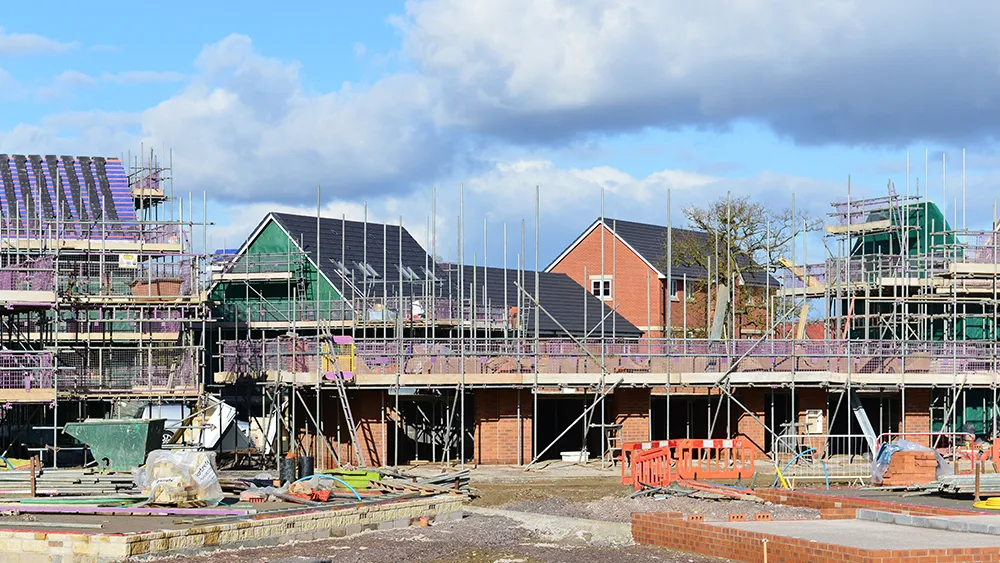
Housebuilding remained the weakest area of the industry, with its activity index standing at 40.7. Rising borrowing costs and unfavourable market conditions continued to weigh heavily on residential construction.
Tim Moore, economics director at S&P Global Market Intelligence, said the September figures showed that the downturn in UK construction output had become less severe.
“All three sub-sectors have seen a degree of stabilisation relative to the rapid declines reported in the second quarter of 2026,” he said.
However, the improvement in output was accompanied by a renewed deterioration in demand.
Total new work declined sharply in September, with the rate of contraction accelerating to its fastest pace for three months.
Construction companies reported longer sales conversion periods and delays to major project decisions. Firms cited subdued demand and geopolitical tensions as key factors, while sharply rising input costs also created pressure.
The weaker order pipeline contributed to another month of employment cuts across the industry. Construction employment has now fallen in every month since January 2025, with September recording the fastest rate of job losses for five months.
The latest survey also indicated a renewed reduction in the use of subcontractors.
Demand for construction products and materials continued to fall markedly in September, extending a downturn that began in December 2024.
At the same time, suppliers’ delivery times lengthened for a second consecutive month, reaching their greatest deterioration since May. Companies linked the worsening supplier performance to international shipping delays and continued supply chain disruption associated with the conflict in the Middle East.
Input costs also increased sharply during September, although the rate of cost inflation eased to a seven-month low. Around a quarter of survey respondents reported higher purchasing costs, compared with just 3% reporting a decline.
Fuel surcharges, higher freight costs and rising raw material prices were among the pressures highlighted by construction firms.
Moore warned that the recent moderation in input price inflation could prove temporary as fuel and transport costs continue to rise.
Construction companies remained broadly optimistic about activity over the next 12 months, but confidence weakened significantly during September.
Around 31% of firms expected business activity to increase over the coming year, compared with 21% anticipating a decline. Overall confidence fell to its lowest level since May and was substantially weaker than in August.
Forthcoming infrastructure projects provided some support for expectations. However, companies continued to identify domestic political uncertainty, weak housing market conditions, elevated inflation and higher borrowing costs as significant obstacles to growth.
Moore said softer order books, inflationary pressures and concerns over borrowing costs had prompted companies to scale back their expectations for the year ahead.
The S&P Global UK Construction PMI data were collected between 10 and 29 September 2026.
Alternative figures from Glenigan published this morning found that UK residential construction remains in a slump, with the value of started projects 33% lower than the same period last year.