Bank of Canada won’t target house prices with interest rates
By Erik Hertzberg
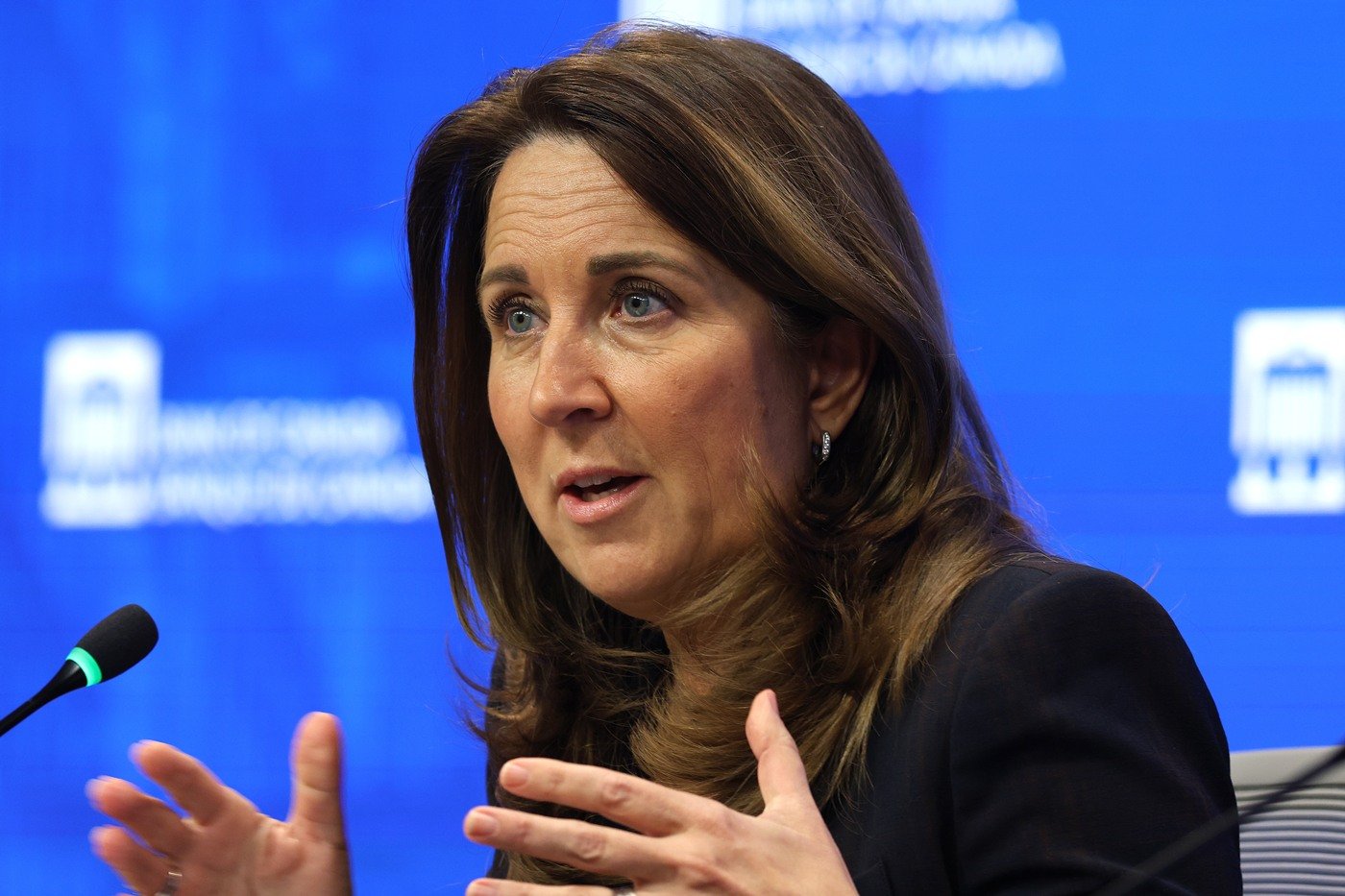
(Bloomberg) — The Bank of Canada’s second in command said the central bank is limited in what it can do to address home prices, arguing that the housing market should remain an input and not a target of interest rate decisions.
“Low, stable and predictable inflation” is the best salve for the country’s housing affordability problems, Senior Deputy Governor Carolyn Rogers said in a speech in Victoria, British Columbia.
“Targeting house prices directly with interest rates would ask monetary policy to do more than it can reasonably do—and would risk imposing costs across the broader economy,” Rogers said in prepared remarks Thursday.
The comments suggest that the central bank will aim to set borrowing costs to address overall inflationary pressures, even though the housing resale market in the country remains weakened.
Rogers reiterated that the central bank’s benchmark overnight rate is a “blunt tool” that can influence demand for housing. But borrowing costs cannot address the supply constraints like permitting or limited construction.
“The goal has to be a policy mix that increases supply, protects resilience and reduces the economy’s dependence on rising house prices,” she said.
Home sales totalled a seasonally adjusted 37,738 in August, according to data from the Canadian Real Estate Association, and sales have been below historical averages for years amid stretched affordability and higher borrowing costs.
Prices have also corrected about 20% since peaking during the COVID-19 pandemic, when the central bank cut its benchmark overnight rate to an emergency 0.25%.
The policy rate is currently 2.25%. The Bank of Canada next sets rates on Oct. 28. Traders in overnight swaps put the odds of a hike at that meeting at about 40%, and are pricing 100 basis points of hikes by September of next year.
High gasoline prices have kept headline yearly inflation at about 3% for months, and the central bank has warned that the longer energy prices remain elevated, the more likely those costs will spread to other goods and services.
On a yearly basis, core inflation measures are close to the bank’s 2% target, but the monthly trend shows price pressures starting to build.

Rogers says that while the central bank focused on housing affordability in its monetary policy framework review, there were “no simple fixes” to address the trade-offs posed by hikes and cuts.
While raising borrowing costs can slow price growth, it can also slow construction. Rate cuts can help households afford higher prices, but they also stoke demand amid a dearth of supply.
“The most important lesson we took from our review is that we need to explain these trade-offs better and be clear with Canadians about what monetary policy can and cannot do,” she said.
Rogers also said the bank considered weighing home prices more directly in their inflation analysis, but also came to the conclusion that treating things like mortgage interest costs or rental inflation differently had its own set of advantages and problems.
“There was no simple change to our inflation measure that would do a clearly better job of capturing the affordability challenge Canadians are facing,” she said.
After the speech, Rogers said that Canada should focus on trimming regulatory burdens that hold back investment, but cautioned that changes should be done carefully.
“We absolutely need to be thinking about how to streamline regulation,” she said. “But we do need to remember that regulations are there for a reason too.”
©2026 Bloomberg L.P.
Visited 1,687 times, 1,687 visit(s) today
Bank of Canada Bank of canada speeches bloomberg BoC carolyn rogers Dashboard Editor’s pick inflation speech
Last modified: October 1, 2026