Rent Concessions Drag Developers into Legal Nightmare
Rent concessions are discounts given to tenants, perhaps during a pandemic or to speed a new building’s lease-up.
Simple concept, right? Except in New York, where they have become a nightmare.
This is a story about overzealous lawmakers, unintended consequences and ambulance chasers.
It begins with an issue legislators addressed in the 2019 rent reform: Landlords could legally jack up a rent-stabilized tenant’s discounted rent, no justification needed.
For example, if the maximum rent were $1,800 but the landlord were charging a preferential rent of $1,200, he could offer a lease renewal for $1,800 and refuse to accept less, forcing the tenant to pay up or leave.
It’s hard to say how often that happened, but the potential was there. Many rent-stabilized tenants in pre-1974, outer-borough buildings pay less than the maximum, aka the “legal rent.”
Tenant activists saw preferential rent not as a discount but as an arrow in landlords’ quiver. The Assembly and Senate responded in the Housing Stability and Tenant Protection Act of 2019 by locking in tenants’ preferential rents. After that, landlords could charge the legal rent only upon vacancy.
No one gave much thought to how this might affect newer developments made possible by the 421a tax abatement. These rentals were not a target when legislators opened fire on the old rent stabilization law, but were hit by legislators’ stray bullets.
How did this happen? Clever lawyers figured out how to use the new statute to screw developers and collect fat fees.
Some context: Long before 2019, state legislators subjected market-rate apartments in 421a buildings to rent stabilization for the duration of the decades-long tax abatement. (A later version of 421a allowed for deregulation of high-rent units.) The developer would set the initial rent, but annual increases would be limited to the percentage set every June by the Rent Guidelines Board.
There’s a quiz ahead, so stay with me.
Developers sometimes offer rent concessions as a marketing tool to compensate early tenants for continuing construction or unfinished amenities, or just to lease up the building faster.
A popular concession during the pandemic was “3 months free.” Instead of paying, say, $3,000 a month for 12 months ($36,000 total), a tenant could pay nothing for three months and then $3,000 a month for nine, or $27,000 total. Or maybe the discount would be spread across all 12 months, making the monthly rent $2,250.
In that case, what’s the initial rent?
- $3,000
- $2,250
- $0
You could make an argument for all three, and lawyers have been doing exactly that for six years. (Not how I’d want to spend my time, which is why I did not become an attorney.)
Why does this matter? Developers, who based subsequent rent increases on the higher rent figure, are on the hook for massive overcharges if their concessions are ruled to be a preferential rent.
Supreme Court and Appellate Division judges have been hearing cases and slogging through legal briefs to answer this ridiculous but consequential question, which may ultimately go to the Court of Appeals.
What a great use of our finest legal minds. The likely result will be fewer concessions offered to tenants, a transfer of funds from buildings to tenants who were charged what they agreed to pay, and a windfall for a few lawyers.
Cases like this also dissuade developers, investors and lenders from doing projects that would alleviate the city’s housing shortage.
With apologies to attorneys, judges and paralegals toiling away on rent concessions, the brainpower and resources spent on this issue could have gone toward so many productive endeavors.
The tenants’ cases are nearly all brought by a single law firm, Newman Ferrara, which has turned this obscure circumstance into a cottage industry. Aiding them is a nonprofit called Housing Rights Initiative led by Aaron Carr — paradoxically, an advocate for housing supply.
They send press releases portraying this as a devious plot by immoral developers to rip off hapless tenants.
“The owners of the American Copper Building, the twin copper-clad towers at 626 First Avenue, have been soaking up taxpayer-funded tax breaks while, according to tenants, treating rent stabilization like optional fine print,” Newman Ferrara wrote.
Doesn’t your heart just break for tenants who can afford $9,772 a month for a two-bedroom?
Reality check: Prospective tenants were told up front what the base rent was and knew full well what they would have to pay when the concessions ended. They never imagined themselves to be victims until Newman Ferrara, Aaron Carr and some elected Democrats told them they were.
I don’t blame lawyers for trying to make money. The fault lies with state legislators who passed an overly broad, ambiguous law. They imagined themselves protecting low-income tenants in old, rent-stabilized buildings but accidentally roped in new, market-rate buildings.
John Catsimatidis gave fellow developers hope by winning one of the early cases, but tenants gained the upper hand in March when an appeals court overturned a ruling in William Grey v. LIC Development Owner.
As a result, tenants who received short-term concessions during the pandemic could continue to receive them for 25 years. That is absurd.
Government agencies are supposed to prevent messes like this by giving clear instructions to the real estate industry. The state’s Division of Homes and Community Renewal actually did that for preferential rents in its Fact Sheet 40.
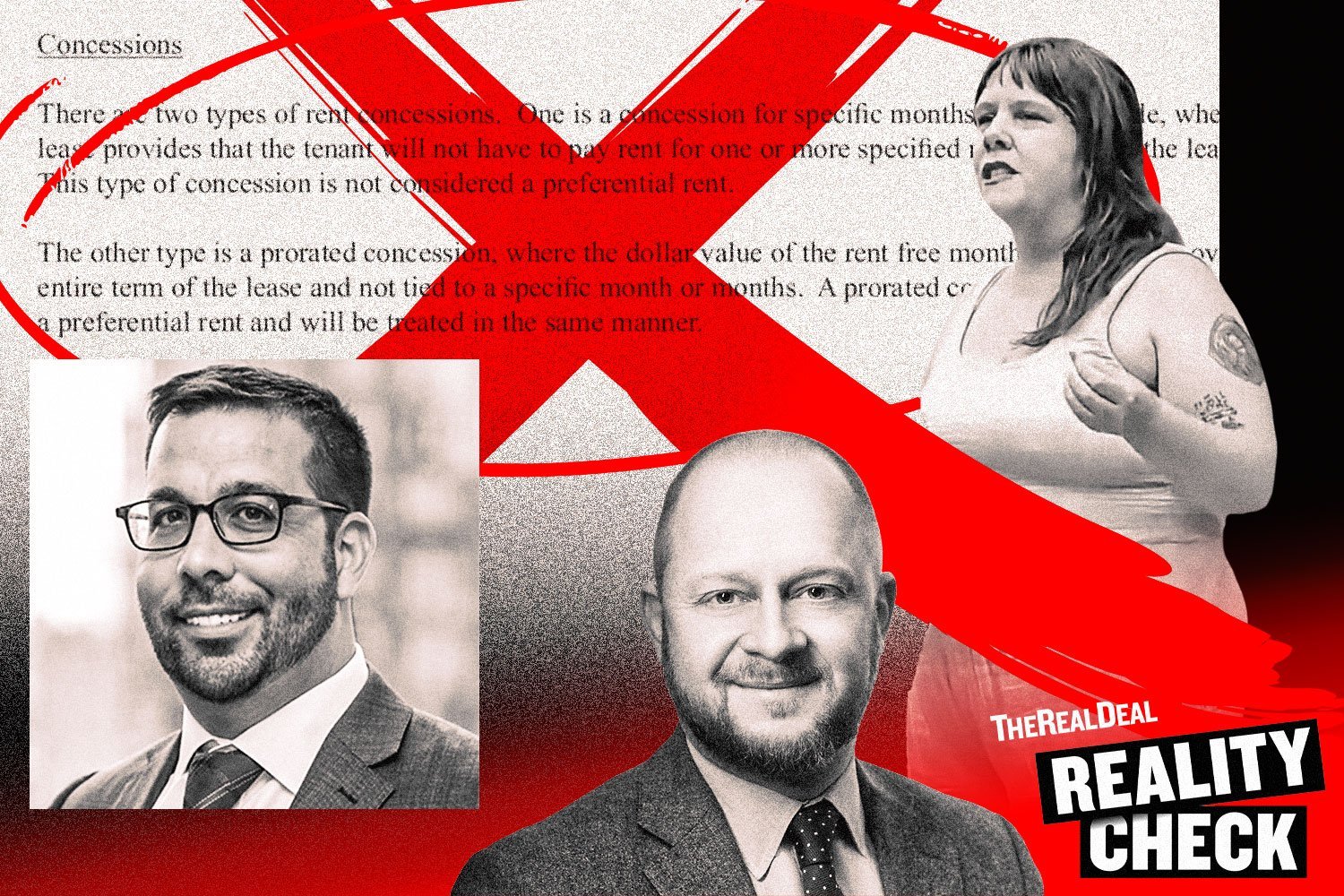
A discount pro-rated over the course of the lease is a preferential rent, the guidance said, but a concession given for specific months is not.
But after the HSTPA passed in 2019, the agency deleted that clarification. It simply disappeared from the fact sheet without explanation, leaving developers vulnerable to devastating judgments stemming from concessions offered in good faith.
“No one took notice until these lawsuits started,” said Kucker Marino partner Vladimir Favilukis, who represents owners in some of the cases. “You are pulling the rug out from under landlords who were relying on Fact Sheet 40 and case law.”
Smelling blood, a socialist politician named Emily Gallagher is now using her Assembly office to recruit tenants to Newman Ferrara’s cause. She recently emailed residents of 1 North Fourth Place, where her proletariat constituents enjoy “Williamsburg’s best views” and pay $7,000 a month for a two-bedroom.
Your tax dollars at work.
Read more

Tenants predict wins in 421a overcharge suits. Landlords beg to differ

Gotlib’s Black Spruce sued for 421a rent hike

Housing Rights launches new suit at 421a scheme