Last November, Brazilian federal agents pulled banker Daniel Vorcaro off the tarmac at São Paulo’s Guarulhos airport as he prepared to board a private flight out of the country. He was subsequently charged with multiple counts of bank fraud, corruption and money laundering, and is currently awaiting judgement, says The Conversation. Daniel Vorcaro, 42, presided over Brazil’s biggest banking failure in a generation – his defunct Banco Master left a $10 billion black hole and many thousands of victims.
He is hardly “the first Brazilian scammer in a banker’s suit”. But, aside from scale, what singles this case out is Vorcaro’s network of influence, which extends right to the top of the Brazilian establishment. As the country approaches crucial elections, the Banco Master crisis “threatens to shake the country’s democracy to its core”. It’s hard to find a prominent Brazilian politician – including president Lula – who hasn’t been dragged into Vorcaro’s net. Portraying himself as a financial wizard, he took “the country’s political system hostage”, allegedly building a massive network of tame “economists, influencers, bureaucrats, politicians and judges”. In the months since his arrest, tantalising details of high-level hobnobbing have emerged.
The Brazilian newspaper Gazeta do Povo compares Vocaro’s reach into the Brazilian establishment with Jeffrey Epstein’s mastery of US power circles. Certainly, the tactics were similar, says The Economist. Vocaro revelled in his “playboy” lifestyle – inviting politicians “to lavish parties with sex-workers” and feting several Supreme Court judges. His bank was essentially a “Ponzi scheme with an influence-peddling operation attached”: Bernie Madoff meets Jeffrey Epstein.
Try 6 free issues of MoneyWeek today
Get unparalleled financial insight, analysis and expert opinion you can profit from.
Start your trial
Sign up for MoneyWeek’s free twice-daily newsletter.
Join more than 165,000 subscribers and keep yourself informed with latest financial news, insights and expert analysis to help you understand what really matters when it comes to your finances.
Join more than 165,000 subscribers and keep yourself informed with latest financial news, insights and expert analysis to help you understand what really matters when it comes to your finances.
Daniel Bueno Vorcaro was born in southeastern Brazil in 1983 – the son of a real- estate broker, says The Capital Review. Vorcaro studied for a degree and then an MBA at the Brazilian Institute of Capital Markets and embarked on a series of business ventures before getting into banking in 2018, when he struck an agreement to acquire Banco Maxima and rebranded it Banco Master.
“What followed was a period of extraordinary – and, as investigators now allege, artificially inflated – growth.” The engine was “an aggressive retail strategy” based on extensive issuance of bank deposit certificates offering returns way above the market average. “Ordinary Brazilians, lured by yields that rivals couldn’t match, poured their savings in.” What they didn’t know was that “much of the bank’s asset base was hollow”.
Daniel Vorcaro spent millions wooing Brazil’s political class
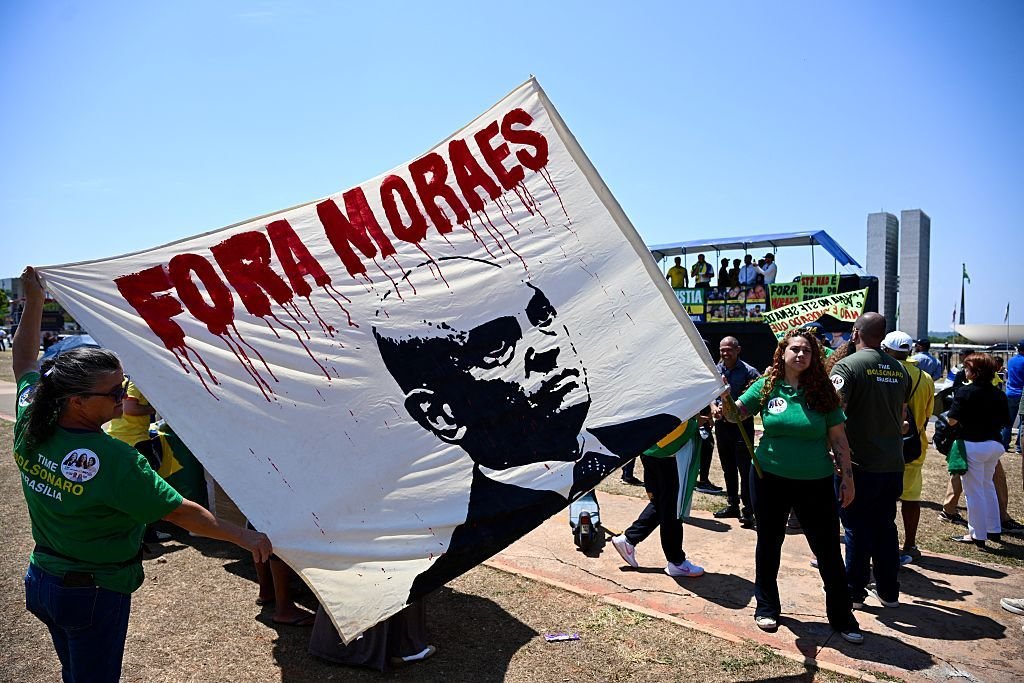
Daniel Vorcaro put substantial effort into wooing Brazil’s political right. He spent millions financing Dark Horse, a biopic of former president Jair Bolsonaro, who was jailed for orchestrating an attempted coup in 2022 – reportedly at the request of the latter’s son, Flavio Bolsonaro, a senator and presidential candidate who until recently denied he’d ever met Vorcaro. But perhaps most worrying, says The Economist, are the relationships forged with leading members of Brazil’s judiciary – not least Supreme Court justice Alexandre de Moraes, whose lawyer wife was recently revealed to have signed a $25.5 million contract with Banco Master.
As the probe into Vorcaro’s affairs – dubbed Operation Compliance Zero – continues, comparisons with the “car-wash” bribery scandal that rocked Brazil a decade ago are inevitable, says Bloomberg. Much as it might like to, Brasilia’s political class can’t “put the Master case behind it”. Still, the “biggest loser”, says The Economist, is democracy. Amid all the corruption scandals that have tarnished their country, Brazilians at least used to trust their top court. “Now that trust is fraying.” Corruption at the heart of the country’s institutions “could undermine trust in democracy more than Bolsonaro ever did”.
This article was first published in MoneyWeek’s magazine. Enjoy exclusive early access to news, opinion and analysis from our team of financial experts with a MoneyWeek subscription.