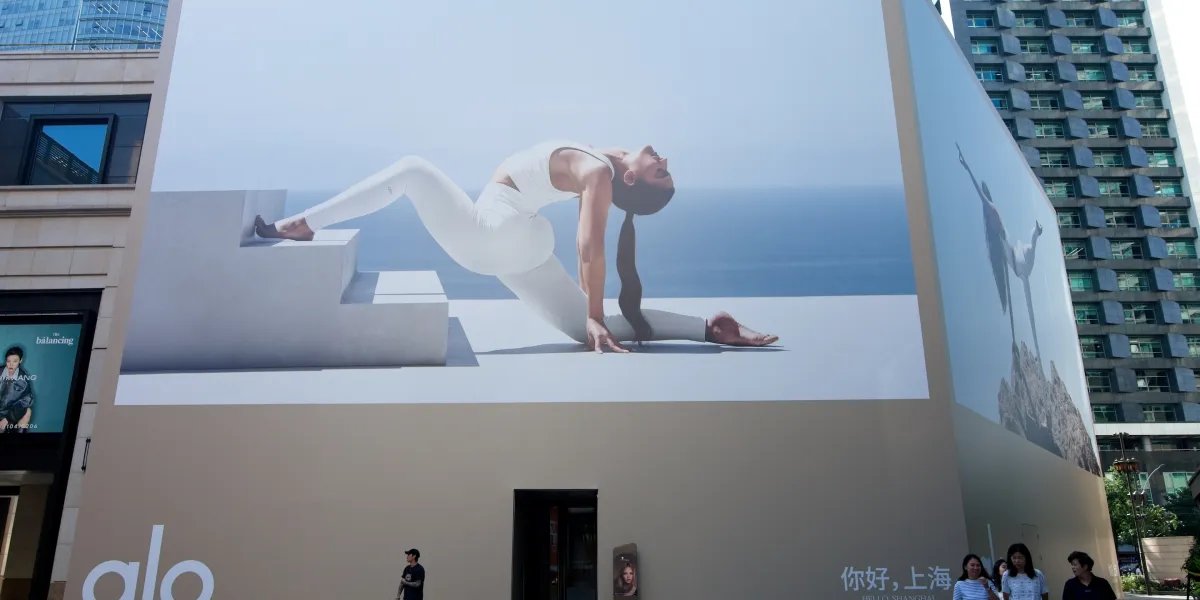
Alo is defying China’s consumer slowdown, selling $1.5 million in a minute and planning more stores
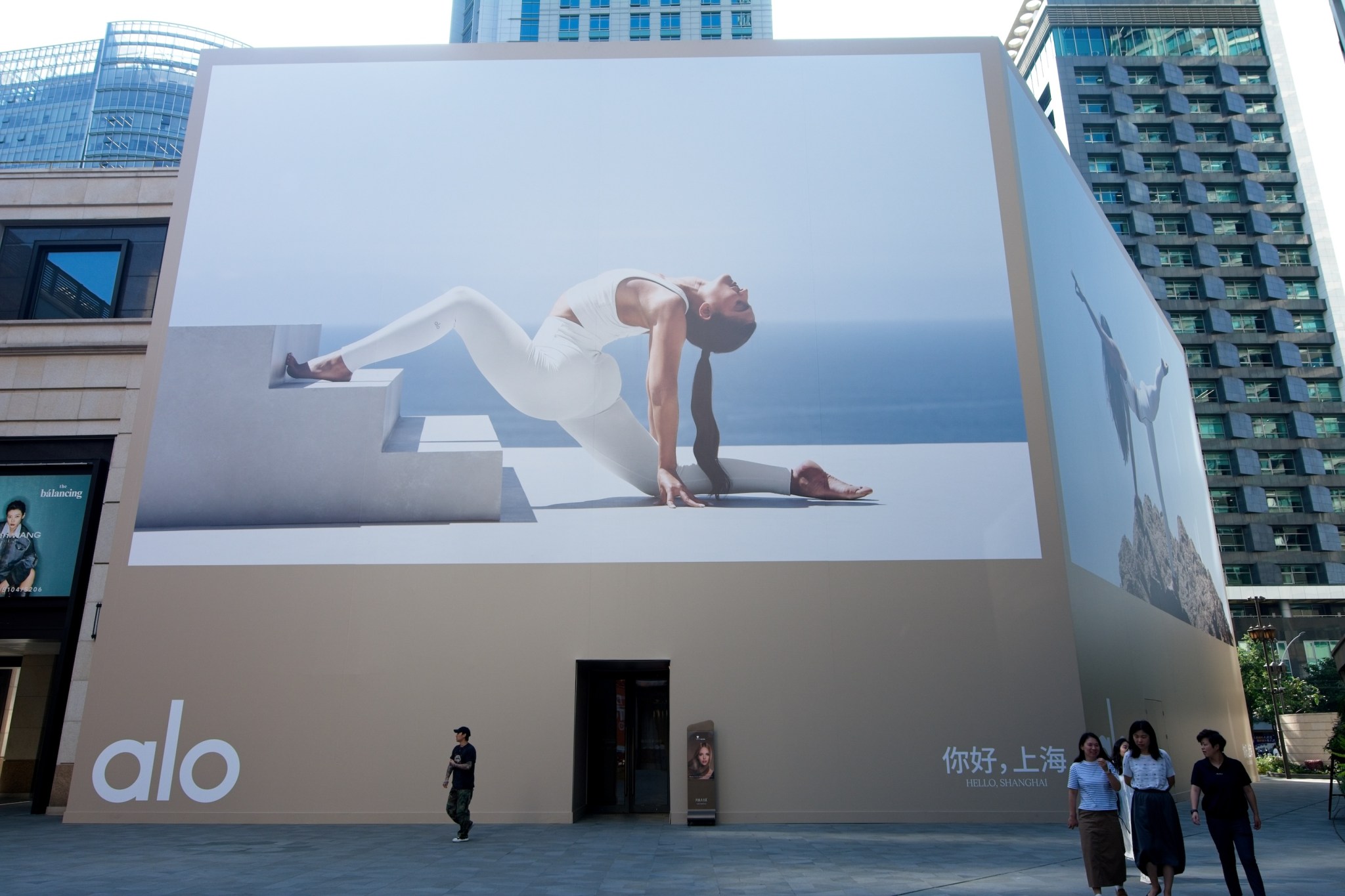
Chinese consumers are keeping a tight grip on their wallets—but apparently not when it comes to Alo.
Retail sales in China rose just 0.4% year over year in August, half the pace economists polled by Reuters had expected. Weak consumption and a prolonged property downturn had already helped drag second-quarter GDP growth to 4.3%, the slowest pace in more than three years.
Yet when the Los Angeles-based activewear and lifestyle brand opened its official flagship store on Tmall, Alibaba’s business-to-consumer marketplace, on Aug. 12, shoppers spent more than 10 million yuan (about $1.5 million) within one minute of the presale checkout opening at 12:30 a.m., according to Alibaba. Alo, which had announced its arrival on Chinese social media less than two months earlier, went on to set a sales record for a newly launched brand in Tmall’s sports and outdoor category.
The blockbuster debut came with caveats. Dao Insights, a publication that tracks Chinese consumer trends, noted that accumulated preorders, a limited-edition tote bag, and celebrity-driven fan demand may have concentrated sales into the opening rush, leaving the durability of that demand less clear.
Still, Alo is already betting on a much bigger physical presence. On Sept. 16, the company announced plans to open eight more stores across seven Greater China cities through 2027: two in Shanghai and one each in Beijing, Hong Kong, Macau, Shenzhen, Chengdu and Hangzhou. Separately, a previously announced Hong Kong flagship at K11 Musea is slated to open this fall.
Alo had one big advantage: It wasn’t entering China cold. Long before its official launch, Chinese consumers could buy Alo through cross-border e-commerce and resellers, while the brand’s celebrity-heavy marketing and social media presence had already built awareness. In the days leading up to its Tmall debut, Alo-related topics racked up 240 million views on RedNote, the popular Chinese lifestyle and social media platform, according to Dao Insights.
That meant Alo didn’t have to spend its launch introducing itself. Instead, it could focus on shaping how Chinese consumers experience the brand, from its product mix and pricing to its broader wellness positioning. Alo also localized its marketing, tapping actress Zhao Lusi, actor Wang Yibo, and supermodel Sui He, a veteran of multiple Victoria’s Secret Fashion Shows.
Alo’s focus on community
The strategy extended beyond e-commerce. Before the Tmall launch, Alo kicked off an eight-week series of community events in Shanghai, including running clubs, city walks, outdoor yoga, cycling and wellness classes. The programming introduced consumers to what Alo calls the “Alosphere,” its lifestyle ecosystem combining movement, wellness, community and culture.
Early sales also offer a clue to how Chinese shoppers see the brand. As of Aug. 14, Alo’s bestselling product wasn’t a pair of yoga leggings but its 1,150-yuan (about $170) Suit Up straight-leg trousers, with more than 10,000 sold, according to China Daily. A 1,750-yuan (about $260) sneaker sold more than 3,000 pairs. Both were selling at full price.
That mix suggests Alo’s appeal in China may extend well beyond the yoga studio. Its early momentum also fits a broader split in Chinese consumption: Even as overall spending remains weak, premium sports and wellness brands continue to find pockets of growth. On’s Asia-Pacific sales rose 43.1% in the second quarter, with the Swiss running brand citing strong momentum in Greater China, while Arc’teryx operated 79 owned retail stores in Greater China at the end of 2025, a net gain of 61 since 2019.
Alo is also entering a market long dominated by Lululemon—and even the incumbent is showing signs of strain. Lululemon operated 174 stores in mainland China as of Aug. 2, but its comparable sales there fell 8% on a constant-dollar basis in its fiscal second quarter.
Against that backdrop, Alo’s fashion-heavy early sales suggest it may be carving out a niche as much through style and lifestyle as through performance.
Now the brand is betting it can turn that early enthusiasm into a lasting retail business. “Our ambition goes beyond opening stores: we are building an Alosphere,” Benedetta Petruzzo, Alo’s international CEO, said in announcing the expansion.