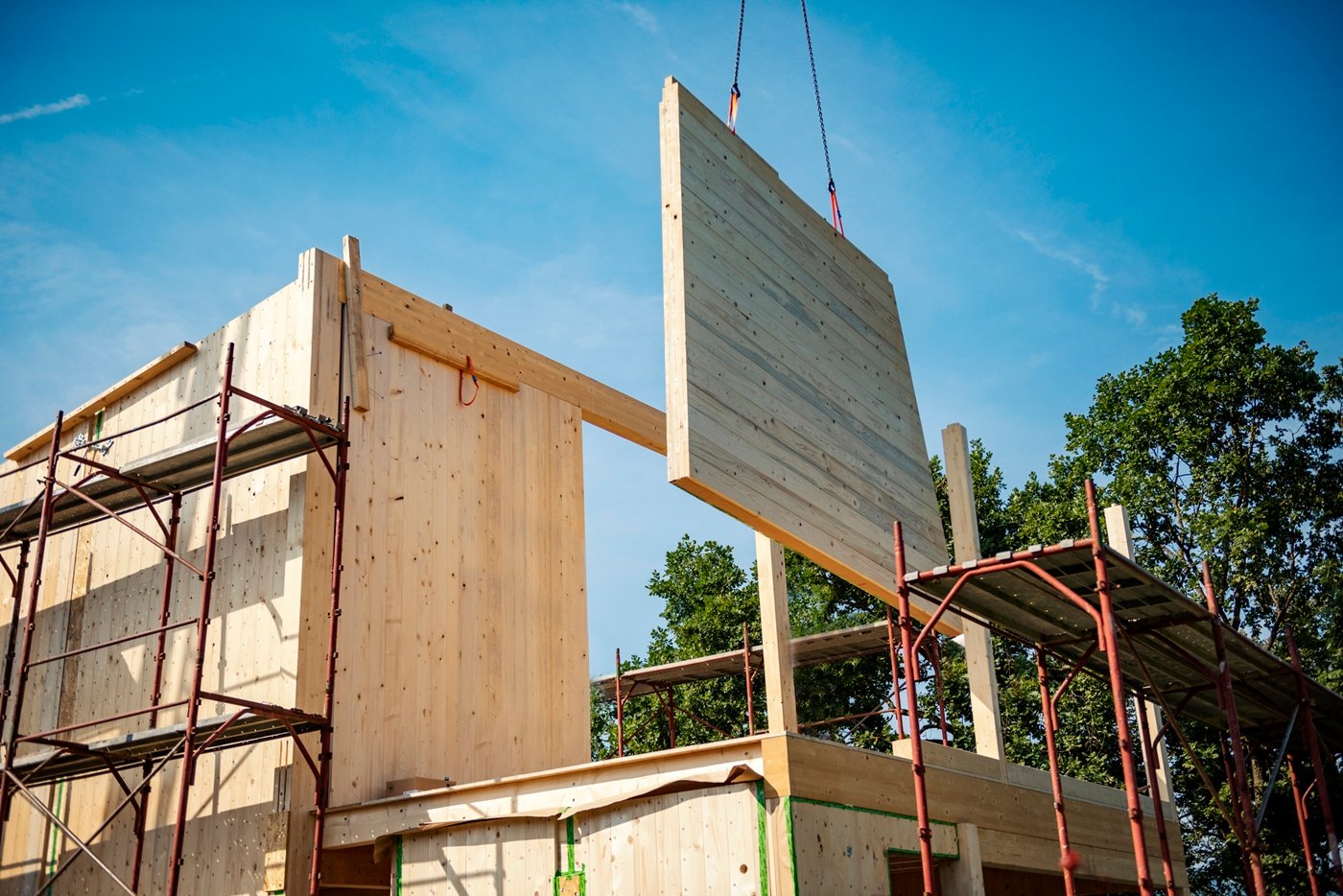
Canadians open to alternative housing as builders face financing, cost pressures

Canadians are showing greater openness to alternative forms of housing, but builders say financing constraints, labour shortages and rising costs are making it harder to deliver the kinds of homes buyers increasingly want.
A new Housing Attainability Report from Meridian Credit Union found 62% of Canadians would consider non-traditional housing options such as modular, prefabricated or tiny homes, while 50% view those formats as a viable path to homeownership. Purchase price was cited by 89% of respondents as a key consideration when choosing a home, while 84% pointed to monthly carrying costs.
The report also found growing interest in alternative ownership structures, including co-ownership and rent-to-own arrangements, alongside modular and prefabricated housing. Nearly half of construction businesses surveyed, or 45%, reported an increase in client interest in unconventional, prefabricated or modular housing.
“Canadians are showing us that homeownership is no longer one-size-fits-all,” said Meridian President and CEO Jay-Ann Gilfoy, pointing to co-ownership, modular housing and rent-to-own models as examples of how buyers are adapting.
Financing and costs constrain new supply
Despite that shifting demand, nearly eight in 10 builders surveyed, or 79%, said there is a mismatch between what the industry is building and what Canadians actually need, with half describing that gap as significant.
Financing remains one of the biggest obstacles, with 63% of builders identifying securing project financing as a major barrier to housing development. Rising material costs and economic uncertainty are also contributing to projects being delayed or shelved.
“Many construction businesses continue to face financing pressures, labour shortages and rising costs that make it harder to deliver the attainable housing Canadians are looking for,” said Jason Teal, Meridian’s vice-president of business banking.
The economics of entry-level housing have become particularly difficult, with 60% of builders saying high construction costs have made affordable starter homes financially unviable. The report says the combined cost of land, materials and municipal fees can push projects beyond what many first-time buyers can afford, leading builders to favour higher-priced properties in order to maintain viable margins.
Skilled-trades shortages are also weighing on construction capacity, affecting 78% of firms surveyed and 94% of companies with at least 100 employees. More than half of builders reported project delays as a result, while 41% said the shortages had significantly increased labour costs.
Those supply constraints are unfolding as younger Canadians continue to feel particularly squeezed by housing costs. Eighty-seven per cent of millennials and 81% of Gen Z respondents reported ongoing housing-related stress, while 70% of both groups said they had delayed a move, expected to rent longer or lowered their housing expectations.
Meridian says closing the gap between buyer demand and new supply will require broader access to capital, additional skilled labour and conditions that make new housing projects more economically viable.
The findings are based on research conducted between May 13 and June 8, including a nationally representative survey of 1,500 Canadians and a separate survey of 250 construction-industry decision-makers.
Visited 2 times, 2 visit(s) today
homebuilders housing supply meridian credit union modular housing prefabricated homes real estate market survey
Last modified: September 22, 2026