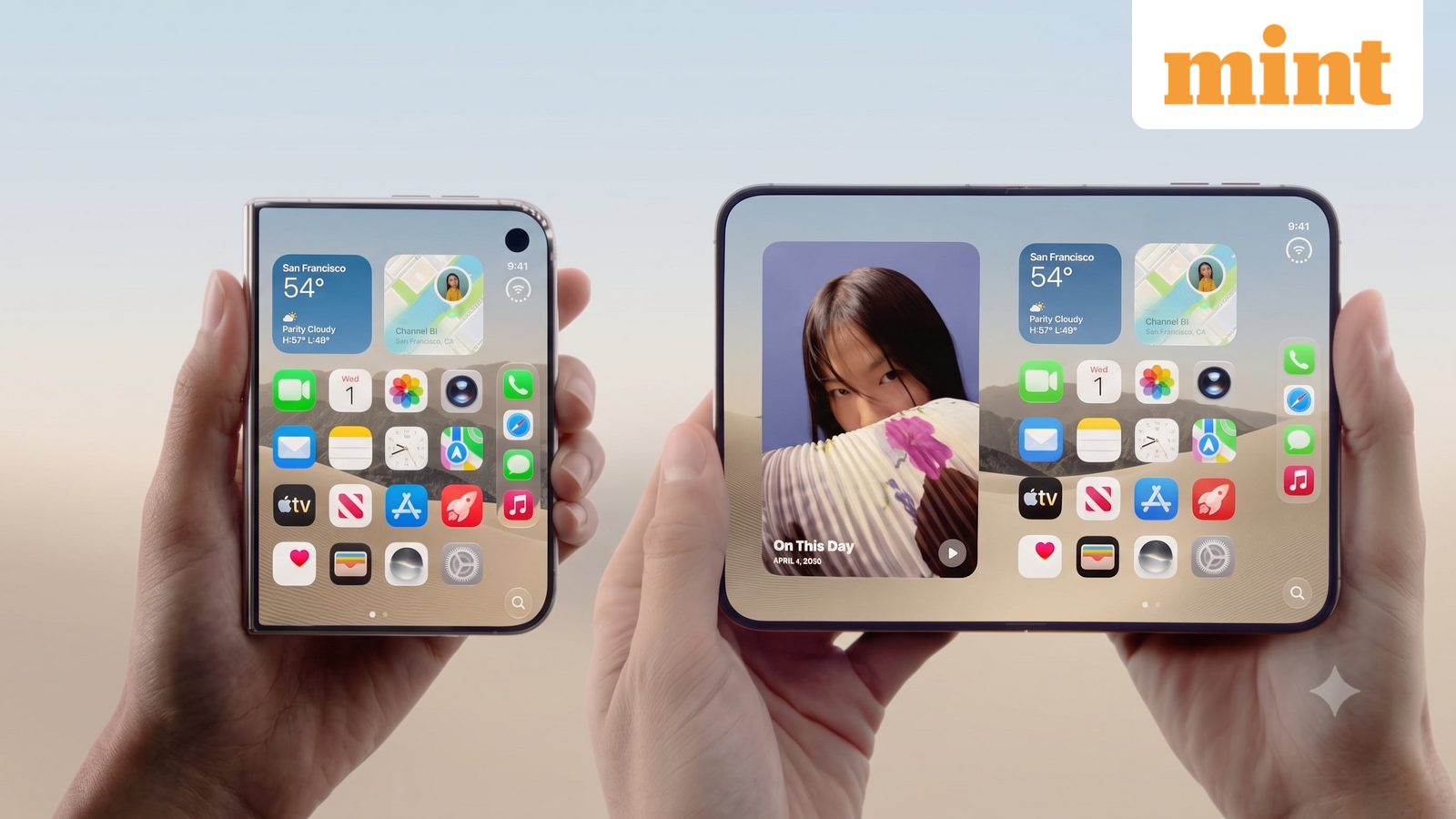
Apple iPhone Duo costs ₹1 lakh less in US. How many can you legally carry to India? | Custom rules explained
Apple’s iPhone 18 Pro and iPhone 18 Pro Max are now available to customers in India through both its retail stores and online platforms. The Cupertino-based tech giant also surprised users by unveiling its first foldable iPhone, for which pre-orders and sales will begin in October.
This latest lineup comes with a significant price difference compared with its pricing in the United States. The company’s foldable device, the iPhone Duo, starts at ₹2,99,900 in India, while the iPhone 18 Pro and iPhone 18 Pro Max start at ₹1,64,900 and ₹1,79,900, respectively. In the American market, the three models start at $1,999, $1,199, and $1,299, respectively.
After accounting for the currency conversion, the price gap between iPhone Duo in India and the US is approximately ₹1 lakh. This may prompt many users to consider buying the device in the US instead.
It is not uncommon for people to ask friends or relatives travelling from the US to bring back Apple devices, particularly when there is a significant price difference. Hence, it is important for buyers to understand the applicable customs rules before carrying such devices into India.
How many devices can you bring duty-free to India?
There’s no fixed limit on the number of Apple iPhones that one can carry to India from the United States, but there is a value limit that effectively determines what you can bring without paying customs duty.
According to Cleartax’s Chandni Anandan, genuinely used personal effects, such as an iPhone already in use can be carried duty-free. A new, sealed device is treated as dutiable if its price exceeds ₹75,000.
Since a new iPhone duo costs way more than ₹75,000, the amount above the allowance will attract duty as applicable.
“Even after factoring in this tax, an imported iPhone duo works out to roughly ₹2.57 lakh, still cheaper than its ₹3 lakh retail price in India.” said Ankit Jain, Partner at Ved Jain and Associates.
He also said that customs officers generally also consider a single, unboxed phone under the “used personal effects” exemption. If a traveler carries just one unboxed handset in active use, they can avoid customs duty altogether.
But what if you are carrying iPhones to sell them?
Carrying several new phones signals commercial intent, which removes the personal-use benefit entirely and makes them fully dutiable, said Chandni.
“Duty applies once the phone’s value exceeds your free allowance, or when it’s clearly being imported to sell,” the expert noted.
Speaking about the applicable duty rates, she said that the levy is layered: Basic Customs Duty (BCD) at 15%, then a Social Welfare Surcharge at 10% of the BCD, and finally IGST at 18% on the total import value plus BCD and surcharge. Together, this results in an effective rate of about 37.5% of the phone’s value.
For example, if three iPhones cost ₹1.91 lakh each:
- Total value: ₹5,73,000
- Less duty-free allowance: ₹75,000
- Dutiable value: ₹4,98,000
- Duty at 37.5%: ₹1,86,750
Thus, based on these assumptions, the indicative customs duty payable would be ₹1,86,750.
Can you avoid customs duty by claiming the iPhone is for personal use?
No, merely claiming that an iPhone is for personal use does not make it duty-free under any circumstances, said Tejaswi Dudeja, Senior Associate at SKV Law Offices, adding that under Section 79 of the Customs Act, 1962, duty-free clearance is subject to the conditions prescribed under the Baggage Rules, while Section 77 requires the passenger to declare the contents of the baggage.
“Further, as per Rule 2(1)(g), personal effects exclude goods imported for commercial purposes. Customs may therefore examine the circumstances, particularly where multiple new or high-value iPhones are being carried,” he said.
Depending on the circumstances, custom officials may seek documents such as the passport or travel documents, purchase invoice or bill, receipt or other evidence of value, and details identifying the devices.
“Personal use is therefore a factual consideration, not an independent exemption from customs duty,” Dudeja added.