Can you get a death claim on a lapsed life insurance policy? Here’s what Consumer Commission says
If a life insurance policy lapses due to non-payment of premiums, the insurer can legally reject the death claim. But can the insurer also keep the premiums already paid by the policyholder?
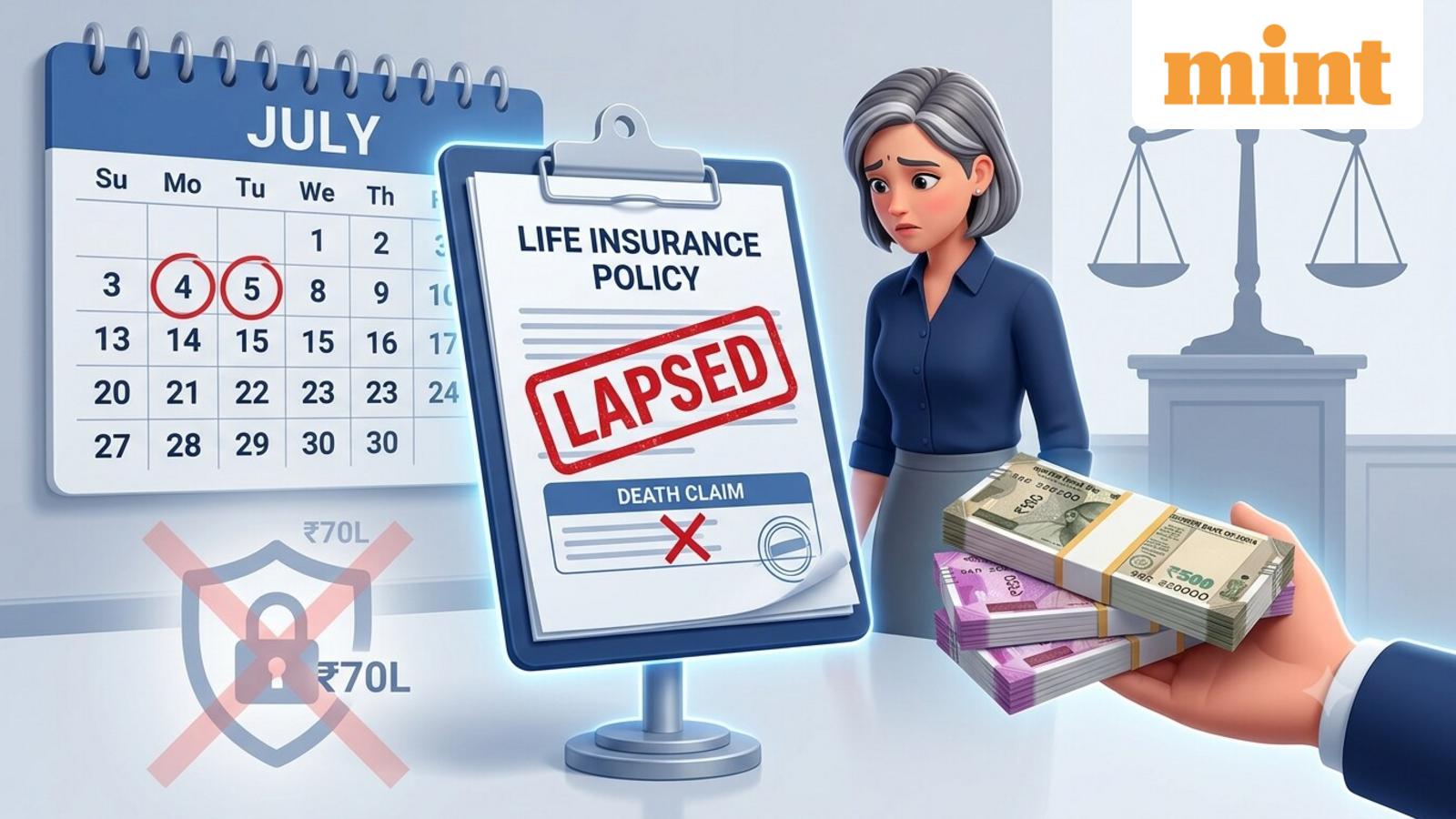
In a significant ruling, the Maharashtra State Consumer Disputes Redressal Commission said that while HDFC Life Insurance Company was justified in rejecting a ₹70 lakh death claim because the policy had lapsed, it could not retain the entire ₹7 lakh first-year premium paid by the insured.
According to a report by The Economic Times, the Commission said that it would not be fair for the insurer to keep the entire ₹7 lakh premium, given the exceptional facts of the case.
What was the case?
As reported by The Economic Times, the deceased policyholder had purchased an HDFC Life Classic Assure Plus policy by paying an annual premium of ₹7 lakh. The policy offered a minimum death benefit of ₹70 lakh.
He paid only the first annual premium. The second premium, due on 3 October 2016, was never paid, even during the 30-day grace period. As a result, the policy lapsed and the insurance cover ceased.
However, HDFC Life sent him an email stating that the premium amount payable for policy revival would remain valid until 5 July 2017. The policyholder died on 4 July 2017—one day before that date. His widow later filed a death claim, which the insurer rejected because the policy had already lapsed.
Why did the widow challenge the decision?
According to The Economic Times, the widow argued that the insurer’s email mentioning that the premium amount was “valid till 05.07.2017” created the impression that the policy continued to remain effective until that date.
She claimed that it was contradictory for the insurer to invite payment until 5 July but reject the claim by stating that the policy had lapsed much earlier. She alleged a deficiency in service and unfair trade practice, seeking either the ₹70 lakh death benefit or a refund of the premium already paid.
Why was the ₹70 lakh death claim rejected?
The Consumer Commission agreed with HDFC Life that the policy was not in force on the date of the policyholder’s death.
The Commission found that the email did not revive the insurance cover. It merely specified the validity of the premium calculation for policy revival.
Revival required payment of the overdue premium and compliance with applicable IRDAI regulations, neither of which had taken place before the insured’s death. Therefore, contractually, the insurer was not liable to pay the death benefit.
Why did the Commission still order a ₹7 lakh refund?
Despite rejecting the death claim, the Commission found that the insurer should not retain the entire first-year premium under the exceptional facts of the case.
According to the report, the Commission noted that:
- The insurer had already retained ₹7 lakh from the policyholder.
- It had continued sending revival communications.
- The revival quotation remained valid until 5 July 2017.
- The policyholder died just one day before that validity period ended.
The Commission held that allowing the insurer to keep the full premium without providing any effective benefit to the consumer’s family would amount to unjust enrichment.
Accordingly, it directed HDFC Life to refund the ₹7 lakh premium within 45 days, failing which it must pay 9% interest. However, it rejected the widow’s claim for the ₹70 lakh death benefit, 24% interest and separate compensation for mental agony.
What should policyholders learn?
The general rule, as per the ICICI Prudential Life Insurance FAQs: “Are the premiums returned to the nominee in the unfortunate event of the Life Assured’s death while the policy remains lapsed?”
The FAQ answers, “There is no provision to pay any amount in a lapsed policy, unless specifically mentioned in the policy contract.”
“No reminder email from the insurer, no revival window, and no equity argument will resurrect the death benefit once the premium goes unpaid beyond the grace period. Families often discover this only after a claim is rejected,” Amitraj Kaushal, Advocate at the Supreme Court of India, told The Economic Times.
Mint has not been able to independently verify the authenticity of the report.
Disclaimer: This is only for informational and educational purposes. Please consult a qualified expert for the latest laws and regulations.